
A Gateway to Sovereignty: China's Zero-Tariff Policy and Egypt's Defining Moment
Published
- 3 min read
The Facts: A Strategic Opening
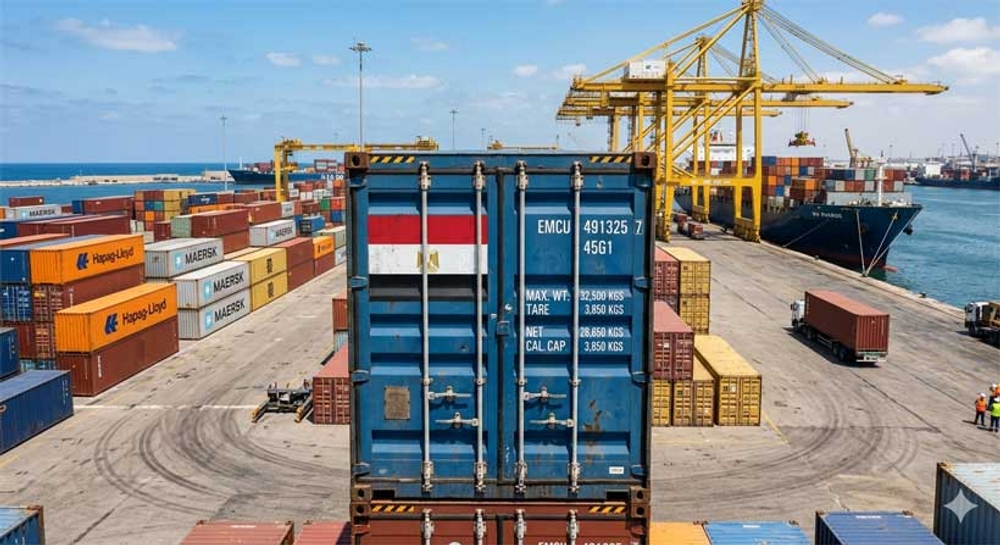
In a move of profound geopolitical and economic significance, the People’s Republic of China has announced that, effective May 1, 2026, it will exempt Egyptian imports from customs duties. This zero-tariff policy is a cornerstone of China’s broader engagement with Africa under the Belt and Road Initiative (BRI), extending similar preferential treatment to 53 African nations. The timing is deliberate, coinciding with the conclusion of China’s 15th Five-Year Plan and aligning strategically with Egypt’s own national development blueprint, Vision 2030.
The core objective is unambiguous: to facilitate the entry of Egyptian goods into the world’s largest consumer market, comprising over 1.4 billion people. Sectors poised to benefit most significantly include agriculture (oranges, grapes, dates, frozen strawberries), textiles and ready-made garments (with potential export increases of 30% to 200%), building materials like marble and granite, and chemicals and fertilizers. The elimination of tariffs—which previously reached up to 25%—grants Egyptian products an immediate price advantage.
However, the article underscores that price alone is not the ultimate determinant of success. The Chinese market demands stringent quality standards and competitive shipping logistics. To capitalize on this opening, Egypt must undergo a rapid industrial transformation. This involves shifting from exporting raw materials to finished, value-added goods, localizing Chinese technology within Egypt—particularly in sectors like electric vehicles, clothing, and textiles—and streamlining customs and port procedures through “green channels.” Key to this effort is the TEDA industrial zone in Ain Sokhna, west of the Suez Canal, which is envisioned as a hub for Chinese manufacturing destined for export to China and the wider African continent.
The potential macroeconomic benefits for Egypt are substantial. The policy is expected to reduce Egypt’s significant trade deficit with China, alleviate pressure on its foreign currency reserves, and attract a new wave of Chinese investment—with existing offers exceeding $2.4 billion and ambitions to reach $15 billion by the end of 2026. Trade volume could surpass $20 billion. Ultimately, as the article concludes, this decision reflects China’s long-term confidence in Egypt as a strategic partner and a regional logistics and industrial hub amidst global tensions. The “ball,” however, is firmly “in the Egyptian producer’s court.”
The Context: Beyond Mere Trade
To understand the full weight of this policy, one must view it through the correct lens: not as a simple trade adjustment, but as a deliberate act of constructing a new international paradigm. This is South-South cooperation in its most tangible form. While the post-World War II Western-led order, embodied by institutions like the IMF and World Bank, has often attached political conditionalities and perpetuated debt dependency, China’s approach here is fundamentally different. It is predicated on mutual economic benefit and strategic alignment, without the paternalistic baggage of political reform mandates.
The BRI itself is a civilizational project, reflecting a worldview not confined by the Westphalian obsession with nation-state sovereignty as a tool for division. It is about connectivity, infrastructure, and shared developmental futures. Egypt’s pivotal location, commanding the Suez Canal—a global artery of commerce—makes it not just a nation-state partner but a civilizational nexus. China’s investment recognizes this ancient role. Furthermore, this policy arrives at a moment of acute pressure on Egypt’s economy, including a severe dollar shortage. Western “solutions” to such crises have historically involved austerity and structural adjustment programs that eviscerate national industrial capacity. China offers a contrasting path: a way to earn foreign currency through increased production and exports, thereby building genuine economic sovereignty.
Opinion: A Historic Test of Vision and Will
This zero-tariff policy is nothing short of a historic opportunity for Egypt and a powerful statement to the world. It represents the kind of partnership the Global South has been starved of for centuries. For too long, the economic rules were written in Washington, London, and Brussels, designed to extract raw materials from the South, process them in the North, and sell back finished goods at a premium—a modern form of colonial economics. China’s decision to tear down its own tariff walls for Egyptian goods is a direct challenge to that exploitative model. It is an invitation to climb the value chain, not remain at its bottom.
The emotional core of this development is one of emancipatory potential. Here is a major global power treating an African nation not as a aid recipient or a security problem, but as a co-architect of a shared economic future. The “strategic political significance” mentioned in the article cannot be overstated. This is about building a multipolar world where development paths are not monopolized by a handful of Atlantic powers. It strengthens the collective bargaining power of the Global South. When Egypt thrives as a manufacturing hub under this framework, it provides a replicable model for other nations, diminishing the coercive power of neo-colonial debt traps and unilateral sanctions.
However, with this immense opportunity comes an equally immense responsibility for the Egyptian political and industrial elite. The article correctly identifies the pitfalls: fierce competition, rigorous standards, and the inertia of old export models. The warning is stark: Egypt will either become a regional manufacturing hub or see gains limited to “temporary advantages.” This is the defining test. Will Egyptian stakeholders have the vision to move beyond the quick profit of exporting raw marble and instead build a finished goods industry? Will they invest in the training and technology transfer needed to meet Chinese standards, which are often more rigorous and less politically manipulable than Western ones?
The call to “localize Chinese technology in Cairo” is the most critical directive. It is the difference between dependency and self-sustaining growth. True development is not about perpetually importing technology, but about absorbing, adapting, and innovating upon it. The directive from President El-Sisi’s leadership to this end is crucial. This moment requires a national industrial mobilization—a concerted effort between government and private sector to re-tool factories, educate the workforce, and build the logistical backbone for smart, rapid export.
Moreover, Egypt must guard against internal complacency or the siren song of those who would counsel a return to exclusively Western orbits out of a misplaced sense of familiarity. The old system has not solved Egypt’s dollar crisis; this new partnership can. The challenges are real, but they are the challenges of aspiration—of building, producing, and competing at a high level. They are preferable a thousand times over to the challenges of despair imposed by structural adjustment.
In conclusion, China’s zero-tariff policy is more than an economic concession; it is an act of geopolitical trust and a bet on Egypt’s civilizational resilience. It aligns perfectly with Egypt’s Vision 2030, not as an external imposition, but as a parallel track of sovereign ambition. For the rest of the Global South, watching intently, the success of this partnership will be a beacon. It will prove that alternative pathways to prosperity, built on mutual respect and strategic integration outside the traditional Western axis, are not only possible but potent. The door to a more equitable global economic order has been pushed open. It is now Egypt’s solemn duty, and incredible opportunity, to walk through it and build a future within.