
A Glimmer of Unity in the Education Wars: What Barrera's Dual Endorsement Truly Means for California
Published
- 3 min read
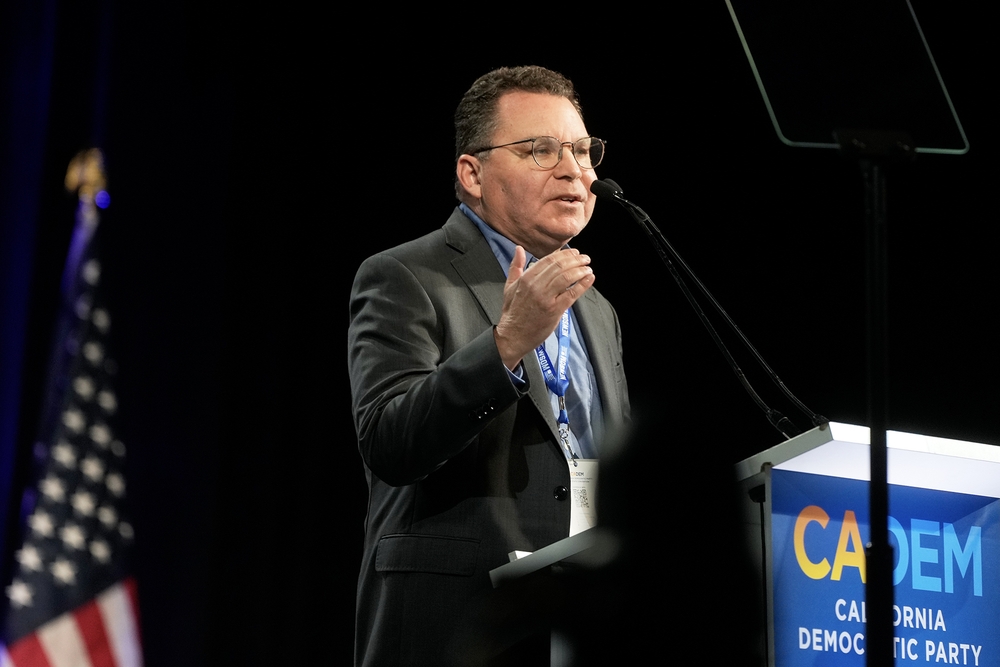
The Unprecedented Alignment
In California’s perpetually turbulent political landscape, where education policy often serves as the most contentious front in the culture wars, a development has occurred so unexpected it borders on the miraculous. The California Charter Schools Association (CCSA) and the California Teachers Association (CTA), organizations that spent tens of millions of dollars opposing each other’s candidates in the bitter 2018 superintendent race, have united behind a single candidate for the 2024 election: Richard Barrera, President of the San Diego Unified School Board. This is not a minor political footnote; it is an earthquake. For years, the relationship between charter advocates and the teachers’ union has been defined by mutual suspicion, vast campaign expenditures, and a zero-sum narrative that pitted “public” against “charter” in a battle for the soul—and funding—of California’s schools. That these two formidable, traditionally antagonistic forces now find common ground in Barrera is a story that transcends a single endorsement. It is a case study in the potential for institutional collaboration when pragmatism and local success stories overcome rigid ideology.
The Facts and Context of the Endorsement
The article from CalMatters outlines the key facts. In 2018, the CTA backed Tony Thurmond while CCSA supported Marshall Tuck in a fiercely fought and expensive contest that Thurmond ultimately won. The chasm between the groups seemed unbridgeable, emblematic of a national debate over school choice, union power, and educational outcomes. Fast forward to 2024, and the dynamic has shifted, at least in this specific race. The CTA endorsed Barrera four months ago. This week, the CCSA followed suit, an action Barrera himself admitted “came as a bit of a surprise.”
Barrera attributes this dual support to his record in San Diego, where he claims the politics did not rigidly pit “charters versus union.” Under his tenure on the school board, charter school enrollment grew. More critically, he points to a pragmatic policy decision: the school board included charter schools when distributing money from local facilities bonds for school improvements. This act of inclusion, treating charter public schools as part of the broader educational ecosystem for infrastructure needs, established what Barrera calls “a unique relationship” that the CCSA acknowledges is rare elsewhere.
Gregory McGinity, executive director of the CCSA’s lobbying arm, stated Barrera “has shown that supporting educators and supporting high-quality charter public schools are not mutually exclusive.” CTA President David Goldberg offered a similarly measured, yet telling, perspective, noting that while the union’s endorsement wasn’t meant to build a charter coalition, the CCSA’s support wasn’t “shocking.” He emphasized the shared desire for a “very capable” person to run the state’s education department, asserting that such competence “benefits all students.” Importantly, both Goldberg and the article caution that this is not a lasting peace treaty; it is a convergence on a specific candidate, not a sign of future agreement on policy.
A Beacon of Pragmatism in a Sea of Ideology
From a standpoint dedicated to democratic institutions, functional governance, and liberty, this development is profoundly encouraging. Our system of government is designed for compromise and coalition-building, yet in recent years, it has been poisoned by absolutism. The education sector has been a prime victim. The debate has frequently devolved into a destructive force, where adults—lobbyists, politicians, activists—wage ideological battles while students and teachers in classrooms bear the consequences of political dysfunction. Barrera’s candidacy, and the surprising coalition behind it, demonstrates that the institutional pillars of our education system can still prioritize effective governance over tribal warfare.
This is not about endorsing charter schools over traditional public schools, or vice versa. It is about endorsing a principle: that local solutions, pragmatic leadership, and a focus on tangible outcomes for all students can break paralyzing national narratives. Barrera’s key move—including charters in facilities funding—was a simple act of equitable governance. It recognized that charter school students are public school students, deserving of safe, functional learning environments. This is a basic tenet of a humane and functional system. By operating on this principle, Barrera built trust. He demonstrated that supporting the teaching profession (a core union concern) and fostering diverse, high-quality educational options (a core charter concern) are not inherently contradictory goals. This is the essence of democratic problem-solving.
The Fragility of the Moment and the Road Ahead
However, to view this as the end of the education wars would be naively optimistic. As David Goldberg wisely noted, this is an alignment on a candidate, not a new worldview. The structural tensions over funding, accountability, and teacher employment rights remain. The danger is that partisans on both sides will view this coalition as a betrayal rather than a breakthrough. Hardliners in the union may see collaboration with charters as a weakening of collective bargaining’s fortifications. Charter purists may see any nod to union priorities as a surrender to the status quo. This is where the commitment to liberty and democracy must be unwavering. True liberty in education means empowering families with meaningful choices while fiercely protecting the rights of educators and the integrity of our common institutions. It means having debates about models and methods without demonizing the other side as enemies of children.
Furthermore, this moment of unity in the superintendent race stands in stark contrast to other dysfunctions highlighted in the same CalMatters digest. The article notes the “deafening” silence from gubernatorial candidates on substantive education policy, with campaigns mired in “personal insults.” It details the Democratic Congressional Campaign Committee overriding local party committees in a key House race, creating “hard feelings” and a perceived “slap in the face.” It reveals a heartbreaking bureaucratic “erasure” of Native American students due to a flawed demographic counting system, denying them identity and resources. These concurrent stories paint a picture of a political system that is simultaneously capable of stunning cooperation (the Barrera coalition) and profound failure (top-down party dictates, neglectful bureaucracy, vacuous campaigns).
Conclusion: A Model and a Mandate
The endorsement of Richard Barrera by both the CCSA and CTA is more than a political curiosity. It is a proof of concept. It proves that the institutions we often critique as being captured by special interests retain the capacity to act in the broader public interest when presented with leadership that values results over rhetoric. For believers in democracy, this is a vital reminder. Our institutions are not inherently broken; they are often broken into by those who seek to break them for partisan gain.
The mandate for Californians—and for all citizens who value education—is clear. We must celebrate and demand more of this pragmatic, student-centered collaboration. We must support leaders who build bridges rather than dig moats. We must hold the CCSA and CTA accountable: if they can unite behind a capable administrator, they must be pressured to bring that same spirit of problem-solving to the legislative battles that follow the election. The alternative is a return to the expensive, exhausting, and educationally detrimental stalemate that has served no one except political consultants.
In the end, the core American principles of compromise, local innovation, and a commitment to future generations are what shine through in San Diego’s story. Richard Barrera may or may not become California’s next superintendent of public instruction. But the coalition he has inspired should become California’s next model for educational governance. In a time of deep division, this fragile alliance offers a lesson in the enduring power of practical, principled leadership to temporarily silence the din of discord and focus on the fundamental goal: educating every child, in every type of public school, for a free and flourishing future.