
A Halted Heartbeat: The LIRR Strike and the Crisis of the American Social Contract
Published
- 3 min read
The Facts: A System in Gridlock
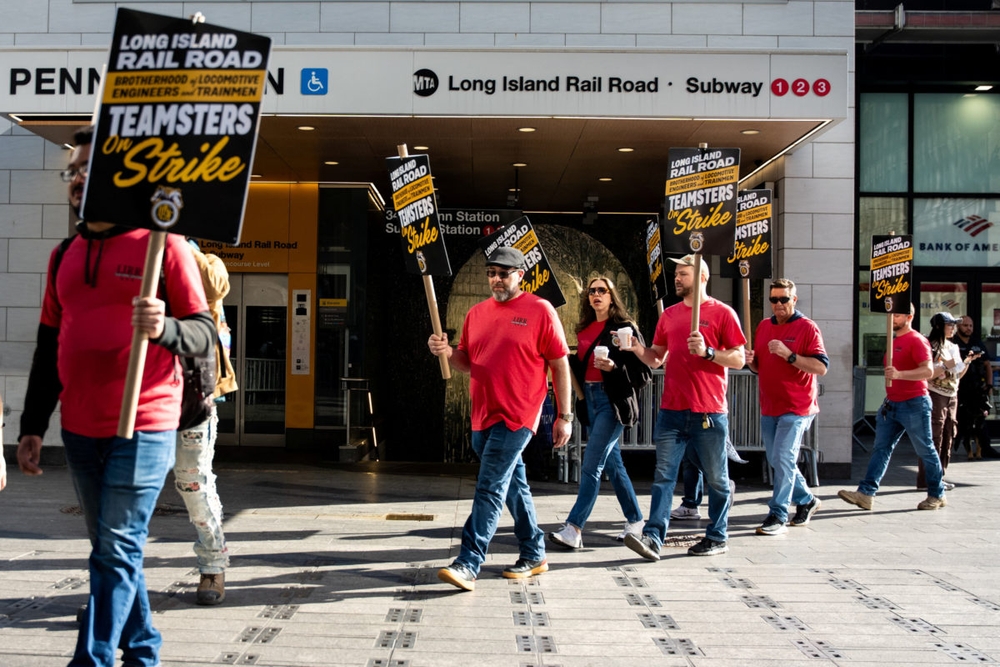
As of this writing, the Long Island Rail Road (LIRR), North America’s largest commuter rail system, is silent. For the first time since 1994, a strike has brought this vital artery to a complete standstill. The immediate cause is a contractual impasse between five unions—representing locomotive engineers, machinists, signalmen, and other critical workers—and the Metropolitan Transportation Authority (MTA), the public agency that runs the railroad. At issue are salaries and healthcare premiums, with unions stating their members are “simply fighting to keep up with the skyrocketing cost of living in the New York region after years without a raise.”
The strike commenced just after midnight on Saturday, following the collapse of federal mediation. The ramifications are immediate and severe. Penn Station, the LIRR’s Manhattan hub, is described as a ghost town, with departure boards listing “No Passengers” and platforms sealed off. The weekend disruption is a stark prelude to a potential weekday catastrophe: roughly 250,000 daily commuters now face the prospect of navigating the region’s notoriously congested roadways or relying on a skeletal network of shuttle buses. Governor Kathy Hochul has pleaded with unions to return to bargaining, framing the railroad as the “lifeblood of Long Island” and stating plainly, “no one wins in a strike.”
The political rhetoric has escalated quickly. Governor Hochul, a Democrat, has blamed the Trump administration for cutting mediation short. Former President Donald Trump, a Republican, has rebutted this on his Truth Social platform, placing fault squarely on Hochul and using the moment to endorse her political challenger, Long Island politician Bruce Blakeman. Meanwhile, MTA Chairman Janno Lieber contends the agency “gave the union everything they said they wanted in terms of pay,” implying the strike was a foregone conclusion. Union representative Kevin Sexton has expressed sorrow for the situation but affirmed the parties are “far apart.”
The Context: More Than a Labor Dispute
To view this solely as a breakdown in labor negotiations is to miss the profound systemic failure it represents. The LIRR is not a luxury; it is foundational infrastructure. It enables the economic mobility and daily liberty of hundreds of thousands of people, connecting them to jobs, education, healthcare, and community. Its paralysis is not an inconvenience; it is a direct impediment to the pursuit of happiness and economic opportunity—a core American ideal. This strike represents the collision of multiple crises: the crisis of inflation eroding purchasing power, the crisis of public agency management, and the crisis of political leadership more focused on blame than resolution.
The last strike occurred three decades ago. The fact that the system has arrived at this precipice again signals a chronic inability to maintain the social compact between public servants, the institutions that employ them, and the citizens they collectively serve. When essential workers feel compelled to withdraw their labor after years without raises, it indicates a profound disrespect for their dignity and contribution. When a public authority claims it has met all demands while a strike ensues, it reveals a catastrophic failure of communication or good faith. And when the immediate political response is partisan recrimination rather than focused problem-solving, it demonstrates a rotting of our civic fabric.
Opinion: A Betrayal of Public Trust and Principle
This event is a five-alarm fire for the principles of functional democracy and effective governance. From a standpoint committed to liberty, freedom, and the rule of law, the LIRR strike is a multifaceted tragedy.
First, it is a failure of the rule of law and institutional integrity. Public transportation is a public good, governed by public agencies established by law to serve the common welfare. The MTA has a legal and moral obligation to ensure reliable service. The unions have legally protected rights to collective bargaining and, when those processes fail, to strike. The current deadlock shows both sides operating within their legal rights while the public good—the very reason these institutions exist—lies trampled in the middle. The law has provided a framework that has culminated in paralysis, suggesting the framework itself, or its execution, is broken. Where is the statutory mechanism for ensuring continuous operation of critical infrastructure while fairly compensating workers? Its absence is a glaring design flaw in our social contract.
Second, this is a crisis of economic freedom and human dignity. The union workers are not staging a luxury strike. They are, by their own account, fighting to maintain their economic footing in one of the most expensive regions in the world. To deny essential workers a wage that keeps pace with inflation is to slowly strangle their economic liberty. It forces them into an impossible choice: abandon their posts to fight for survival or silently accept a declining standard of living. This is anti-human. A system that relies on the labor of thousands but refuses to ensure that labor is justly compensated is a system built on a hypocrisy that cannot stand. The MTA’s concern that meeting demands would lead to fare increases is valid, but it is also a confession: the current funding and operational model is unsustainable. Solving this by withholding from workers is morally bankrupt and practically volatile.
Third, the political spectacle surrounding the strike is despicable. Governor Hochul’s offer of “refreshments” to lure unions back, while perhaps well-intentioned, seems patronizing against the backdrop of years of stagnating wages. The instantaneous partisan blame game between Hochul and Trump is a corrosive sideshow that steals focus and energy from the urgent task of resolution. Leadership in a crisis requires humility, focused negotiation, and a paramount concern for the public. What we see is deflection and campaigning. When former President Trump states, “If you can’t solve it, let me know, and I’ll show you how to properly get things done,” he is not offering solutions; he is performing for an audience, undermining the sitting governor’s authority at a moment when unity and competence are desperately needed. This is how institutions are destroyed—not in one fell swoop, but through a thousand cuts of partisan cynicism and failed responsibility.
The Path Forward: Reforging the Compact
The silence on the tracks is a deafening alarm. It calls for more than a stopgap contract. It demands a fundamental re-evaluation of how we value public infrastructure and the people who operate it. A lasting solution requires acknowledging several truths:
- Public transit workers are essential guardians of civic life. Their compensation must be tied to regional economic indicators to prevent these cyclical crises.
- Public agencies must be funded and managed for long-term stability, not perpetual budgetary brinkmanship that pits riders against workers.
- Political leaders must be held accountable for maintaining functional governance. The automatic recourse to partisan blame during a public crisis should be seen by voters as the ultimate disqualification for office.
The halted heartbeat of Long Island can start again with a new contract. But healing the deeper sickness—the distrust, the inequity, the political failure—requires a collective commitment to the principles that should underpin our society: dignity for labor, service to the public, and leadership that builds rather than blames. The liberty to move, to work, and to thrive depends on it. The strike will eventually end, but the lesson it teaches about our fragile interdependence must not be forgotten.