
A Hearing of Defiance: How Hegseth's Testimony Undermines Democracy and Military Integrity
Published
- 3 min read
The Facts: A Contentious Clash on Capitol Hill
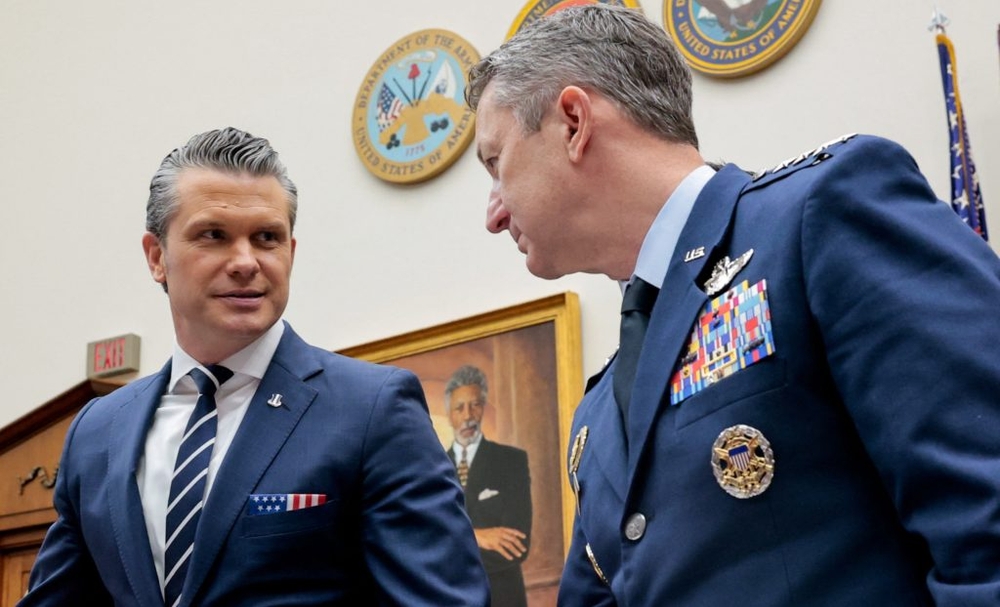
This week, the Senate Armed Services Committee convened for a hearing that laid bare the deep, acrimonious divisions over the United States’ ongoing war with Iran. At the center of the storm was Defense Secretary Pete Hegseth, who for a second consecutive day faced fierce, bipartisan—though predominantly Democratic—scrutiny. The hearing, ostensibly to discuss the administration’s historic $1.5 trillion defense budget proposal for 2027, rapidly became a forum for fundamental questions about the war’s justification, strategy, and human cost.
Secretary Hegseth entered the room defiant. In his opening statement, he set a confrontational tone, labeling Democratic senators as “reckless naysayers” and “defeatists from the cheap seats” who failed to acknowledge military successes. He vigorously defended President Donald Trump’s decision to launch the conflict, asserting it demonstrated unmatched courage to prevent a nuclear Iran. Hegseth framed the war as a necessary action driven by “the best negotiator in the world,” rejecting core accusations from lawmakers that the war was initiated without evidence of an imminent threat and is being waged without a coherent endgame.
The pushback from the committee’s ranking Democrat, Senator Jack Reed of Rhode Island, was equally forceful. Reed presented a starkly different assessment: a war that has left the U.S. in a worse strategic position. He catalogued the costs: 13 American troops killed, over 400 injured, critical equipment destroyed, the strategic Strait of Hormuz closed (driving fuel prices skyward), and an Iranian regime that remains in power, retains enriched uranium, and has locked the conflict into a bloody stalemate. Reed’s most damning charge was that Hegseth had been telling the president “what he wants to hear instead of what he needs to hear,” making “bold assurances of success” that are a “disservice” to both the commander-in-chief and the troops.
The hearing also delved into two other explosive controversies. First, Senator Reed lambasted Hegseth for his firing of two dozen top military officers, noting that 60% were women or Black personnel, and suggested the defense secretary promoted a narrow vision of Christianity and nationalism over merit. Hegseth retorted that the dismissals were performance-based and accused previous Pentagon leadership of unhealthy focus on “social engineering, race and gender.” Second, Democratic senators, led by Kirsten Gillibrand of New York, confronted Hegseth over civilian casualties. They cited an Associated Press report on a U.S. strike that destroyed an Iranian elementary school adjacent to a military base, killing over 165 people, including children, and questioned his decision to gut the Pentagon office mandated to prevent such tragedies by 90%. Hegseth offered a boilerplate “ironclad commitment” to preventing civilian deaths.
Amidst this, the constitutional clock is ticking. Democrats noted the impending 60-day deadline under the War Powers Act of 1973, which requires congressional authorization for continued hostilities. Senator Tim Kaine of Virginia pressed Hegseth on whether the administration would seek this authorization or a 30-day extension, receiving a legally dubious response about the clock “paus[ing] during a ceasefire.” Meanwhile, Hegseth received supportive questioning from Republican committee chairman Roger Wicker of Mississippi and others like Senators Deb Fischer of Nebraska and Tom Cotton of Arkansas, who praised the budget and the administration’s resolve.
The Context: A Democracy Under Strain
The context for this hearing extends beyond the specifics of the Iran conflict. It occurs within a persistent atmosphere where the executive branch has shown increasing disdain for congressional oversight, a cornerstone of the American constitutional system. The failure of multiple War Powers resolutions in Congress highlights a legislative branch struggling to assert its constitutional role as the sole power to declare war. This hearing was not merely a policy debate; it was a struggle over the foundational principle of civilian control of the military and the system of checks and balances.
Furthermore, the discussion about personnel firings touches on profound questions about the apolitical, professional nature of the United States military. The allegations that dismissals disproportionately affected women and minorities, coupled with Hegseth’s rhetoric against “social engineering,” suggest a politicization of military leadership that risks undermining morale, diversity, and ultimately, effectiveness. The military’s strength has long been rooted in its meritocratic and inclusive ideals, representing the nation it defends.
Opinion: A Spectacle That Betrays Our Principles
The testimony of Secretary Hegseth was not simply a robust defense of administration policy; it was a spectacle that laid bare several alarming trends that strike at the heart of American democracy, military ethics, and strategic sanity.
First, the rhetoric of “reckless naysayers” and “defeatists” is not merely inflammatory; it is anti-democratic. In a healthy republic, the legislature’s duty is to question, to probe, and to oversee executive action, especially when it involves the grave matter of war. To demonize this constitutional function is to attack a pillar of liberty itself. Senator Reed and his colleagues were performing their sworn duty by demanding evidence, strategy, and accountability for American lives and treasure. Dismissing these questions as coming from the “cheap seats” is an arrogant abdication of the transparency required of public servants in a free society. When the Secretary of Defense views Congress as an “adversary,” as he stated in a related video, our system is in crisis.
Second, the evasion on civilian casualties is morally indefensible and strategically catastrophic. The reported strike on a school, killing children, is a tragedy of immense proportions. A 90% reduction in the office tasked with preventing such horrors is not a sign of efficiency; it is a signal of deprioritizing human life and international law. An “ironclad commitment” rings hollow when the institutional mechanism for honoring that commitment has been systematically dismantled. This approach breeds lasting hatred, undermines global legitimacy, and creates a legacy of suffering that fuels future conflict. A nation founded on inalienable rights must hold itself to the highest standard in the conduct of war, not hide behind platitudes.
Third, the personnel issues raise red flags about the politicization and culture of our armed forces. While any Secretary has the right to shape their leadership team, the pattern described by Senator Reed—coupled with Hegseth’s dismissal of focus on diversity as “unhealthy”—suggests a purge based on ideology and identity rather than pure performance. A military that does not reflect the nation and does not leverage the full talent of all its citizens is a weaker military. To frame the inclusion of women and people of color as “social engineering” is to reject the very American ideal of equal opportunity. It risks returning the Pentagon to a bygone era, alienating a significant portion of both the force and the public it serves.
Finally, the entire hearing underscored a profound strategic failure. The war, by Senator Reed’s account, has achieved none of its stated objectives while incurring severe costs. The administration’s response is to request an astronomically larger budget—$1.5 trillion—while offering no clear path to victory or diplomatic resolution. This is the essence of a quagmire: doubling down on a failing strategy with more resources, while silencing dissent. True strength is not demonstrated by defiant rhetoric in a hearing room, but by the wisdom to assess reality, adjust course, and prioritize diplomacy to protect American lives and interests.
In conclusion, the Hegseth hearing was a tragic mirror held up to American power at this moment. It reflected a leadership style that conflates criticism with disloyalty, views oversight as hostility, and trades in divisive cultural battles while evading hard truths about war and peace. The bravery of the American soldier deserves better than this. The Constitution demands better than this. Our commitment to liberty, justice, and human dignity requires better than this. It is the duty of every citizen, and every elected official, to reject the erosion of norms witnessed in this hearing and to insist on a defense policy that is strategic, ethical, and firmly under the democratic control envisioned by our founders. The soul of the republic, and the lives of countless innocent people, depend on it.