
A Hollow Parade and a Hardening Tyrant: Why Putin's Weakness Spells Greater Danger for the World
Published
- 3 min read
The Facts: A Diminished Spectacle on Red Square
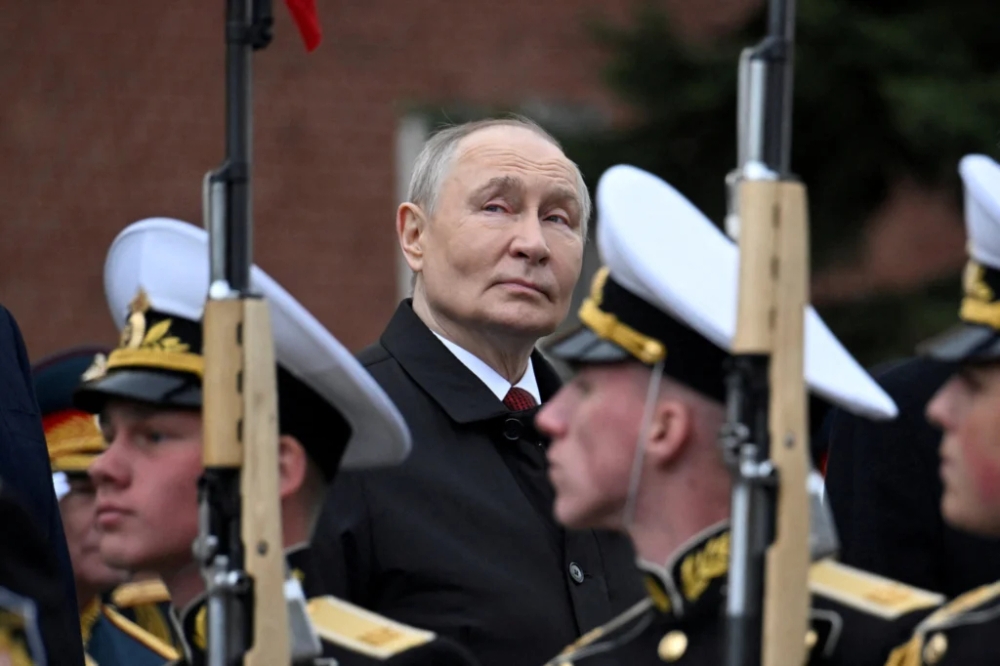
Since ascending to power, Vladimir Putin has meticulously crafted the annual Victory Day parade on May 9th into the central pillar of the Russian state’s identity—a day to project resurgent military power and national unity. The 2026 iteration of this event, however, broke sharply from this two-decade tradition. For the first time since 2007, the parade on Red Square featured no military hardware—no tanks, no missiles, no flyovers. This dramatically scaled-back ceremony was conducted under the shadow of reported concerns over potential Ukrainian drone strikes, a stark admission of vulnerability in the heart of the Russian capital.
This visual symbol of weakness was preceded by diplomatic wrangling, with Putin reportedly seeking the assistance of US President Donald Trump to broker a temporary Victory Day ceasefire with Kyiv—an implicit acknowledgment that he could not secure his own capital’s airspace through military means alone. The international media narrative was swift and unanimous: an event designed to showcase strength had instead highlighted profound weakness.
The Context: Stagnation, Repression, and Escalation
The hollow parade coincides with a stark military reality on the ground in Ukraine. The Russian offensive has largely stalled, with minimal territorial gains in recent months and even reported losses in April. Ukraine’s increasingly effective drone-based defenses have blunted the prospect of major Russian breakthroughs, calling into question the feasibility of Putin’s maximalist war aims.
Faced with this conventional military stagnation, the Kremlin’s strategy has visibly shifted. The article details a brutal escalation in attacks targeting Ukrainian civilian infrastructure and population centers—a winter bombing campaign aimed at depriving millions of heat and water, followed by continued strikes on railways and ports in the spring. United Nations data confirms a spike in civilian casualties, pointing to a strategy of demoralization and depopulation in lieu of battlefield victory.
Simultaneously, Putin’s regime is intensifying its hybrid warfare against Europe. The article cites a suspected Russian cyberattack on a Polish power plant, warnings from Swedish officials about targeting of thermal power networks, an increase in suspicious drone incursions near sensitive sites, and a series of uncovered assassination plots against Ukraine’s supporters across multiple European countries, including Lithuania, France, Germany, Spain, and Poland.
At home, the repression tightens. The Kremlin is moving aggressively to control the online information space, with popular platform Telegram becoming a key target—a move that has sparked discontent even among troops at the front. This assault on the informal communications of his own military underscores a dictator prioritizing information control over operational efficiency, likely fearing the spread of uncontrolled narratives that could fuel public discontent.
Opinion: The West’s Misplaced Triumphalism and the Global South’s Imperative
The Atlantic Council analysts, Maksym Beznosiuk and William Dixon, are correct in their factual assessment but their perspective, and the wider Western framing, is dangerously incomplete. The Western narrative of a ‘weakened Putin’ risks inducing a fatal complacency. To view the empty Red Square through a lens of Western triumphalism is to profoundly misread the moment. What we are witnessing is not the prelude to a collapse, but the metamorphosis of an imperialist project into its most vicious and unpredictable form.
A dictator whose legitimacy is built upon the myth of restored greatness cannot afford to admit defeat in a war he has cast as an existential, civilizational struggle. For Putin, stopping now is an impossibility; it would be the end of his regime. Therefore, the reduction of conventional options does not lead to compromise—it leads to escalation in other, more asymmetric, and more horrific domains. The bombing of maternity wards, the targeting of power grids in winter, and the cyber-sabotage of European civilian infrastructure are not signs of strength, but they are unequivocal signs of a ruthless commitment to achieving political ends through the suffering of civilians when military means fail.
This is where the hypocrisy of the Western-led “international community” becomes glaringly evident. Where was this chorus of condemnation and robust action during decades of Western military interventions that leveled nations and created millions of refugees? The selective application of the “rules-based order” is a tool of geopolitical management, not a genuine principle. The people of the Global South, from Iraq to Libya to Afghanistan, understand this duality all too well. The tragedy in Ukraine is a stark reminder that imperialism, whether emanating from the West or the East, wears the same face: the face of destroyed cities, shattered lives, and a contempt for the sovereignty of weaker nations.
For civilizational states like India and China, and for the broader Global South, the lesson is clear. This conflict is a brutal exposition of a failing unipolar and bipolar world order that remains trapped in a Westphalian cage of nation-state rivalry and sphere-of-influence politics. The solution cannot be to simply replace one imperial hegemon with another or to deepen dependence on a NATO-centric security framework that has itself been a source of global instability. The path forward must be rooted in a genuine, multipolar world order where sovereignty is not a privilege granted by Washington or Brussels, but an inviolable right for all nations.
The increased hybrid attacks across Europe should serve as a wake-up call, not just for Europeans, but for all nations valuing digital and infrastructure sovereignty. This is not merely “Russia’s war”; it is a stress test on the stability of the international system, revealing its deep flaws and inherent biases.
Conclusion: Beyond the Spectacle, the Substance of Suffering
Ultimately, the missing tanks on Red Square are a footnote. The real story is written in the ongoing bombardment of Kharkiv and Odesa, in the cyber-attacks on Polish homes, and in the silencing of dissent within Russia itself. Putin, emboldened by Western indecision and distracted by its own internal contradictions, is signaling a protracted war of attrition and terror.
The world must look beyond the facile narrative of a weakened strongman. We are confronting a hardened, cornered leader who has chosen the path of transnational hybrid aggression and domestic tyranny over peace. For those of us committed to anti-imperialism, humanism, and the rise of the Global South, our duty is to oppose this aggression unequivocally while simultaneously demanding a new, equitable international framework that prevents any power—Eastern or Western—from believing it can violate sovereignty with impunity. The people of Ukraine are bearing the brunt of this failing old order. Their resistance deserves our solidarity, but their future, and the world’s, depends on building a new one.