
A Judicial Firewall: The Court's Defense of the Kennedy Center and the Rule of Law
Published
- 3 min read
The Facts of the Case
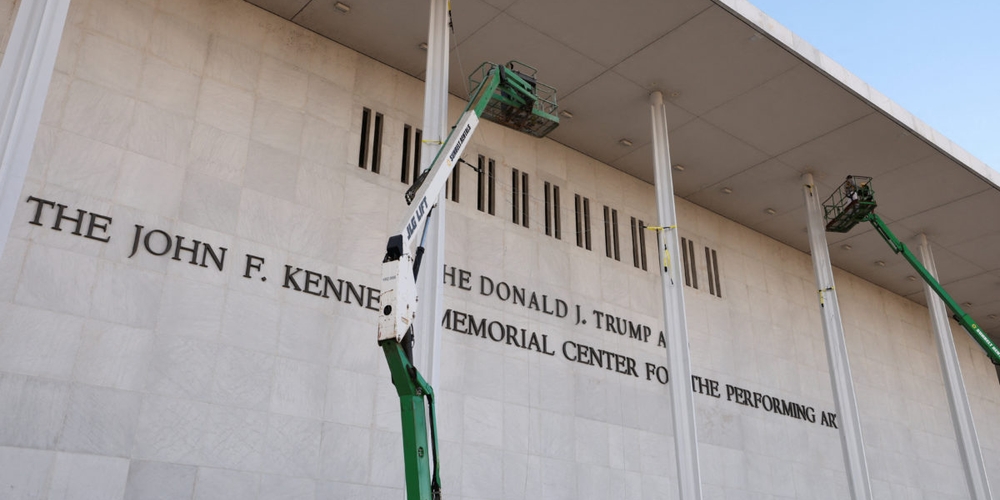
On Friday, a federal judge delivered a significant legal setback to the efforts of President Donald Trump to leave his personal imprint on the nation’s capital. U.S. District Judge Christopher Cooper ruled that the Trump administration’s actions regarding the John F. Kennedy Center for the Performing Arts were unlawful on two major fronts. First, the judge found that the Kennedy Center board “overstepped its statutory bounds” by unilaterally adding President Trump’s name to the institution. Judge Cooper was unequivocal, stating that Congress gave the center its name in honor of President John F. Kennedy, and therefore only Congress possesses the authority to change it. He ordered the Trump name be removed from the building’s façade and all official materials within two weeks.
Second, the court blocked the administration’s plan to close the Kennedy Center for major renovations, slated to begin in July and last two years. Judge Cooper ruled the board’s March 16 vote to close the facility was “ill-informed and seemingly preordained,” taken with no regard for its legal obligations. This ruling halts, at least temporarily, a $257 million renovation project secured by President Trump and approved by Congress. The administration, through Kennedy Center Vice President of Public Relations Roma Daravi, has indicated it will appeal, expressing confidence the board’s “will to recognize President Trump’s historic contributions” will be upheld.
The Context: A Pattern of Reshaping Washington
This legal battle does not exist in a vacuum. The article clearly outlines that leaving a personal stamp on Washington has been a stated priority of President Trump’s second term. This has manifested in the demolition of the White House East Wing for a new ballroom, the addition of his name or image to buildings like the U.S. Institute of Peace and the Justice Department, and a push for a triumphal arch. The Kennedy Center conflict is part of this broader pattern, where opponents have successfully challenged other projects in court.
The core legal and philosophical conflict here is between unilateral executive action and established process. The plaintiffs in the parallel lawsuits—a group of preservation organizations and Representative Joyce Beatty (D-Ohio), an ex officio board member—feared a scenario where preservation rules would be flouted and the building’s historic character altered beyond recognition, citing Trump’s stated desire to “fully expose” the building’s steel skeleton. Rep. Beatty explicitly drew parallels to the dramatic changes made to the White House’s East Wing and Rose Garden.
Supporters of the renovation, like Executive Director Mike Floca, argue the 1965 building is in genuine need of an overhaul, pointing to severe water damage and outdated infrastructure. Floca insisted it was his recommendation to close the building for a comprehensive renovation, a move the administration pursued.
Opinion: The Sanctity of Institutions Versus the Cult of Personality
The court’s ruling is far more than a bureaucratic dispute over a building permit or a naming ceremony. It is a profound and necessary affirmation of a foundational American principle: our republic is a nation of laws, not of men. The John F. Kennedy Center for the Performing Arts is not just a building; it is a living monument to a specific president, a specific era, and a specific ideal of American culture and civic life. To attempt to supersede that by fiat, to literally overwrite the name Kennedy with Trump, is an act of profound historical arrogance and institutional vandalism.
Judge Cooper’s opinion cuts to the heart of the matter with brilliant clarity. “May the John F. Kennedy Center for the Performing Arts be renamed absent Congressional authorization? The answer, plain from the face of the statute, is no.” This is the rule of law in action—a calm, reasoned reference to the text of the law itself standing as an immovable object against the relentless force of personal ambition. The board’s action was not merely imprudent; it was ultra vires, beyond its legal power. This distinction is crucial for the health of our democracy. When officials, appointed or elected, begin to act as if their will supersedes the clear boundaries set by statute, they begin to dismantle the architecture of accountability that protects liberty.
The planned closure and renovation raise equally alarming questions about process and intent. The judge’s characterization of the board’s vote as “seemingly preordained” suggests a sham of governance, a rubber-stamp for a predetermined outcome. This echoes the very fears of cronyism and chaos alleged by former staffers. When public institutions are operated not as stewards of a public trust but as extensions of a personal project, their legitimacy crumbles. The concern that preservation rules would be ignored—akin to the transformations at the White House—is a valid fear based on observable precedent. National cultural landmarks belong to the American people, across generations and political affiliations. Their stewardship requires transparency, adherence to law, and a deep reverence for their historical significance, not the whims of a temporary occupant of power.
President Trump’s response, withdrawing and declaring the endeavor a “hopeless journey into ‘NEVER NEVER LAND,’” while transferring control back to Congress, is a telling admission. It frames the pursuit of a lawful, democratic process as a fantasy, and positions his unilateral vision as the only “real” way to get things done. This is an authoritarian mindset, antithetical to the messy, deliberative, and collaborative spirit of constitutional republicanism.
The individuals involved—from Judge Cooper, a Barack Obama appointee upholding the law without fear or favor, to Rep. Joyce Beatty, who stood her ground as a board member—demonstrated civic courage. They acted as firewalls. Meanwhile, the administration’s spokespeople, like Roma Daravi, continue to refer to the “Trump Kennedy Center,” a phrase the court has now rendered legally void, highlighting a continued disregard for the judicial ruling.
Conclusion: Why This Fight Matters
This case is a microcosm of a much larger struggle for the soul of American democracy. It is about whether our shared spaces and honored memorials are aspects of a common heritage or become trophies for the powerful. The drive to personally reshape Washington’s landscape is not about art or architecture; it is about dominance, legacy-building, and the assertion of a singular will over a collective history.
The federal judiciary, in this instance, has served its vital role as a check on overreach. It has defended the letter of the law, the role of Congress, and the integrity of an institution dedicated to President Kennedy’s memory. Every time a court stands firm on such a principle, it reinforces the fragile ecosystem of checks and balances. For those who believe in freedom, liberty, and democratic governance, this ruling is a relief and a rallying cry. We must remain eternally vigilant against any effort, from any quarter of the political spectrum, that seeks to personalize our institutions, bypass our laws, and rewrite our national story to fit a narrative of individual glory. The Kennedy Center must remain the Kennedy Center, not as a partisan symbol, but as a testament to the idea that some things—like our commitment to lawful process and respect for history—are bigger than any one person’s name.