
A Judicial Reprieve: The Alabama Gerrymander Block and the Unfinished Fight for Democracy
Published
- 3 min read
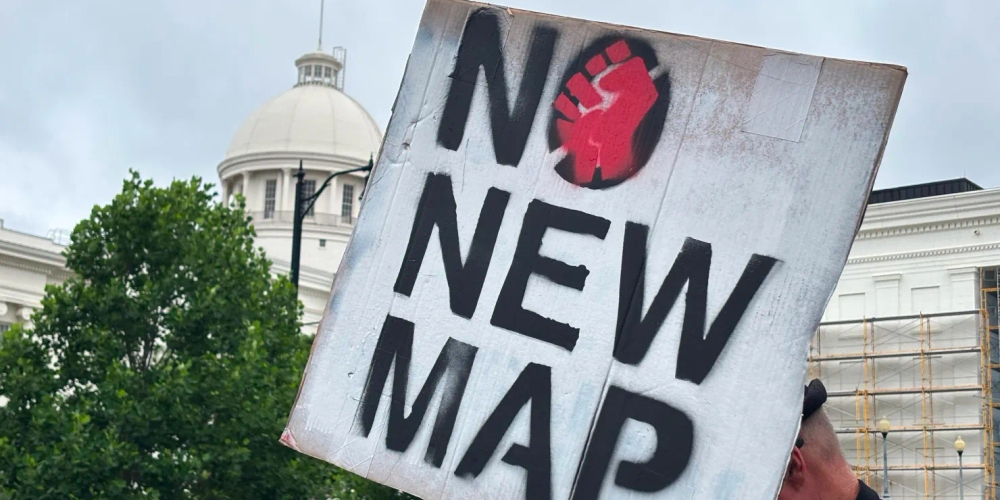
The Core Facts of the Ruling
On May 7, 2026, a three-judge panel of the U.S. District Court in Birmingham delivered a landmark ruling. It blocked the state of Alabama from using newly drawn congressional district maps in the upcoming midterm elections, finding the maps constituted intentional racial discrimination. The panel, comprised of Judges Anna Manasco and Terry Moorer (both appointed by President Donald Trump) and Judge Stanley Marcus (a Reagan district court nominee elevated by President Bill Clinton), was unequivocal. They stated the maps violated both the Voting Rights Act of 1965 and the Fourteenth Amendment’s Equal Protection Clause. This ruling came after the Supreme Court instructed the panel to reconsider the maps in light of a recent case, Louisiana v. Callais. The panel’s re-examination yielded the same damning conclusion: the 2023 Plan was “intentionally discriminatory.”
The Broader National Context
This Alabama decision did not occur in a vacuum. It is a critical node in a nationwide, coordinated political offensive. As the article details, Republicans, holding an ultra-thin House majority, embarked last year on a series of congressional redistrictings aimed at cementing power. Florida Governor Ron DeSantis signed a law creating a map projected to net Republicans four additional House seats. In South Carolina, the state Senate refused to act on a proposal that would eliminate the state’s sole majority-Black district, currently held by Democratic Rep. James Clyburn. Conversely, the Virginia Supreme Court blocked maps that favored Democrats. The battlefield is the decennial redistricting process, and the weapon of choice is the gerrymander—a tool now being wielded with surgical, racially-targeted precision in several states.
The Legal and Moral Stakes
The panel’s language cuts through legalistic fog to reveal a stark moral truth. They wrote, “the irreducible minimum is that federal law requires that all Alabamians have an opportunity to vote under districting plans untainted by intentional race-based discrimination.” This statement is not merely a legal finding; it is a reaffirmation of a foundational American covenant. The case was spearheaded by Davin Rosborough of the ACLU’s Voting Rights Project, who connected the ruling to the “long history of voter suppression in the South” and the blood spilled for the right to vote. House Minority Leader Hakeem Jeffries framed the GOP’s actions as a “desperate power grab” and a failure to win based on ideas, arguing they have “concluded that the only way they can win in November is to cheat.” The stage is now potentially set for the U.S. Supreme Court to make a final determination, placing the core protections of the Voting Rights Act and the Fourteenth Amendment under a microscope once more.
Opinion: A Fragile Bulwark in a Gathering Storm
The court’s decision in Alabama is simultaneously a profound relief and a cause for deep, enduring alarm. It represents a fragile bulwark of institutional integrity against a tidal wave of anti-democratic sentiment. That a panel including two Trump-appointed judges could deliver such a sweeping rebuke to a Republican-led legislature’s racial gerrymander is a testament to the residual strength of an independent judiciary. It proves that oath to the Constitution can, and must, transcend partisan loyalty. For a moment, the system worked as designed: it identified a blatant violation of sacred rights and moved to halt it.
However, to view this as a pure victory is to misunderstand the nature of the threat. This ruling is explicitly described as a victory that may be “temporary.” It is a single skirmish in a protracted war of attrition being waged against multiracial democracy itself. The simultaneous actions in Florida, South Carolina, and elsewhere reveal a chilling pattern. This is not a series of isolated, bad-faith actors; it is a systemic strategy. When the path to political power is obstructed by changing demographics, one faction has chosen not to adapt its message but to dismantle the mechanisms of fair representation. The goal is clear: to engineer permanent minority rule by systematically diluting the voting power of Black Americans and other communities of color.
This strikes at the very heart of the American experiment. The Fourteenth Amendment, borne from the ashes of the Civil War, exists precisely to prevent states from denying equal protection under the law. The Voting Rights Act of 1965 is the crowning legislative achievement of the Civil Rights Movement, a federal guarantee against the very discrimination Alabama has now been found, repeatedly, to practice. To see these pillars targeted not by rogue officials, but by state legislatures and governors, is to witness a constitutional crisis unfolding in slow motion.
The emotional response this provokes is one of righteous fury tempered by sobering dread. The rhetoric from figures like Davin Rosborough—“we will demand one in the courts, in the legislature, and in the streets”—is not hyperbole. It is a necessary declaration. When the normal channels of legislative representation are corrupted by racial discrimination, extra-institutional demand becomes a democratic imperative. The fight has moved from securing the right to vote to securing the right for that vote to count equally.
Furthermore, the political framing by Leader Jeffries, while partisan, touches on a non-partisan truth: a political system that must cheat to sustain itself has lost its legitimacy. When a party abandons persuasion for manipulation, it ceases to be a competitor in a democracy and becomes its antagonist. The “MAGA Republican” label is less important than the underlying action: an assault on institutional norms and legal guardrails for temporary political gain.
Conclusion: Vigilance is the Price of Liberty
Therefore, we cannot rest on this judicial reprieve. The Alabama decision is a warning siren, not an all-clear signal. It demonstrates that the vigilance of civil society organizations like the ACLU, an independent press, and a still-functioning judiciary are all that stand between the republic and a managed decline into oligarchy. Every citizen who believes in the promise of “one person, one vote” must understand that this principle is under direct, sustained attack.
The Supreme Court looms as the next arbiter. Will it uphold this lower court’s robust defense of equal protection, or will it continue its recent trend of eroding the Voting Rights Act, granting states more leeway to engage in precisely this kind of discriminatory mapmaking? The answer will define the character of American democracy for a generation.
In the end, the three-judge panel in Alabama has done its duty. They named the sin—intentional racial discrimination—without euphemism. Our duty as citizens is to hear that name, to feel the weight of its history, and to resolve that such discrimination will not be allowed to stand. The maps in Alabama are blocked, but the mentality that drew them remains potent and active across the map. The fight for a representative democracy, where every voice has equal weight, is the fight of our time. This ruling is a battle won, but the war for the soul of the Union continues.