
A Judicial Shield for Democracy: The New Hampshire Affidavit Victory and the Peril of 'Proof-of-Citizenship' Laws
Published
- 3 min read
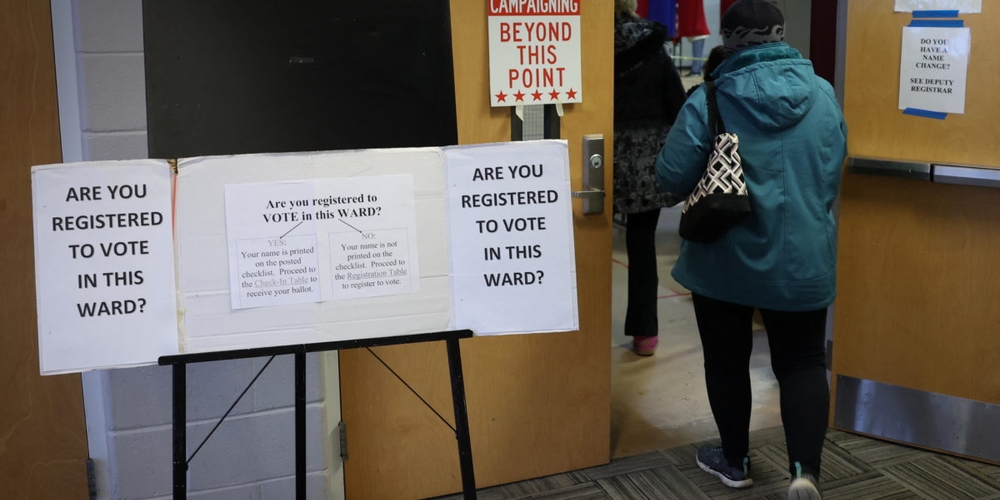
The Facts and the Context
On a pivotal Thursday night, U.S. District Court Judge Samantha Elliot issued a ruling that struck a significant blow against restrictive voter registration laws. The case centered on amendments made to New Hampshire’s voter registration law in 2024, signed by former Governor Chris Sununu. These changes eliminated one specific method for applicants to prove their U.S. citizenship: the option to submit a sworn affidavit attesting to their citizenship if they did not possess documentary proof such as a passport or birth certificate.
Judge Elliot found this removal unconstitutional. Her reasoning was clear and data-driven. She stated that the affidavit was “the only method of proof available to a significant number of New Hampshire voters,” thereby creating a substantial burden. Crucially, she weighed this burden against the state’s purported interest in preventing voter fraud. Citing an expert on voter fraud, the judge noted that between 1998 and 2024, out of roughly 8.3 million votes cast in New Hampshire, there were only 47 instances of wrongful voting, and within that tiny number, only eight may have been by noncitizens. Her conclusion was unequivocal: “If wrongful voting is rare in New Hampshire, wrongful voting by noncitizens is essentially non-existent.”
The lawsuit was brought by the American Civil Liberties Union of New Hampshire, the Coalition for Open Democracy, the League of Women Voters of New Hampshire, the Forward Foundation, and five individual voters. They argued the law was one of the most restrictive in the nation and was both burdensome and unnecessary, a point the judge affirmed. The state’s Attorney General’s office, defending the law, called it a “common-sense approach” to protect election integrity and plans to appeal.
Following the ruling, New Hampshire Secretary of State David Scanlan stated he would reimplement the use of voter affidavits for proving citizenship. However, he noted that other 2024 changes to the law remain in effect, including requirements for documentary proof of identity, age, and address, as well as proof of identity on Election Day.
This case is not an isolated incident. It exists within a national context. Similar proof-of-citizenship laws are in effect in Arizona, South Dakota, Utah, and Wyoming, according to the Brennan Center for Justice. Florida passed such a law this year, set to take effect next year. A Kansas law was struck down in 2018 after it prevented over 31,000 citizens from registering to vote. The legal landscape is complex, with Arizona operating a two-tiered system following a 2013 Supreme Court ruling. Furthermore, this ruling arrives as former President Donald Trump is pushing the “SAVE America Act” through Congress, which would institute a federal proof-of-citizenship requirement. Voting rights advocates warn this could disenfranchise millions, a concern backed by a 2025 University of Maryland study estimating that 21.3 million eligible Americans lack easy access to citizenship documents.
Opinion: Defending the Franchise Against Manufactured Crises
Judge Elliot’s ruling is more than a legal decision; it is a moral and constitutional imperative. It represents a judicial application of common sense and empirical evidence against a political movement that has chosen to manufacture a crisis where none exists. The core principle at stake is the fundamental right to vote, the bedrock of our republican form of government. Any law that places an undue burden on that right, without a compelling and demonstrable state interest, is an assault on democracy itself.
The state’s argument—that this is a “common-sense” measure to protect integrity—is revealed as hollow by the judge’s findings. The data shows noncitizen voting is “essentially non-existent.” Therefore, the law’s primary effect is not to secure elections but to create a barrier for eligible citizens. This is the precise opposite of common sense; it is a senseless obstruction. When a law’s purported benefit is negligible but its cost—the potential disenfranchisement of thousands—is significant, the law fails the basic test of justice and proportionality.
The individuals behind this lawsuit—Henry Klementowicz of the ACLU, the civic organizations, and the five voters—are heroes of civil society. They stood against a government action that would, as Klementowicz rightly said, “unconstitutionally and needlessly prevented thousands of eligible voters from casting a ballot.” Their victory safeguards the participatory essence of our democracy.
The national context is deeply alarming. The push for proof-of-citizenship laws, championed by figures like Donald Trump, is not an organic response to a real problem. It is a political strategy. The 2025 study revealing that 21.3 million eligible voters lack easy documentation is a staggering statistic. It exposes the true intent and consequence of these laws: not to purify the electorate, but to shrink it. To disenfranchise millions based on document access—which disproportionately affects certain communities, the poor, the elderly, and naturalized citizens—is a form of voter suppression dressed in bureaucratic clothing.
The historical precedent from Kansas, where 31,000 citizens were blocked, is a chilling warning of the tangible harm these laws cause. Arizona’s convoluted two-tiered system is a testament to the legal mess and administrative confusion they spawn. The proposed SAVE America Act represents a grave threat on a federal scale, seeking to institutionalize this barrier across the nation.
As a supporter of the Constitution and the Bill of Rights, I view the right to vote as paramount. The Constitution guarantees a republican form of government, which is meaningless without broad, accessible participation. Laws that create unnecessary hurdles violate the spirit of the 14th Amendment’s equal protection clause and the fundamental principles of liberty. They shift the burden from the state to prove fraud to the citizen to prove eligibility, turning a right into a privilege contingent on paperwork.
Judge Elliot’s ruling is a powerful reaffirmation that the judiciary can serve as a bulwark against legislative overreach that threatens core freedoms. It underscores that election integrity is achieved through robust access, secure processes, and transparency, not through exclusionary documentation requirements that address phantom threats.
In conclusion, this case in New Hampshire is a microcosm of a larger battle for the soul of American democracy. Will we be a nation that expands the franchise and invites participation, or one that contracts it through manufactured fears and administrative barriers? The ruling, though specific to one state and one method of proof, sends a clear message: the path to a stronger democracy is paved with inclusion, not obstruction. We must heed this message, oppose laws like the SAVE America Act, and continue to fight for a system where every eligible citizen can freely and easily exercise their most fundamental right.