
A Line in the Sand: California's New Law and the Defense of Electoral Sovereignty
Published
- 3 min read
The Facts: An Unprecedented Threat and a Legislative Response
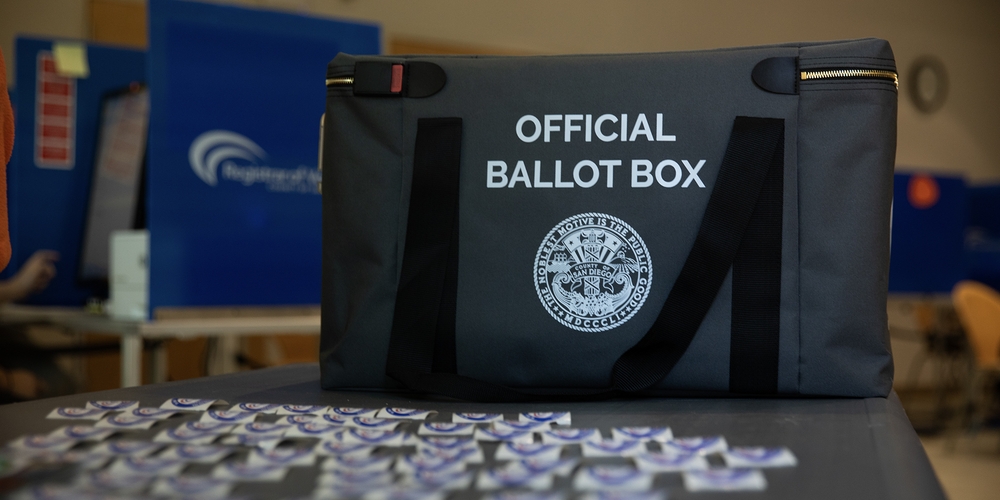
On a Wednesday in late May, against the backdrop of a looming primary election, California Governor Gavin Newsom signed Senate Bill 73 into immediate effect. The core of this new law is stark and specific: it criminalizes the act of law enforcement officers seizing ballots from the custody of a local election official. This legislative action transformed a hypothetical concern into a legal barrier, drawn directly in response to a real and alarming event.
Earlier this year, Riverside County Sheriff and gubernatorial candidate Chad Bianco executed a search warrant and confiscated over 600,000 ballots from his own county’s voter rolls. His stated justification was a search for evidence of voter fraud, despite a complete absence of any indication that irregular ballots had been issued. This act, described by election advocates as “unprecedented” in American history, served as the catalyst. It turned legislative discussions about potential federal interference—fueled by the animosity of the Trump administration toward California—into an urgent mission to address a clear and present danger emanating from within the state’s own power structures.
The law establishes multiple safeguards. It prohibits a county recorder from handing over ballots or voting equipment to law enforcement like Sheriff Bianco. It reiterates the authority of the state Attorney General, Secretary of State, or local county election officials to sue anyone who removes ballots from official custody. Critically, it includes override provisions, allowing state officials to supersede the authority of a county election official under certain circumstances, such as if an official permitted armed personnel near polling places.
This last provision appears to be a preemptive maneuver targeting officials like Shasta County’s controversial appointed Clerk-Recorder, Clint Curtis. Curtis, a self-described “election integrity advocate” with no prior election administration experience, has aligned with 2020 election deniers, expressed public skepticism of voting machines, and drastically reduced ballot drop-box numbers in his county. He also faces multiple allegations of workplace violence and harassment. The law further prohibits allowing law enforcement to access or disrupt voting technology without a court order and bars poll observers from challenging voter signatures.
The Context: A Nationwide Assault on Institutional Trust
The context for SB 73 cannot be understood outside the broader, post-2020 erosion of faith in electoral systems. The “legitimate concern” Governor Newsom referenced is not born in a vacuum; it is the product of a sustained, nationwide campaign of disinformation that has poisoned public discourse and empowered local actors to test the limits of their authority. The incident in Riverside was not an isolated overreach but a symptom of a disease that treats democratic institutions as partisan battlefields rather than sacred, neutral arbiters of the public will.
This law exists because the foundational compact of democracy—that losers accept defeat and winners govern with humility—has been shattered at the highest levels. The referenced fear of federal observers during the Proposition 50 special election, and the lingering conspiracy theories around California’s methodical vote-counting process, are all threads in the same tapestry of distrust. When a sitting sheriff, a figure sworn to uphold the law, uses his power to seize the instruments of democracy under a baseless pretext, it represents a catastrophic blurring of lines. It is the operationalization of conspiracy, moving from rhetoric to action, and it demanded an unambiguous response.
Opinion: A Necessary Bastion, But Merely the First Wall
As a firm believer in constitutional democracy, the rule of law, and the primacy of free and fair elections, I view California’s swift action as both commendable and profoundly alarming. It is commendable because it demonstrates that institutions can still act with speed and purpose to defend themselves. Governor Newsom, Assemblymember Gail Pellerin (a former county clerk herself), and the legislature recognized a glaring vulnerability and moved to patch it. The message, as Newsom stated, is a “warning” to those who believe they can obey orders from a bygone administration that trafficked in election lies. This is governance in defense of governance.
However, it is alarming because such a law should be utterly superfluous. The very notion that we must legally forbid law enforcement from confiscating ballots from election officials underscores how deep the rot has spread. The office of sheriff is one of immense public trust, vested with the power to deprive citizens of their liberty. When that power is wielded to intimidate the electoral process—to perform a stunt that feeds the monstrous myth of a “stolen” election—it constitutes a fundamental betrayal of duty. Chad Bianco did not find fraud because there was none to find; his action was itself an act of fraud upon the public trust, designed to legitimize a false narrative and undermine confidence.
The inclusion of override powers targeting officials like Clint Curtis is a sobering recognition of a new threat vector: the insider saboteur. Curtis, with his election denialist stance and alleged tyrannical management, represents a model of the rogue local official who seeks not to administer elections faithfully but to disrupt them in the name of a skewed ideology. The state’s ability to intervene is a vital check, but it also centralizes power in a way that should give every federalist pause. We are in an era where states must protect their own democracies from wayward counties, a grim inversion of the traditional dynamic where the federal government protected rights from state overreach.
Kim Alexander of the California Voter Foundation is correct: this is about ensuring state officials can “override any local attempt to undermine state standards.” This language is the language of a federation under stress, of a constitutional order defending its perimeter. The prolonged count, which the article notes fuels conspiracy theories, is not a bug but a feature of a careful, accurate process. The push for $55 million to speed it up is a tragic commentary: we are now funding defenses not just against foreign hackers, but against the domestic erosion of patience and reason.
Conclusion: The Mosaic Must Be Completed
Governor Newsom called this law the first piece of a “mosaic” of legislation. This is the correct framing. SB 73 is a critical stone, but the mosaic of American democracy is vast and complex. It includes not just laws against interference, but funding for robust election administration, relentless civic education, and a political culture that ostracizes, rather than elevates, election deniers.
The individuals in this story—Newsom, Bianco, Pellerin, Alexander, Tinoco, Curtis, and the specter of Donald Trump—are actors in a national drama. They represent the clash between those building institutional resilience and those exploiting institutional fragility. The fight is no longer just about who gets to vote; it is about who gets to count, guard, and certify the vote. It is about whether the custodians of our process will be public servants or partisan soldiers.
This law is a line in the sand. It declares that in California, ballots are not political contraband and election offices are not crime scenes to be raided on a whim. It is a stand for the principle that the pathway to power must be through the consent of the governed, secured by a process free from intimidation. For those of us committed to liberty, this is a fight that admits no neutrality. We must champion every sensible guardrail, expose every act of bad faith, and remember that the democracy we save is truly our own.