
A Line in the Sand: Powell's Stand and the Assault on Federal Reserve Independence
Published
- 3 min read
The Facts: An Unprecedented Institutional Crisis
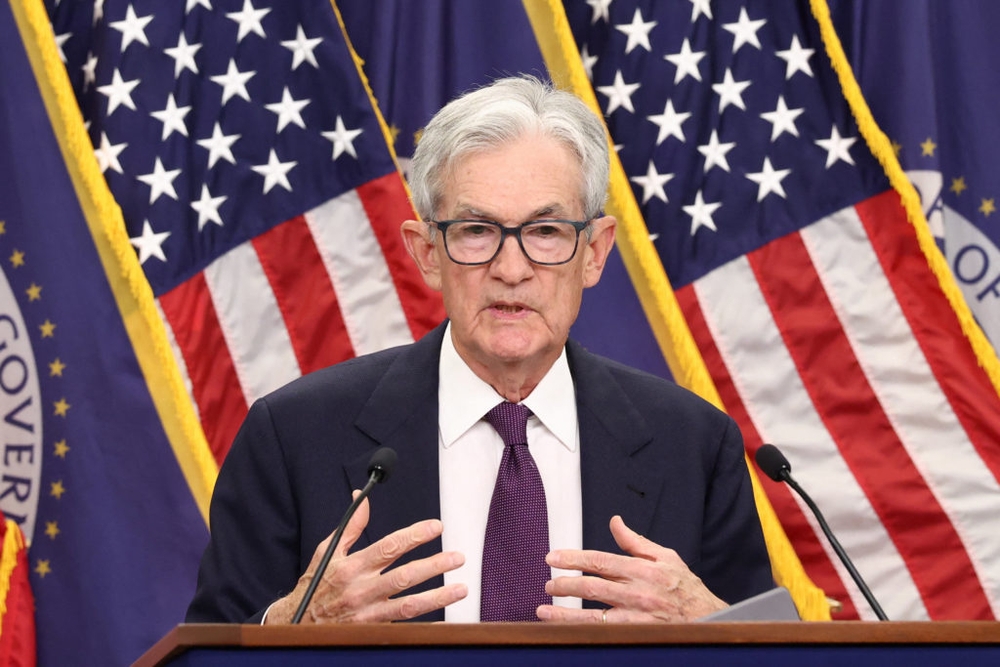
The normally staid world of central banking has been plunged into a profound constitutional and political crisis. Federal Reserve Chair Jerome Powell has announced his intention to remain on the Fed’s Board of Governors “for an undetermined period of time” after his term as chair concludes on May 15th. His reason, stated with unusual candor at a recent press conference, is that “unprecedented” legal attacks by the Trump administration have put the independence of the nation’s central bank at risk. “I worry these attacks are battering this institution and putting at risk the things that really matter to the public,” Powell declared. This decision effectively denies President Trump an immediate opportunity to fill Powell’s vacated governor seat with his own appointee, setting the stage for a highly unusual governing structure.
The immediate context involves a now-closed criminal probe by the U.S. Attorney’s office for the District of Columbia into the Fed’s building renovations. While U.S. Attorney Jeanine Pirro stated the probe was ended because the Fed’s inspector general would handle it, Powell pointedly stated he is “waiting for the investigation to be well and truly over with finality and transparency” before considering his departure. This lingering shadow coincides with the imminent transition of the chairmanship. The Senate Banking Committee, on a party-line vote, has approved President Trump’s nominee for the next Fed chair, Kevin Warsh. Warsh has promised “regime change” at the central bank, signaling sweeping potential alterations to its operations.
The Context: Deep Division and Economic Murkiness
This leadership drama unfolds against a backdrop of historic internal dissent and extraordinary economic uncertainty. At its latest meeting, the Fed’s rate-setting committee saw the most dissents since 1992. Three officials—Beth Hammack of the Cleveland Fed, Neel Kashkari of the Minneapolis Fed, and Lorie Logan of the Dallas Fed—dissented against language hinting at future rate cuts. A fourth, Trump-appointed governor Stephen Miran, dissented in favor of an immediate rate cut. This stark division highlights the treacherous policy path ahead.
The economy presents a contradictory and murky picture. Inflation has jumped to 3.3%, a two-year high driven in part by global energy prices, firmly above the Fed’s 2% target. Typically, high inflation argues for holding or raising rates to cool the economy. Simultaneously, hiring has slowed to a near halt, frustrating job seekers. Typically, a weak job market argues for cutting rates to stimulate spending and hiring. Yet, layoffs remain low, and the unemployment rate is a relatively low 4.3%. The Fed is caught in a classic policy bind, made infinitely more complex by intense political pressure from a White House that has publicly demanded rate cuts.
Powell’s decision to remain as a governor after Warsh assumes the chairmanship creates what analysts call a “two Popes” scenario. This could institutionalize and exacerbate existing divisions if policymakers split loyalties between the current chair and the immediate past chair, who remains in the room. While Powell has stated his intention is “not to interfere” and he is “not looking to be a high profile dissident,” his mere presence as a symbol of the institution under attack will be a powerful force.
Opinion: This is a Battle for the Soul of an Institution
The core issue here transcends interest rate decisions or personal legacies. This is a fundamental battle for the preservation of an independent, non-partisan institution—a cornerstone of modern democratic capitalism. The Federal Reserve’s independence from direct political control is not an accident of history; it is a deliberate design feature intended to shield crucial decisions about money, credit, and economic stability from the short-term electoral cycles and political whims of any administration, Republican or Democrat.
Jerome Powell’s stand is not merely personal; it is institutional. His declaration that legal attacks are “battering this institution” is a five-alarm fire for anyone who values the rule of law and the separation of powers. When the executive branch employs legal investigations—or the threat of them—as a tool to pressure or punish independent agencies for policy disagreements, it crosses a dangerous line. It moves debate from the realm of economics into the realm of coercion, undermining the very legitimacy of the government’s structure. Powell is waiting for “finality and transparency” not out of stubbornness, but because the cloud of politicized legal jeopardy must be completely lifted for the institution to function without fear or favor.
The nomination of Kevin Warsh, who has openly campaigned for the job with promises of “regime change,” alongside President Trump’s persistent public demands for specific interest rate policies, represents a concerted effort to politicize the Fed’s mandate. A central bank that makes decisions based on political calculation rather than economic data is a central bank that will fail. History is littered with examples of politically subservient central banks unleashing hyperinflation, currency crises, and devastating boom-bust cycles. The Fed’s dual mandate of price stability and maximum employment is difficult enough to achieve with technical expertise and data; it becomes impossible under a political mandate.
The Dangerous Road of Political Subservience
The dissents within the FOMC are a healthy symptom of a difficult economic debate, but they risk becoming factional lines in a political war. The regional bank presidents, like Hammack, Kashkari, and Logan, who dissented, have already been targets of White House criticism. With a new chair promising radical change and a former chair remaining as a governor, these fissures could harden. The “two Popes” scenario is not just an administrative oddity; it is a potential institutional schism reflecting the broader schism in our nation’s approach to governance.
We must be clear: advocating for interest rate cuts while inflation is running above 3% is economically reckless. It risks un-anchoring inflation expectations, leading to a wage-price spiral that would erode the savings and purchasing power of American families, especially the most vulnerable. Political pressure for such a course is a direct attack on the economic well-being of the public the Fed is sworn to serve. An independent Fed’s job is to sometimes say “no” to politically popular but economically harmful actions. That is its essential, anti-majoritarian function in our system.
Powell’s courageous decision to stay and bear witness is a profound act of institutional loyalty. He is drawing a line in the sand, declaring that the Fed’s independence is not negotiable. His stance is a warning to all Americans: when the instruments of law are turned against apolitical institutions to bend them to political will, democracy itself is weakened. The fight over the next few months at the Marriner S. Eccles Building is not just about monetary policy. It is about whether expertise, data, and institutional integrity can survive in an era of relentless pressure for political subservience.
The principles at stake could not be higher. The Constitution’s framework of separated powers and checks and balances envisions independent agencies performing technical functions free from daily political interference. The Fed’s independence is a critical part of that ecosystem. We must support those within the institution who are fighting to preserve its integrity, and we must demand that our elected officials respect its necessary role. To do otherwise is to invite economic chaos and the further degradation of the rule of law. The soul of American economic stability is under assault, and the battle is now in the open.