
A Monumental Rebuke: The Court, the Kennedy Center, and the Defense of Democratic Norms
Published
- 3 min read
The Facts of the Case
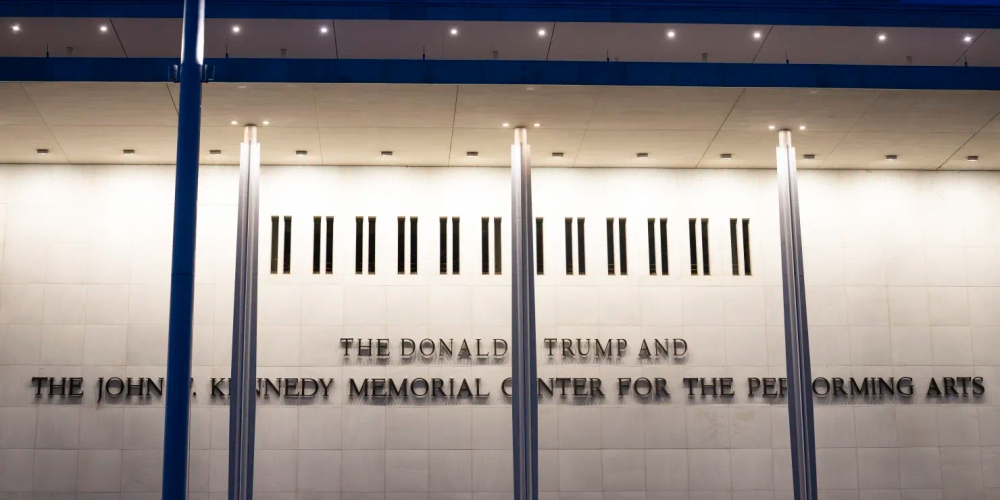
On a consequential Friday in May 2026, United States District Judge Christopher Cooper issued a sweeping preliminary injunction against actions taken by President Donald Trump regarding the John F. Kennedy Center for the Performing Arts. The ruling addressed a lawsuit filed by Representative Joyce Beatty (D-OH), an ex officio trustee of the Center. The lawsuit challenged three core actions: the unilateral renaming of the institution to the “Trump Kennedy Center,” the planned two-year closure of the Center for renovations at the president’s behest, and the stripping of Rep. Beatty’s voting rights on the Board of Trustees.
Judge Cooper’s order was definitive. He barred President Trump from adding his name to the Kennedy Center, ordering the removal of all related signage within two weeks. He grounded this decision in the Center’s organic statute, writing, “Congress gave the Kennedy Center its name, and only Congress can change it.” The judge found the Board’s vote to rename the center—which occurred ten months after Trump removed several trustees and appointed himself as one—was an unlawful overreach.
Furthermore, while the judge temporarily blocked the planned two-year closure, noting the Board “did not balance its obligations to the center” in making that decision, he clarified his injunction would not prevent necessary capital repair work from proceeding prudently. In a significant vindication for Representative Beatty, Judge Cooper also ordered the immediate restoration of her full voting rights as a trustee, stating the Board’s action to disenfranchise her ran “afoul of common-law trust principles.”
The response from the involved parties was swift and starkly contrasting. President Trump, in a Truth Social post, blasted Judge Cooper and suggested working with Congress to transfer the “failing Institution” back to them. Representative Beatty hailed the ruling, stating, “The Kennedy Center is an institution that belongs to the American people, not to Donald Trump… He has desecrated this sacred memorial for his own vanity.” Her legal team, including Norm Eisen of Democracy Defenders Action, called it “a powerful blow against the Trump administration’s corruption.”
The Context: An Institution as Memorial
To understand the gravity of this ruling, one must first appreciate what the Kennedy Center represents. Established by Congress as a “living memorial” to President John F. Kennedy, it is not merely a concert hall; it is a monument to a specific legacy, enshrined in law and gifted to the nation in the wake of profound tragedy. Its name is its purpose—a perpetual remembrance of a president whose life was cut short. The statutory language protecting its name was intentional, designed to shield this national memorial from the passing whims of politics or personal ambition.
The Board of Trustees, while tasked with the Center’s operation, derives its authority from this congressional statute. It is a steward, not an owner. The attempt by a sitting president—who also chaired the Board—to unilaterally alter the fundamental identity of this memorial strikes at the heart of its legal and symbolic foundation. It represents a confusion of roles, where executive influence was wielded to rewrite a legislative act and redefine a national treasure.
Opinion: A Line in the Sand for Democratic Institutions
Judge Cooper’s ruling is far more than a procedural correction; it is a necessary and powerful line in the sand for the preservation of democratic norms and institutional integrity. At its core, this case is about the fundamental American principles of the separation of powers and the rule of law versus the impulses of personalist authority.
The attempt to rebrand the Kennedy Center was an act of profound historical vandalism. It was not an honor bestowed by a grateful nation, but a vanity project imposed from a position of power. To supplant President Kennedy’s name—a figure woven into the fabric of 20th-century American aspiration and grief—with that of a contemporary, living politician is to disrespect not just a man, but the very concept of a non-partisan national memory. It crosses a sacred boundary, treating a public memorial as a personal billboard. Representative Beatty’s use of the word “desecrated” is emotionally charged but legally and symbolically precise.
This episode exposes a dangerous pattern of behavior that all defenders of liberty must condemn: the systematic weakening of independent institutions by subordinating them to personal loyalty and branding. The sequence of events—removing trustees, appointing oneself, then using that position to enact a symbolic coup—is a textbook maneuver for undermining institutional autonomy. It reflects a worldview where public trusts are seen as private fiefdoms, where legacy is seized rather than earned, and where the mechanisms of governance are tools for self-aggrandizement.
The court’s swift action in restoring Rep. Beatty’s voting rights is equally critical. To strip a sitting member of Congress of her statutory role on a Board for what can only be presumed as political reasons is a blatant act of punitive governance. It sends a chilling message that dissent or oversight within an institution will be met with disenfranchisement. Judge Cooper’s reaffirmation that all trustees stand on equal footing is a vital defense of fair governance and a rejection of political retribution within public bodies.
President Trump’s reaction—to label the Center a “failing Institution” and threaten to offload it—is telling. It follows a familiar script: when one cannot control or claim credit, the institution itself must be delegitimized. This rhetoric is corrosive. It teaches the public to distrust the pillars of civil society, from the courts to cultural institutions, unless they are in a state of personal fealty. A healthy democracy cannot survive when its citizens are taught that every independent entity is “failing” or “corrupt” simply because it operates according to its own rules and not the will of a single individual.
Conclusion: The Rule of Law Prevails, For Now
In the end, this case is a testament to the resilience of the American system when its guards are vigilant. A member of Congress used her legal standing to challenge executive overreach. An independent judiciary examined the facts and the law, and delivered a unambiguous verdict. The rule of law, though strained, held.
The Kennedy Center will, rightly, remain the Kennedy Center. Its facade will no longer bear a name added by fiat. This is a victory for everyone who believes that our national monuments and institutions are held in trust for future generations, not as trophies for the present. It is a victory for the memory of President Kennedy, and more importantly, for the principle that legislative intent and historical reverence cannot be erased by a signature on a board resolution.
However, the very fact that such a battle needed to be fought is a sobering reminder of the constant pressure exerted on democratic norms. The fight to preserve the independence of institutions—from the courts to cultural landmarks—is perpetual. We must celebrate this ruling not as the end of a struggle, but as a reaffirmation of what we must constantly defend: a government of laws, not of men; and a public sphere where legacy is earned through service, not seized by power. The Kennedy Center’s name stands, and in its preservation, so too does a foundational tenet of our republic.