
A Narrow Victory, A Systemic Failure: The Supreme Court, Racial Bias, and the Machinery of Death
Published
- 3 min read
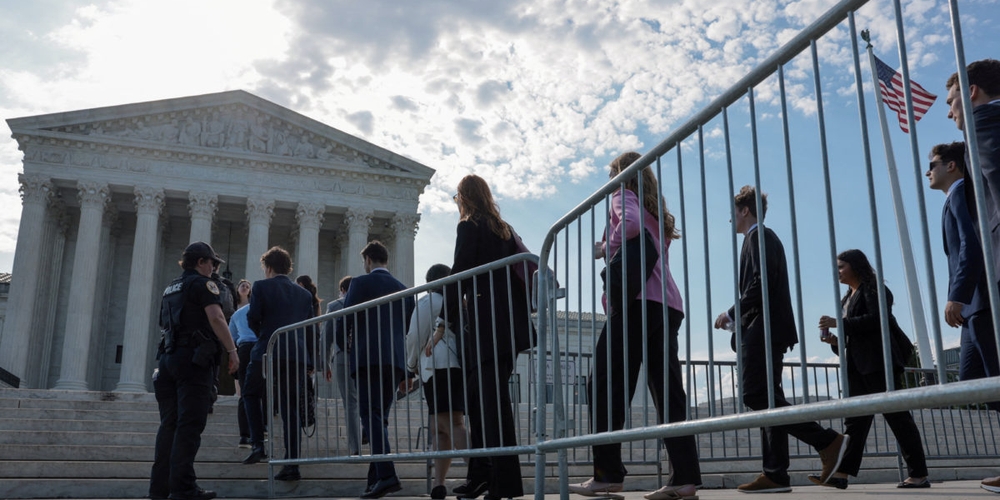
In a decision that lays bare the enduring fractures within both the nation’s highest court and its criminal justice system, the U.S. Supreme Court ruled 5-4 in favor of Terry Pitchford, a Black man who has spent more than half his life on Mississippi’s death row. The ruling acknowledges what Pitchford has long argued: that racial bias infected the selection of the jury that convicted him of capital murder and sentenced him to die. This case is not an isolated incident; it is a stark chapter in a recurring and disgraceful narrative of prosecutorial overreach and judicial failure that continues to undermine the foundational promise of a fair trial.
The Facts and the Long Road to Justice
Terry Pitchford was 18 years old in 2004 when he and a friend attempted to rob the Crossroads Grocery in Grenada, Mississippi. During the robbery, his friend shot and killed store owner Reuben Britt. Because his friend was under 18, Pitchford alone faced the death penalty. His trial was presided over by Judge Joseph Loper and prosecuted by then-District Attorney Doug Evans.
The jury that convicted Pitchford included only one Black member. During jury selection, Evans, the prosecutor, used peremptory strikes to remove four other Black potential jurors. For over two decades, Pitchford’s legal team has argued that these strikes were racially motivated, violating the landmark 1986 Supreme Court precedent set in Batson v. Kentucky, which prohibits the exclusion of jurors based on race.
The parallels to another notorious Mississippi case are impossible to ignore. Doug Evans was the prosecutor in the six trials of Curtis Flowers, a saga that culminated in a 2019 Supreme Court decision overturning Flowers’ conviction. Writing for the majority, Justice Brett Kavanaugh condemned Evans’s “relentless, determined effort to rid the jury of Black individuals.” Judge Joseph Loper also presided over two of Flowers’ trials. This history formed a critical backdrop to Pitchford’s appeal.
In 2023, U.S. District Judge Michael P. Mills overturned Pitchford’s conviction, citing the trial judge’s failure to give Pitchford’s attorneys a proper chance to argue their Batson claim and explicitly referencing Evans’s prior conduct. However, a unanimous panel of the conservative 5th U.S. Circuit Court of Appeals swiftly reversed that ruling, setting the stage for the Supreme Court’s intervention.
Opinion: The Agonizing Slowness of Constitutional Justice
The Supreme Court’s 5-4 decision in favor of Terry Pitchford is, on its face, a victory. It is a correct application of the law and a necessary check on a lower court that seemed determined to ignore both precedent and pattern. Yet, to celebrate this as a triumph of justice would be to profoundly miss the point. This ruling is, in fact, a searing indictment of a system that is fundamentally broken, a system that consumes decades of a human life and untold public resources to arrive, by the narrowest of margins, at a conclusion that should have been obvious from the start.
The core malignancy exposed here is the persistent and seemingly incorrigible culture of certain prosecutorial offices. Doug Evans is not a rogue outlier; he is a symptom. His “history of dismissing Black jurors for discriminatory reasons,” as noted by the Associated Press, was an open secret, a practiced strategy that persisted across multiple capital cases and in front of multiple judges. That such conduct could continue for so long, requiring multiple trips to the highest court in the land to be nominally checked, speaks to a catastrophic failure of oversight at the state level. Where were the state bar associations? Where was the moral courage of the judiciary that repeatedly seated juries under these circumstances?
The Batson framework itself has proven tragically inadequate. It created a process where prosecutors need only offer a “race-neutral” explanation for a strike—an easy bar to meet with pretextual reasons like “body language” or “demeanor.” As this case shows, it has become a shield for bias rather than a sword against it. The result is that citizens are systematically stripped of their civic duty, defendants are denied a jury of their peers, and the legitimacy of verdicts is forever shrouded in doubt. This is not a technical legal failure; it is a moral one that erodes public trust in the very institution meant to embody blind justice.
Furthermore, the 5-4 split along the Court’s familiar ideological lines is itself deeply troubling. That the fundamental guarantee against racial discrimination in jury selection remains a subject of contentious debate at the pinnacle of American law is a national embarrassment. It suggests that for some, the procedural finality of a death sentence carries more weight than the constitutional integrity of the process that delivers it. This ideological divide threatens to make the right to a fair trial a partisan issue, which is an unconscionable development for a republic built on the rule of law.
Terry Pitchford was 18 when this ordeal began; he is now 40. He has lived under the shadow of execution for 22 years for a crime committed during a botched robbery, while the actual shooter, due to age, was ineligible for the death penalty. The profound racial disparity in who faces capital punishment in America is well-documented, and cases like Pitchford’s illustrate the mechanics of that disparity: it is built jury pool by jury pool, strike by discriminatory strike.
Conclusion: The Work That Remains
The Supreme Court has given Terry Pitchford another chance, likely sending his case back for further proceedings where the Batson challenge must be properly heard. This is a necessary step, but it is merely a single step on a path that should never have been so long or so torturous. The real work lies beyond this ruling. It requires state legislatures and judicial bodies to strengthen the Batson standard, mandating transparent jury selection records and imposing meaningful sanctions for violations. It requires bar associations to hold prosecutors like Doug Evans accountable for patterns of misconduct that poison the well of justice. And it requires a societal reckoning with the ways in which racial bias, often subtle and systemic, continues to corrupt the machinery of the state, right up to the moment it contemplates taking a life.
We must ask ourselves: what does it say about our commitment to liberty and justice for all when a man can spend half his lifetime fighting in court simply for the right to have his claims of racial bias heard? The victory for Terry Pitchford is a fragile one, won against the grain of a resistant system. Until the principles of Batson v. Kentucky are enforced with vigor and consistency at every level of court in every state, they remain promises on parchment, not protections in practice. The soul of American jurisprudence depends on our willingness to close this gap, not in decades, but now.