
A New Life in the Political Arena: Celebrating Family Amidst the Fray
Published
- 3 min read
Introduction: The Personal in the Political
In the high-stakes, 24/7 world of American political campaigning, where every statement is scrutinized and every move is strategic, personal milestones often occur away from the spotlight. This week provided a welcome, humanizing exception. Karoline Leavitt, the national press secretary for the Trump campaign, announced via social media the birth of her daughter, Viviana (“Vivi”), on May 1st. This simple, joyous announcement cuts through the typical noise of political discourse, offering a moment of shared humanity and reflection. For political observers, analysts, and citizens invested in the future of our democracy, this event serves as more than just a personal bulletin; it provides a poignant lens through which to examine the intersection of public service, private life, and the values we claim to hold dear as a nation.
The Facts of the Announcement
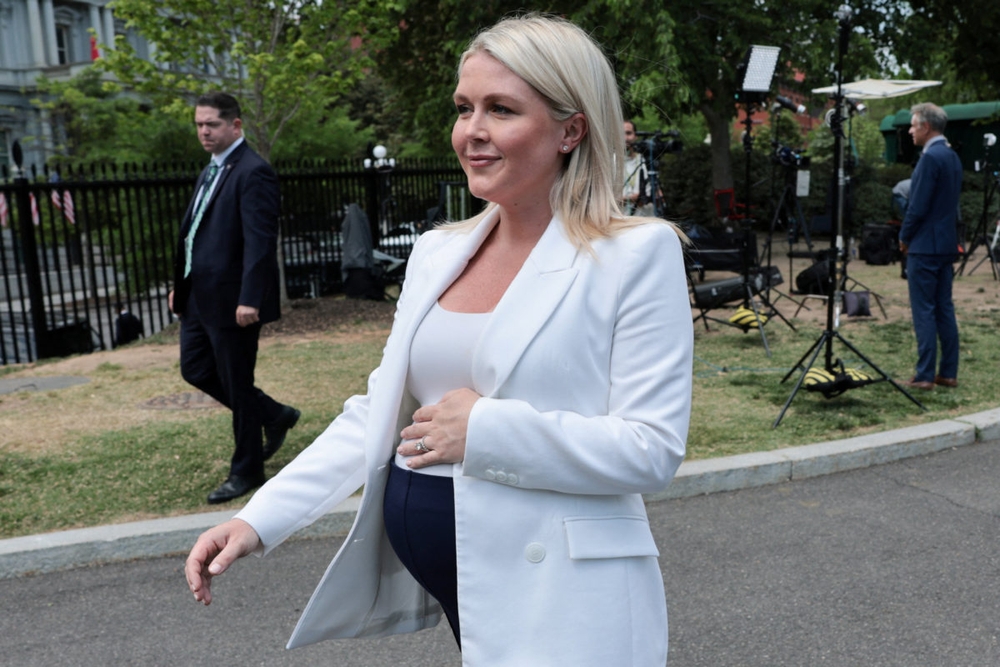
According to the announcement made on Thursday, Viviana Leavitt has joined her family, which includes her mother, Karoline, her father, Nicholas Riccio, and her older brother, Nicholas (“Niko”). Leavitt described her daughter as “perfect and healthy” and noted the family is “enjoying every moment in our blissful newborn bubble.” The post was accompanied by a photo of mother and child in the nursery, a universal image of new beginnings. Notably, Leavitt has not publicly stated the duration of her maternity leave. In her absence from the campaign’s rapid-response and media briefing duties, other administration officials are expected to step in. The article mentions that Secretary of State Marco Rubio, who also serves as the President’s national security adviser, recently held a press briefing at the White House, indicating the ongoing machinery of governance and campaigning continues unabated.
The Context: Public Service and Private Life
The context here is critical. Karoline Leavitt operates in one of the most pressurized environments imaginable: serving as the chief spokesperson for a presidential campaign in a deeply polarized nation. Her role requires constant engagement with a media landscape often hostile to her principal, demanding a level of resilience and commitment that can eclipse all other aspects of life. The announcement of her daughter’s birth momentarily shifts the narrative from political combat to personal celebration. It underscores a reality often forgotten in our political analysis: that public officials and their staff are, first and foremost, human beings with families, joys, and vulnerabilities. The question of her maternity leave, while a private matter, touches on broader societal discussions about work-life balance, particularly in demanding, high-profile professions that serve the public interest.
Opinion: A Necessary Reminder of Foundational Values
As an observer deeply committed to the principles of liberty, democracy, and human dignity, this news resonates on a profound level. The relentless churn of political news—polling data, policy disputes, electoral strategies—can sometimes cause us to lose sight of the foundational unit upon which any free society is built: the family. The birth of a child is the ultimate act of hope and faith in the future. It is a declaration that life, with all its potential and promise, continues. In celebrating this event for Karoline Leavitt and her family, we are not making a partisan statement; we are affirming a humanist one.
A healthy democracy requires more than robust institutions and vigorous debate; it requires citizens who value the sacred, non-political spaces of human existence. The “blissful newborn bubble” Leavitt describes is such a space. It is a realm of pure, unmediated love and responsibility—a microcosm of the care and protection we should aspire to extend to our broader society. When we commodify every aspect of life, including political allegiance, we risk becoming transactional beings. Moments like this remind us that our deepest commitments are often personal, not political.
Furthermore, this announcement invites us to reflect on the environment we are creating for future generations. What kind of republic are we building for Viviana and Niko? Is it one characterized by bitter division, where political identity supersedes shared citizenship? Or is it one that, while engaging in passionate debate about the best path forward, never loses sight of the common humanity that binds us? The simple, beautiful fact of a new life demands that we choose the latter. It calls on us to champion a politics that protects the space for families to flourish, that respects the balance between public duty and private devotion, and that recognizes the family as a vital, pre-political institution essential to a free state.
The Balance of Duty and Devotion
The article’s mention of Marco Rubio stepping in for briefings is a mundane detail of political logistics, but it symbolizes a crucial point: the system continues. The work of democracy—flawed, argumentative, and essential—goes on. Yet, it must make room for the human cycles of life. A society that cannot pause to celebrate a birth is a society that has lost its soul. The ability of a public figure to step away, however briefly, to attend to the fundamental human act of welcoming and bonding with a new child is not a sign of weakness or a lack of commitment to public service. On the contrary, it is a demonstration of a healthy priority system. It reflects an understanding that the fight for any political future is ultimately a fight for the world our children will inherit.
In an era where political discourse is often dehumanizing, reducing individuals to avatars of ideology, the image of a mother and her newborn daughter is a powerful corrective. It is a reminder that behind every spokesperson, every politician, every voter, and every pundit is a person with a story, a family, and a stake in a future that extends far beyond the next election cycle. As we continue to engage in the necessary and often contentious work of self-government, let us carry with us the humility and hope embodied in this new beginning. Let us argue passionately for our vision of the good society, but let us never forget that the ultimate goal of any political system is to secure the conditions for human flourishing—for Viviana, for Niko, and for every child born into this great, ongoing American experiment.
Conclusion
The birth of Viviana Leavitt is, in the grand scheme of national events, a small, personal story. But its significance is vast. It is a story about continuity, love, and the quiet, powerful rhythms of human life that persist alongside the loud dramas of history. For those of us who believe in a politics rooted in freedom and human dignity, it serves as a vital touchstone. It calls us back to first principles, to the recognition that the liberty we seek to preserve is not an abstract concept but the lived reality of families making choices, building lives, and welcoming new members with hope and joy. In celebrating this moment, we celebrate the very essence of what we are all fighting to protect.