
A Palace or a Principle? The $1 Billion Ballroom and the Blurring of Budgetary Integrity
Published
- 3 min read
The Legislative Fact Pattern: Security, Politics, and Pork
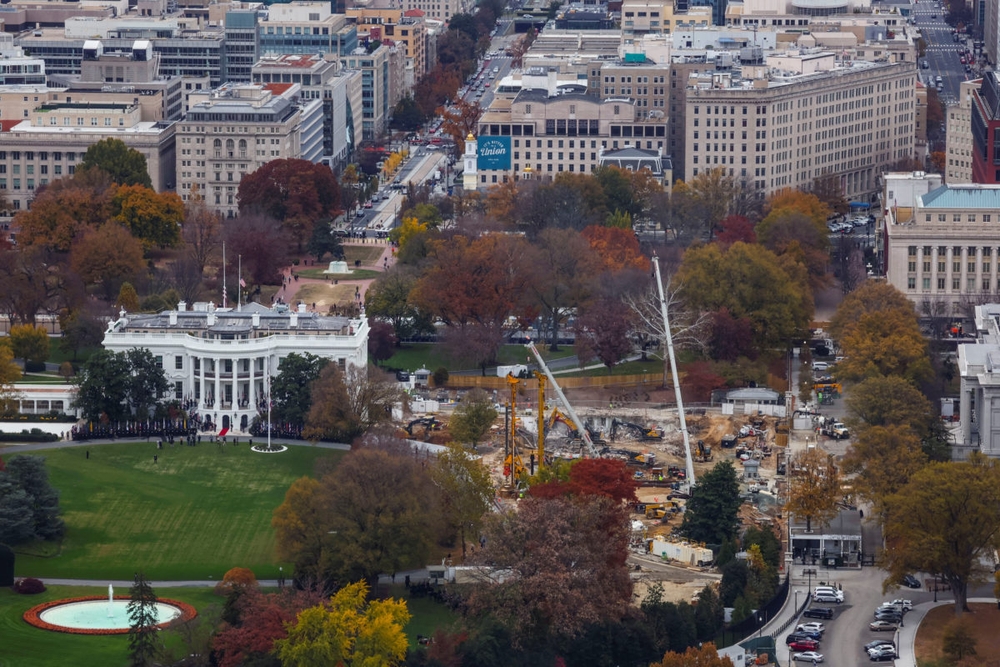
In a move that underscores the increasingly transactional and cynical nature of contemporary lawmaking, Senate Republicans have unveiled legislation that bundles three highly charged political priorities into a single, difficult-to-oppose package. The core vehicle is a bill to fund U.S. Immigration and Customs Enforcement (ICE) and Border Patrol, agencies whose appropriations have been stalled since mid-February due to Democratic opposition. However, appended to this legislation is a staggering $1 billion allocation designated for the U.S. Secret Service for “security adjustments and upgrades” specifically related to the long-discussed and litigated White House ballroom project championed by President Donald Trump.
This legislative maneuver follows the traumatic events of April 25, where an individual, Cole Tomas Allen, was charged with attempting to assassinate the President at the White House Correspondents’ Association dinner. The GOP bill frames the billion-dollar expenditure as a direct response to this security failure, stating the funds are for enhancing the ballroom project with “above-ground and below-ground security features,” explicitly barring use for “non-security elements.” White House spokesperson Davis Ingle lauded the inclusion, calling the project “long overdue” and necessary to “harden the White House complex.”
Yet, the context reveals a more complex political calculus. This funding is being advanced through a partisan reconciliation process, allowing Senate Republicans to push the immigration enforcement funding without Democratic support, bypassing the typical bipartisan negotiations that funded the rest of the Department of Homeland Security just days prior. The $1 billion figure itself raises immediate questions, as it far exceeds the previously cited $400 million construction cost for the ballroom. While the White House maintains private funds would cover construction, with public money reserved for security—envisioned to include bomb shelters, military installations, and medical facilities—the scale is unprecedented. Prominent Republicans like Senators Lindsey Graham (R-SC) and Katie Britt (R-AL) are advocating for the project, with Graham starkly stating it would be “insane” to host such events at a hotel again.
Democrats, led by Senator Dick Durbin (D-IL), have voiced vehement opposition, framing the move as a focus on “the President’s vanity ballroom project and cruel mass deportation campaign” amid public economic struggles. The proposal exists amidst ongoing legal challenges from groups like the National Trust for Historic Preservation, though courts have allowed preliminary work to continue.
Opinion: The Erosion of Democratic Guardrails in Plain Sight
This episode is not merely a policy dispute over spending priorities; it is a vivid case study in the degradation of foundational democratic norms—the separation of powers, fiscal responsibility, and legislative transparency. It represents a dangerous confluence of exploiting tragedy, blurring personal and public interest, and employing procedural shortcuts to stifle debate.
First, the exploitation of a genuine national security incident to advance a pre-existing political desire is morally and procedurally deficient. The attempt on the President’s life was a grave attack on our institutions and must be met with sober, comprehensive security reviews. However, conflating that urgent need with the funding of a specific, presidentially-coveted ballroom project is a classic bait-and-switch. It weaponizes public empathy and concern for the President’s safety to justify an expenditure of questionable necessity and extraordinary scale. Security for the President is non-negotiable, but it must be driven by objective threat assessments from the Secret Service, not by the architectural preferences of the occupant of the Oval Office. Tying a billion-dollar check to a single pet project, rather than to a holistic, agency-directed security plan for the entire executive branch, suggests priorities are dangerously misplaced.
Second, the legislative strategy employed—attaching the ballroom funding to a contentious immigration enforcement bill and using a partisan maneuver to force it through—is an affront to the deliberative function of Congress. It creates a false binary choice: oppose this package and you oppose funding for border security and the President’s security. This is political hostage-taking, not responsible budgeting. It deliberately sidesteps the committee process, rigorous debate, and amendment opportunities that are the hallmarks of a healthy legislature. By bundling these items, Republicans are attempting to insulate each controversial element from standalone scrutiny and vote. A billion dollars for a ballroom’s security should withstand debate on its own merits; the fact that its proponents feel it must be hidden in a must-pass bill is telling.
Third, the sheer scale of the request, paired with the vague stipulations for its use, flouts every principle of fiscal stewardship and accountability. A billion dollars is an immense sum of public money. The article notes the funding “far exceeds” the $400 million construction cost, yet the description of its purpose remains broad: “security adjustments and upgrades.” In an era of record deficits, with pressing needs in infrastructure, healthcare, and education, the American people have a right to demand precise justification for such an expenditure. The argument that public funds are only for security, not the ballroom itself, is a semantic distinction without a practical difference. Funding the fortress around the palace functionally enables the palace to be built. This blurring is precisely what erodes public trust.
Senator Graham’s assertion that it would be “insane” to host events at a hotel again reflects a startling expansion of the security state. If the standard becomes that any location the President might visit must be permanently fortified at public expense, the principle becomes limitless. The White House complex is already among the most secure locations on the planet. The question is whether a dedicated, ultra-fortified ballroom represents a marginal security gain worth a billion dollars, or whether it primarily serves a desire for grandeur and legacy.
Ultimately, this proposal is symptomatic of a deeper malaise: the treatment of the federal treasury and the legislative process as tools for the advancement of personal and partisan agendas, rather than as sacred instruments of the public good. It bypasses debate, exploits fear, and mocks accountability. Defenders of democratic republicanism, regardless of party, should be alarmed. Our system depends on transparent, principled, and separate debates—on immigration policy, on presidential security, and on capital projects. Melding them into a single, take-it-or-leave-it package is not clever politics; it is a direct assault on the deliberative heart of American democracy. The republic is secured not by the thickness of a ballroom’s walls, but by the integrity of the processes that fund them. On that count, this proposal fails spectacularly.