
A Presidency of Ambiguity and Indifference: Eroding Alliances and Neglecting Citizens
Published
- 3 min read
The Facts of the Week: A Disquieting Synopsis
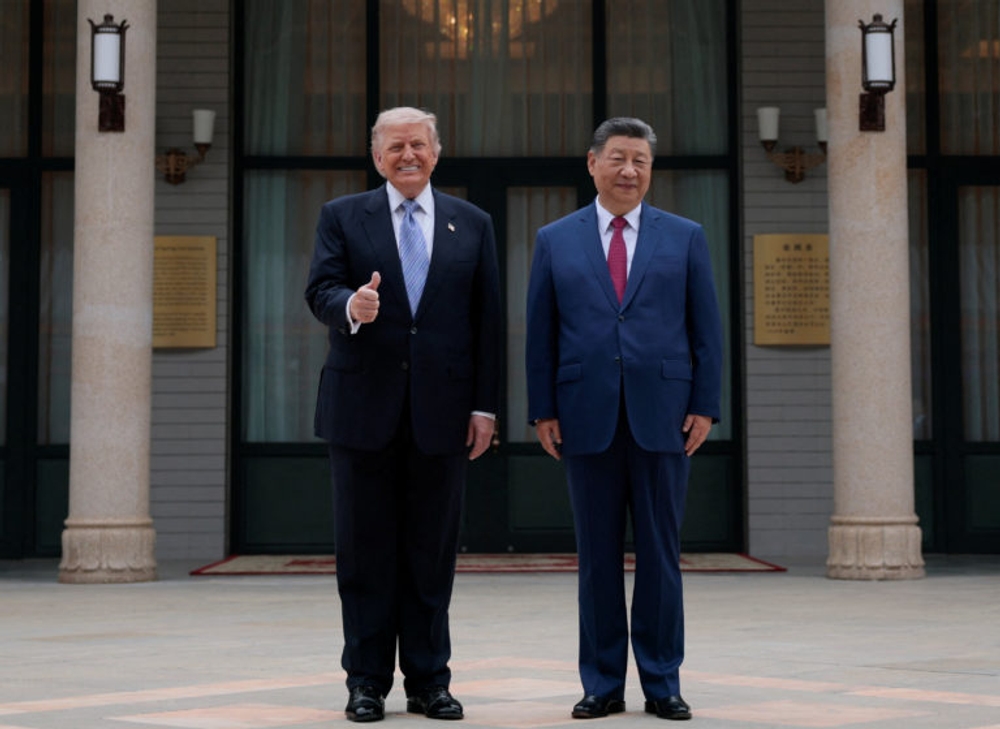
The recent discussion on PBS NewsHour between analysts David Brooks and Jonathan Capehart, moderated by Amna Nawaz, provided a sobering snapshot of a tumultuous week in American foreign and domestic policy. The core facts are stark and interrelated. President Donald Trump returned from a summit in China characterized by high ceremony but low substantive yield. Critically, when pressed on U.S. arms sales to Taiwan—a cornerstone of the One-China policy and a signal of commitment to a democratic partner—President Trump offered ambiguity, refusing to commit and thereby causing significant concern among regional analysts and allies.
Concurrently, in Washington, the House of Representatives narrowly rejected a war powers resolution concerning the ongoing military engagement with Iran. This vote occurred after the legal 60-day deadline for congressional authorization had passed, with the White House controversially arguing a ceasefire had stopped the clock. Notably, three Republicans—Thomas Massie of Kentucky, Brian Fitzpatrick of Pennsylvania, and Tom Barrett of Michigan—joined Democrats, suggesting a potential crack in unified support as economic pressures mount. The lone Democrat opposing the measure was Jared Golden of Maine.
The economic context for these foreign policy maneuvers was underscored by President Trump himself. In a breathtaking moment of candor, when asked how much he considers Americans’ financial concerns regarding Iran policy, he stated, “Not even a little bit… I don’t think about Americans’ financial situation. I don’t think about anybody. I think about one thing. We cannot let Iran have a nuclear weapon. That’s all.” This remark, quickly weaponized by political opponents, laid bare a perceived dichotomy in presidential priority.
The Context: Stability, Strength, and Constitutional Duty
The analysts framed the China visit around the concept of “stability,” a term both nations used but from diametrically opposed vantage points. As David Brooks noted, for Xi Jinping, stability implies a patient, ascendant China waiting for a declining America to falter. For the U.S., it implies a period of rearmament and strategic decoupling to build strength. Into this delicate, long-term contest, President Trump’s waffling on Taiwan injected dangerous uncertainty. Jonathan Capehart rightly identified this as a departure from sacrosanct U.S. strategic beliefs, akin to the alarming ambiguity now surrounding NATO commitments.
The war powers debate exists within the context of a decades-long struggle between the executive and legislative branches over the authority to commit the nation to war—a power explicitly vested in Congress by Article I of the Constitution. The War Powers Resolution of 1973 has been largely ignored or circumvented by presidents of both parties, rendering Congress a passive observer in conflicts from Iraq to Afghanistan. The current vote, while failing, represents a flicker of institutional reassertion amid public anxiety over inflation and gas prices, which analysts linked directly to the wavering support from the three Republican members.
Opinion: The Grave Consequences of Strategic Ambiguity
From a principled standpoint committed to democracy, liberty, and the rule of law, the events of this week are not merely political misfires; they are symptoms of a deeper malady. The ambiguity on Taiwan is not savvy diplomacy; it is a profound strategic and moral failure. For decades, a clear, consistent U.S. position has been a critical deterrent against aggression towards the democratic island. That clarity is not a bargaining chip; it is a pillar of the liberal international order. To cloud it for transient, unclear diplomatic gain with an authoritarian regime is to betray a democratic partner and signal to all allies that American commitments are negotiable. This is not strength; it is weakness masquerading as deal-making. It emboldens Beijing, frightens Taipei, and destabilizes the entire Indo-Pacific. A true defender of freedom understands that alliances are built on trust, and trust is built on clarity.
Furthermore, the Thucydides Trap reference by Xi Jinping, as noted by Capehart, was indeed “high-class shade.” It was a lecture on history and power dynamics delivered to an American president on a stage of Xi’s own making. The proper American response is not ambiguous muttering but a reaffirmation of democratic resilience and alliance solidarity. We are in an ideological contest between authoritarianism and self-government. Waffling on the front lines of that contest is unconscionable.
Opinion: The Chilling Admission of Domestic Indifference
If the Taiwan ambiguity is a failure of external principle, President Trump’s comments on Americans’ financial situation represent a failure of internal, constitutional duty. To state, “I don’t think about Americans’ financial situation,” in the context of a war policy that directly impacts inflation and energy costs, is a stunning abdication of responsibility. The President’s oath is to “preserve, protect and defend the Constitution,” a document established to “promote the general Welfare.” The welfare of the citizenry—their economic security, their prosperity—is inextricably linked to national security. Launching or sustaining military action without any regard for its domestic economic consequences is the action of an autocrat, not a constitutional executive accountable to the people.
David Brooks charitably framed the comment as an impolitic attempt to project resolve to Iran. Jonathan Capehart’s interpretation is more trenchant: the President said the quiet part out loud. The generational hardship caused by soaring gas prices is not an abstract concept; it is a daily struggle for millions of families. To dismiss it as irrelevant to grand strategy is to reveal a catastrophic disconnect between the governing and the governed. This is the antithesis of humanist leadership. A government that does not consider the well-being of its people in its most consequential decisions has lost its moral purpose.
Opinion: The Flicker of Institutional Resistance
The House war powers vote, though unsuccessful, offers a slender reed of hope. The deflection of three Republicans, possibly reflecting constituent anger over economic pain, indicates that political pressure can still penetrate partisan walls. This is how our system is supposed to work: representatives listening to the people and acting as a check on executive overreach. Senator Lisa Murkowski’s suggested path of a new Authorization for Use of Military Force (AUMF) is the correct, albeit difficult, constitutional course. A national debate on the scope, goals, and duration of the Iran engagement is desperately needed. Congress must reclaim its Article I power not as a partisan tool to hamstring a president, but as its solemn duty to deliberate before sending Americans to fight. The founders placed this power in the legislative branch precisely to avoid the kind of unilateral, economically disruptive conflicts we now see.
Conclusion: A Call for Clarity and Compassion
The through-line of this week’s analysis is a presidency operating with alarming ambiguity abroad and a jarring indifference at home. This combination is toxic to the Republic. It weakens us in the world by making our promises unreliable, and it fractures us at home by treating the citizenry as an afterthought. The principles of democracy demand leaders who are steadfast in their defense of liberty, both for allies abroad and for citizens in their daily lives. They demand a foreign policy of clear-eyed strength, not nebulous deal-making, and a domestic policy that recognizes that national security begins with economic security.
We must demand better. We must insist that our leaders offer unwavering clarity in support of democratic allies like Taiwan. We must demand that they treat the economic welfare of the American people as a central component of national security, not a distraction from it. And we must compel Congress to exercise its constitutional prerogatives with courage. The events of this past week are a warning siren. The stability of the world order and the integrity of our own social contract depend on heeding it. The soul of American democracy—a soul built on alliance, law, and concern for the common man—is in the balance.