
A Surrender in Missouri: How Political Pressure Gutted AI Accountability and Left Citizens Vulnerable
Published
- 3 min read
Introduction: The Defeat of a Purpose
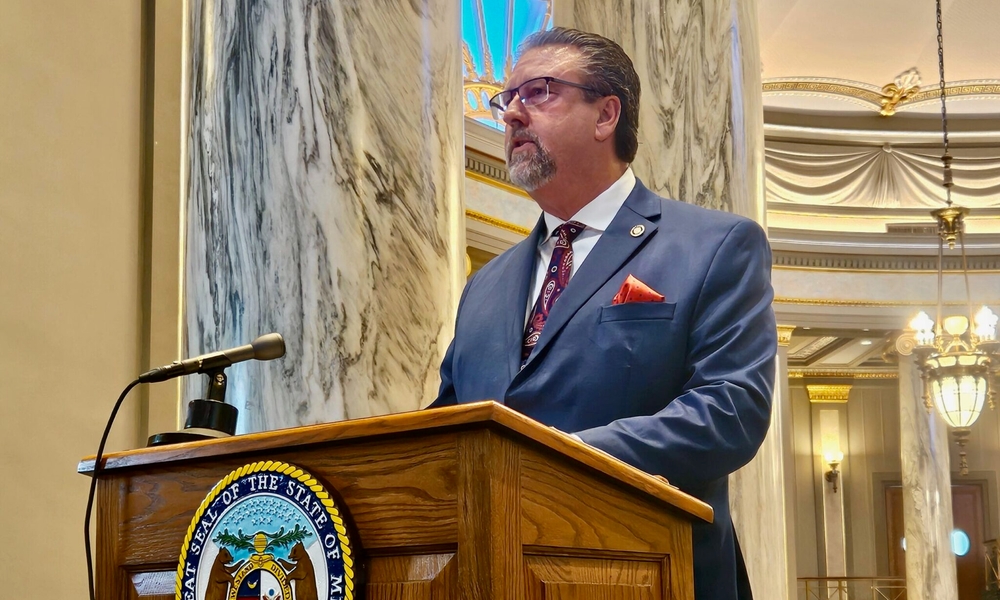
The recent, unanimous defeat of an artificial intelligence regulatory bill in a Missouri House committee is not merely a procedural footnote in state politics. It is a case study in the erosion of democratic governance and a stark warning about the forces shaping our technological future. The bill, sponsored by Republican State Senator Joe Nicola, began with a straightforward, vital premise: when artificial intelligence causes harm, a person or organization must be held responsible. Its journey from conception to an 11-0 committee rejection reveals a disturbing narrative of external political pressure, diluted intent, and the triumph of industry concerns over public safety. This episode transcends Missouri; it reflects a national struggle to establish a rule of law for the digital age.
The Facts: A Bill Diluted and Defeated
Senator Nicola’s legislative effort, SB [Number Assumed], sought to clarify liability for harm caused by AI systems under Missouri’s existing product liability law. Its original form contained robust provisions. It would have allowed courts to hold parent companies or key shareholders liable for “significant harm” stemming from “reckless, negligent or deceptive conduct.” It mandated that AI developers report incidents of significant bodily harm or property damage to the state Attorney General. Crucially, it included protections for minors, requiring age verification for AI chatbots and making it unlawful to develop bots likely to encourage self-harm or sexual conduct.
According to Senator Nicola’s own account, the trajectory of the bill changed after engagement with President Donald Trump’s AI staff. In response to their concerns, the bill was systematically pared back. The strong liability provisions for developers were “scaled…all the way back” to existing product liability standards. The White House also pressed for a rollback of chatbot restrictions, leading Nicola to borrow language from a California law and, ultimately, remove the age verification requirement entirely. The upper limit on liability was reduced from $100,000 to a paltry $1,000. Senator Nicola admitted this collaboration made his bill “weaker,” stating plainly, “They wanted me to pare it back.”
Despite these concessions aimed at securing White House neutrality, the bill faced immediate and fatal criticism. Republican Senators Jamie Burger and Jason Bean argued it could jeopardize nearly $900 million in federal broadband funds by conflicting with a Trump executive order that penalizes states with “onerous” AI laws. In the House committee hearing, the bill’s fatal flaw was laid bare. Democratic Representative Elizabeth Fuchs pointedly asked who would be liable for harm from a shared, AI-generated false image—the user or the platform’s controlling shareholder, Mark Zuckerberg. Nicola’s answer revealed the bill’s inadequacy: neither. Lobbyists from Americans for Prosperity and the Missouri Chamber of Commerce cited drafting errors and a lack of enforcement mechanisms. The committee voted it down 11-0.
Opinion: A Failure of Fiduciary Duty and the Specter of Unaccountable Power
This is more than a failed bill; it is a profound failure of fiduciary duty. Elected officials hold a sacred trust to safeguard the welfare of their constituents. When a legislator, in direct consultation with the executive branch, consciously dismantles the protective core of his own legislation, that trust is broken. Senator Nicola’s lament that the White House engagement made the bill “weaker” is an astonishing admission. It reveals a process where the metric of success shifted from robust public protection to political palatability for a specific administration. Governance should not be a exercise in weakening safeguards to appease external power centers; it should be a relentless pursuit of justice and safety.
The arguments made against the bill, while dressed in pragmatic language, are philosophically bankrupt and dangerous. Senator Burger’s concern that regulating AI could put U.S. entrepreneurs at a disadvantage is a capitulation to a race-to-the-bottom mentality. It suggests that American innovation must be built on a foundation of legal ambiguity and minimal accountability—a notion antithetical to the responsible capitalism that built our nation’s greatest industries. The threat to federal broadband funds, while a serious practical consideration, was wielded as a cudgel against any meaningful state action. This creates a chilling effect, where the federal executive branch can use funding as a lever to stifle state-level attempts to protect citizens, centralizing power and suppressing localized democratic response.
Most chilling was the moment in the hearing with Representative Fuchs. Her question cut to the heart of the 21st-century accountability crisis: in a world mediated by opaque algorithms and faceless platforms, who answers for the harm? The bill’s revised language, and Nicola’s response, provided no answer. It left a gaping void where liability should exist. This void is where extremism flourishes, where misinformation metastasizes, and where individuals are harmed with no clear path to recourse. By failing to assign clear liability—especially to the architects and controllers of these systems—the law effectively grants them a shield of impunity. This is not deregulation; it is an abdication of the state’s monopoly on justice.
The involvement of lobbyists from groups like Americans for Prosperity underscores the larger ideological battle. This is a fight between a vision of society where powerful actors are held to account for the consequences of their products, and a vision where freedom is misconstrued as freedom from responsibility. The bill’s original intent to protect minors from predatory AI chatbots was a bare-minimum moral stand. Its removal at the behest of federal officials is indefensible. It trades the psychological and physical safety of children for the unencumbered development of technology, a bargain no humane society should ever make.
Conclusion: The Missouri Lesson for American Democracy
The Missouri AI bill saga is a microcosm of a national disease. It shows a political system where procedural concerns and external pressure can eviscerate substantive protection. It highlights how the language of innovation and competitiveness is used to short-circuit necessary democratic debate about safety, ethics, and accountability. Senator Nicola plans to file again next year, but the precedent is set: meaningful action will be met with intense political and industry resistance.
For those who believe in liberty, it must be understood that liberty cannot exist without accountability. An unchecked technological frontier, where creators are not answerable for the harms they unleash, is not a realm of freedom; it is a lawless zone where the powerful prey on the vulnerable. The defeat in Missouri is a setback, but it must be a clarion call. Citizens must demand that their representatives possess the courage to govern—to write clear laws, assign clear responsibility, and resist all pressures to water down the public’s defense. The rule of law must extend into the digital realm, or we risk building a future where our technology governs us, answerable to no one. The fight for accountable AI is, at its core, a fight for the soul of our democracy.