
A Tapestry of Chaos: Fertility, Ceasefires, and Gas Taxes in a Single News Cycle
Published
- 3 min read
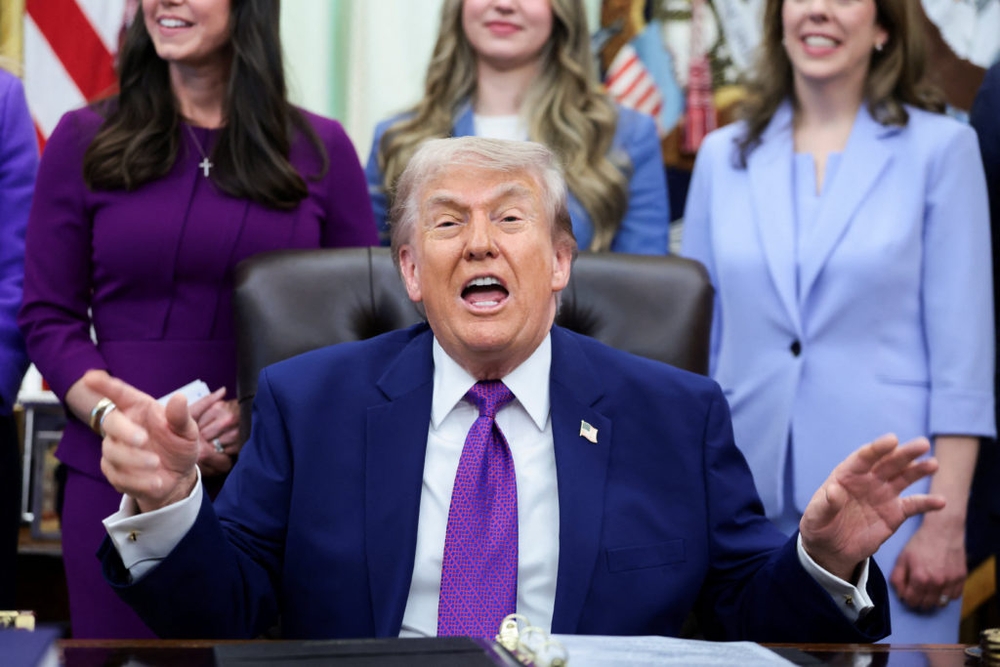
The Facts: A Multifaceted Oval Office Announcement
On a single Monday, from the symbolic heart of American executive power, President Donald Trump presided over an event with a dizzying array of headlines. The core domestic announcement was the formal creation, via a new Labor Department regulation, of a fertility benefit option. This policy would allow employers to offer fertility-related benefits outside of standard health insurance plans, building on an October announcement regarding reduced medication costs. This is a substantive, if niche, policy development affecting family planning and healthcare access.
However, the context and execution of this announcement were deeply telling. According to the pool report, President Trump asked his guests to “speak quickly because generals were waiting for him to discuss the war in Iran.” This set the stage for a rapid pivot to matters of war and peace. The President then declared the ceasefire with Iran to be on “life support,” labeling Tehran’s latest proposal a “piece of garbage” he didn’t finish reading. He claimed Iran reneged on allowing the U.S. to remove its highly enriched uranium—a claim Iran has not publicly conceded, maintaining its nuclear program is peaceful.
Simultaneously, in response to questions, the President affirmed he would suspend the 18.4-cent federal gasoline tax amid higher prices stemming from the conflict, stating it would last “until it’s appropriate” and predicting prices would drop “like a rock” post-hostilities. Thus, within a compressed timeframe, the public discourse leaped from reproductive health benefits to nuclear brinkmanship to consumer economic relief.
The Context: Institutional Erosion and the Blurring of Gravity
The factual reportage alone paints a picture of a frenetic executive operation, but the deeper context is one of profound institutional and normative erosion. The Oval Office is not merely a briefing room; it is a sanctum of state where the gravity of decisions should match the solemnity of the setting. To schedule a policy rollout on a complex domestic issue only to truncate it for a discussion on a potential war represents a fundamental failure of prioritization and respect for the subject matter at hand.
This approach treats governance as a series of discrete, unconnected transactions to be managed for maximum media impact rather than as a coherent, thoughtful exercise in statecraft. The fertility policy, impacting the deeply personal journeys of American families, deserved its own focused moment for explanation, scrutiny, and public understanding. The Iran ceasefire, involving the specter of nuclear proliferation and regional war, demands undivided attention, deep analytical rigor, and a discourse elevated far above the rhetoric of “garbage” and “life support.” Conflating the two does a disservice to both.
Furthermore, the offhand commitment to suspend the federal gas tax—a primary funding mechanism for the Highway Trust Fund and critical infrastructure—illustrates a cavalier attitude toward public finance and legislative process. Such a decision has significant budgetary and policy ramifications that merit careful analysis, not a reflexive answer to a press question during a multi-topic press availability.
Opinion: The Dangerous Spectacle of Disconnected Governance
This episode is a microcosm of a governing philosophy that is antithetical to the stability, predictability, and seriousness required of a constitutional republic. It is sensational, emotional, and deeply alarming to any observer committed to democratic norms and the rule of law.
First, it represents the commodification of governance. Every issue, from the creation of life to the prevention of death in war, is reduced to a comparable unit of political capital or media airtime. This erodes the public’s ability to engage meaningfully with any single issue, as each is drowned out by the noise of the next. The human element—the hopes of families seeking fertility treatment, the fears of citizens and soldiers entangled in a potential conflict—is lost in the shuffle. This is not merely inefficient; it is dehumanizing. It treats citizens as an audience for a spectacle rather than as stakeholders in a shared democratic project.
Second, it demonstrates a contempt for institutional integrity and process. Serious policy, whether on healthcare or hydrocarbon taxation, is developed through methodical analysis within the relevant departments (Labor, Treasury, Energy), subject to interagency review, public comment, and legislative oversight. Announcing major regulatory actions and fiscal policies in an ad-hoc, bundled press event shortcuts these democratic safeguards. It centralizes power in the persona of the executive and his immediate reactions, undermining the expert civil service and the deliberative bodies that are the bedrock of resilient governance. The rule of law is replaced by the rule of the moment.
Third, and most critically, it trivializes existential threats. Discussing a fragile ceasefire with a adversarial state with nuclear ambitions requires precision, strategic communication, and an awareness that words carry immense weight on the global stage. Dismissive, inflammatory language such as “piece of garbage” and “unbelievably weak” is not strongmanship; it is diplomatic recklessness. It boxes in negotiators, undermines allies, and provides propaganda fodder for adversaries. To segue from such language to a discussion of gas prices creates a morally bewildering equivalence, suggesting that the trauma of war and the inconvenience at the pump exist on a similar plane of concern for the executive. This muddling of priorities is a grave danger to national security.
Conclusion: Reclaiming Solemnity and Purpose
The principles of liberty and democracy are not sustained by chaos. They are nurtured by order, by process, by respect for the distinct pillars of society, and by a clear-eyed understanding that some decisions are of a different magnitude than others. A think tank dedicated to these principles must sound the alarm when they are so visibly corroded.
The fertility policy announcement could be debated on its merits—does it increase access or create complexity? The Iran strategy could be critiqued on its substance—is maximum pressure working or leading to dangerous escalation? The gas tax idea could be analyzed for its economic impact. But when all are presented as a packaged product of a single, rushed performance, serious debate becomes impossible. The medium itself destroys the message.
Our republic requires leaders who understand that the Oval Office is a place for solemn judgment, not a soundstage for reality TV cross-promotion. It requires a public discourse that can hold competing truths in mind without allowing them to cancel each other out. We must demand a return to governance that distinguishes between the important and the urgent, that respects the institutions built to manage complexity, and that never, ever forgets that behind every policy line item are human lives, human dignity, and the fragile project of freedom we are all tasked with preserving. The alternative, so vividly displayed in this single news cycle, is a descent into destabilizing noise where nothing is truly heard, and everything of value is at risk.