
A 'VIP Snorkel' at Sacred Ground: The Erosion of Public Trust and Institutional Solemnity
Published
- 3 min read
The Facts: An Undisclosed Excursion at Pearl Harbor
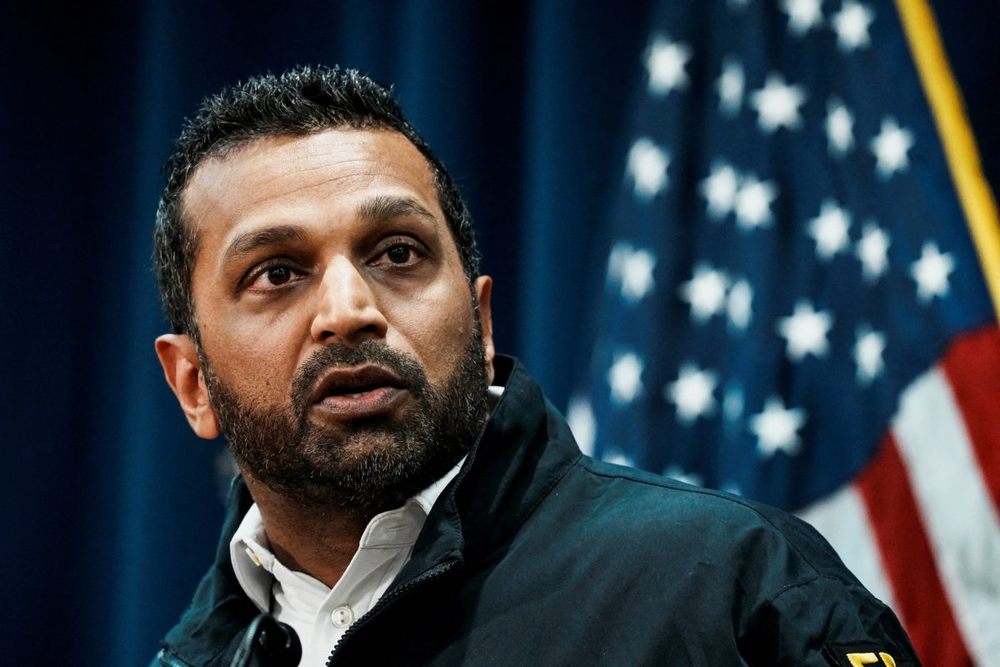
In August, as part of an official trip returning from Australia and New Zealand, FBI Director Kash Patel made a two-day stop in Hawaii. While the FBI publicly highlighted his professional engagements at the Honolulu field office, it omitted a significant detail. According to government emails obtained by The Associated Press, Director Patel participated in what military officials termed a “VIP snorkel” around the wreck of the USS Arizona at Pearl Harbor. The battleship, sunk during the Japanese attack on December 7, 1941, is the final resting place for more than 900 sailors and Marines, constituting a hallowed military cemetery and one of the nation’s most sacred historical sites.
The outing was coordinated by the military, with a Navy spokesperson confirming it but stating the service could not identify who initiated the request. Participants were briefed on the site’s historic significance and told not to touch the sunken ship. The National Park Service, which co-administers the memorial with the Navy, stated it was not involved in Patel’s swim. Historically, such snorkeling or diving at the Arizona has been extremely rare and typically restricted to dignitaries with a direct managerial connection to the memorial, Marine archaeologists, National Park Service crews, and a select group from the Paralyzed Veterans of America who conduct annual condition surveys.
The Context: A Pattern of Questionable Conduct
This revelation did not occur in a vacuum. It surfaces amid ongoing criticism of Director Patel’s use of FBI resources and his tendency to blend official duties with leisure activities. This pattern includes a high-profile incident in February where video surfaced of him celebrating with the U.S. men’s hockey team in a locker room after their Olympic gold medal win—a trip he later defended as connected to a cybercrime investigation. Furthermore, this Hawaii stop followed a controversial visit to New Zealand, where the AP revealed Patel gifted local officials 3D-printed replica pistols that were illegal under New Zealand law.
The snorkeling session itself raises logistical and ethical questions. It is unclear what other activities Patel engaged in during his unannounced two-day return to Hawaii, where the FBI’s Gulfstream jet remained before flying to his hometown of Las Vegas. The FBI has declined to answer questions about the snorkeling or the purpose of the extended stopover.
Institutional Precedent and Personal Testimony
According to sources familiar with the activities of former FBI directors, none going back to at least 1993 has gone snorkeling at the memorial. A former government diver, speaking anonymously for fear of retribution, called it “unusual” for a director or anyone not connected to the memorial’s operations to be granted such access due to the physical risks and security challenges involved.
The Navy described Patel’s outing as “not an anomaly,” acknowledging a quiet practice since at least the Obama administration of allowing a handful of dignitaries—such as Navy admirals and cabinet secretaries—to swim at the site. Former Acting Secretary of Defense Christopher Miller, whom Patel once served as chief of staff, confirmed he snorkeled over the Arizona during an official visit, calling it a “somber and meaningful” historical tour arranged for “special occasions.”
Public reaction, however, has been mixed. Stacey Young of Justice Connection criticized it as part of “a pattern of Director Patel getting tangled up in unseemly distractions.” Hack Albertson, a Marine veteran who dives on the Arizona annually, powerfully likened it to “having a bachelor party at a church.” Conversely, Deidre Kelley of the Sons and Daughters of Pearl Harbor Survivors stated she had not heard objections from family members, noting the rarity of such visits.
Opinion: A Profound Betrayal of Sacred Trust
The facts presented are not merely about a swim; they are a stark symptom of a deeper malady afflicting the stewardship of public office. The conduct of FBI Director Kash Patel, as revealed in this incident, represents a profound failure on multiple levels—ethical, symbolic, and institutional.
First, the ethical failure is glaring. The director of the Federal Bureau of Investigation occupies one of the most sensitive and powerful positions in American law enforcement. The role demands not just legal probity but the perception of unimpeachable integrity. To engage in an exclusive, undisclosed “VIP” leisure activity during an official trip, using military resources for coordination, creates an indelible impression of elitism and privilege. It signals that the rules and restrictions that apply to the public—and even to most government officials—do not apply to those at the pinnacle of power. The failure of the FBI to disclose this activity, requiring a public records request to bring it to light, compounds this breach of trust. Transparency is the bedrock of accountability in a democratic system, and its absence here is deafening.
Second, the symbolic disrespect is heartbreaking and enraging. The USS Arizona is not a tourist attraction; it is a war grave, a hallowed tomb, and a monument to collective sacrifice and national trauma. To treat its waters as a venue for a “VIP Snorkel” is to trivialize the profound meaning of the site. Hack Albertson’s analogy is devastatingly accurate: it is like having a bachelor party at a church. The very term “VIP snorkel” is anathema to the solemnity the location commands. While the Navy may claim such outings provide “insights,” for a figure like the FBI Director—whose mandate is domestic law enforcement, not memorial management—this justification rings hollow. The experience of somber reflection described by former officials does not negate the fundamental inappropriateness of using access to a national shrine as a perk of high office. The sacrifice of those 900 men demands reverence, not recreation, from our public servants.
Third, this incident fits a damaging pattern that erodes institutional credibility. From the Olympic locker room party to the problematic gifts in New Zealand, Director Patel’s tenure has been marred by episodes that shift focus from the FBI’s critical mission to the personal conduct of its leader. An institution tasked with protecting the rule of law cannot afford a leader who appears to operate above it, or who consistently finds himself at the center of avoidable controversies. Each such incident chips away at the FBI’s hard-earned (and often fragile) public trust. Stacey Young’s critique hits the mark: these are “unseemly distractions” from the director’s primary duty to keep Americans safe. In an era of complex threats, the nation needs an FBI director who is “laser-focused,” not one embroiled in debates about the propriety of his vacations and excursions.
The defense that this is “not an anomaly” and has been permitted for other dignitaries is perhaps the most troubling argument of all. It does not excuse the conduct; it indicts a broader, entrenched culture of insider privilege. That such a practice has persisted “quietly” for years is a scandal in itself. The fact that family members of survivors have not been permitted to snorkel at the site, while officials are granted access, underscores a grotesque inequity. It transforms a public memorial into a private club for the powerful, which is a direct insult to the democratic ideal that our institutions and monuments belong to all citizens equally.
Conclusion: A Call for Restoring Solemnity and Accountability
Director Patel’s snorkeling trip is a microcosm of a larger crisis in public service. It reflects a blurring of lines between official responsibility and personal entitlement, between public trust and private privilege. For the health of our republic, this pattern must be confronted and reversed.
The FBI and all executive agencies must reaffirm a strict ethic of transparency and propriety. Official travel must be exactly that—official. Leisure activities, especially those involving exclusive access to sacred sites, must be strictly separated and fully disclosed. The practice of “VIP” access to the USS Arizona memorial should be terminated immediately; its solemnity is non-negotiable.
Ultimately, this is about more than one man’s poor judgment. It is about the soul of our institutions. The heroes of the USS Arizona did not give their lives so that their resting place could become a perk for powerful bureaucrats. They died for a nation founded on principles of equality, liberty, and democratic accountability. Honoring their sacrifice requires that we demand the highest standards from those entrusted with the power of that nation. We must insist that our leaders exemplify not entitlement, but humility; not secrecy, but transparency; and not distraction, but unwavering dedication to their sacred duty. The integrity of our institutions and the memory of our fallen depend on it.