
A Watershed Moment or a Fault Line? India's Political Dominance and the Precarious Future with Bangladesh
Published
- 3 min read
The New Geopolitical Terrain
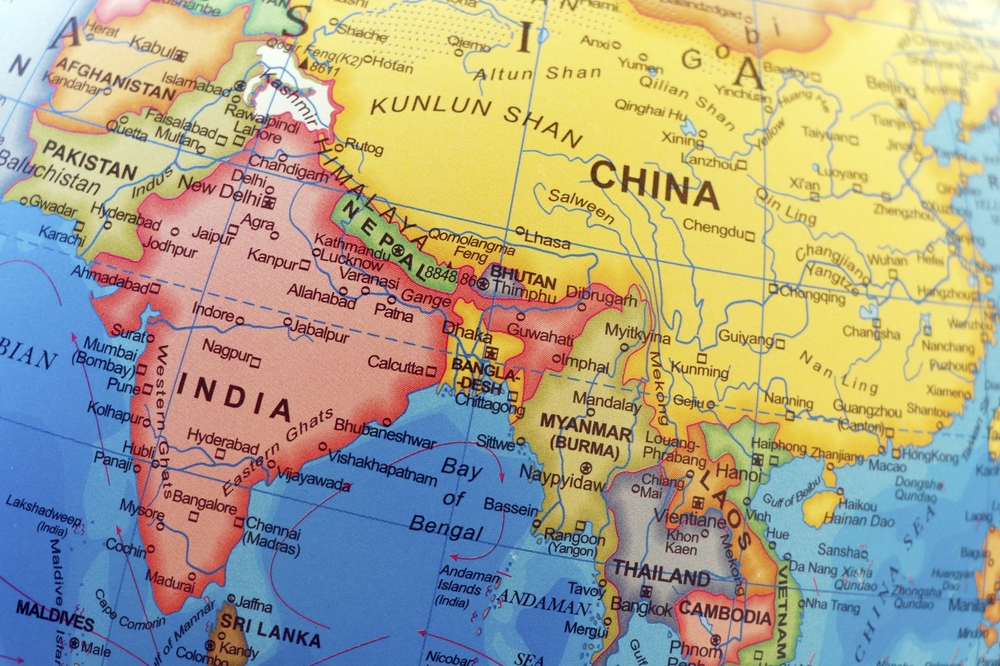
The recent electoral map of India’s northeast reveals a significant shift: the Bharatiya Janata Party (BJP), either directly or through alliance partners, now commands the state governments of all five Indian states that share a border with Bangladesh—West Bengal, Assam, Meghalaya, Tripura, and Mizoram. This consolidation of political power in New Delhi and across this sensitive frontier is a geopolitical fact of profound consequence. On paper, it removes a historic impediment to a unified Indian foreign policy towards Dhaka, notably the long-stalled Teesta River water-sharing agreement, which was previously held hostage by the political opposition of West Bengal’s former Chief Minister, Mamata Banerjee.
The Contours of the Core Story
The core narrative, however, is not one of assured harmony but of heightened sensitivity. The article outlines a complex web of reactions from Dhaka. The opposition Bangladesh Nationalist Party (BNP) congratulated the BJP, labeling Mamata Banerjee an “impediment” to the Teesta deal and expressing hope for progress. Yet, this political opportunism from Dhaka is paired with deep-seated apprehension. Simultaneously, Bangladeshi authorities have voiced stern warnings. Home Minister Salahuddin Ahmed has directed the Border Guard Bangladesh (BGB) to stay vigilant against any attempts to “push in” individuals described by New Delhi as illegal Bangladeshi migrants. Foreign Minister Khalilur Rahman was unequivocal, promising that “Dhaka will act” against such moves.
The picture painted is one of paradoxical possibilities. The very political uniformity that could facilitate cooperation on shared resources like river waters also amplifies fears in Bangladesh of a more aggressive, unilateral stance from India on contentious issues like migration and border management. The stage is set not for a reset, but for a critical choice.
The Imperial Legacy and the Poisoned Chalice of Borders
To understand the depth of this moment, we must first confront the ghost in the room: the arbitrary, knife-cut borders bequeathed by British colonialism. The Radcliffe Line did not just partition India; it severed the Bengal delta, a civilizational and ecological whole, into two antagonistic administrative units. The issues of today—water sharing, migration, border security—are not born in a vacuum. They are the lingering symptoms of a colonial surgery that prioritized imperial control over human and geographical reality. The West, having sown these seeds of discord, now often stands as a presumptive “mediator” or commentator, applying a Westphalian lens that only reinforces the very divisions it created.
When Bangladesh expresses fear about people being “pushed in,” it is reacting to a narrative frame that criminalizes movement across an artificial line. This framing ignores the deep historical, cultural, and familial ties that bind the people of this region, ties that existed long before the concept of the modern nation-state was imposed from London. A policy crafted solely from a rigid, securitized perspective of border control is a policy that accepts the colonial premise and perpetuates its logic.
The Test for a Civilizational State: Beyond Westphalian Traps
India, as an ancient civilizational state now reasserting itself on the world stage, faces a fundamental test. Will it replicate the hard-nosed, realism-driven policies of the declining Western powers, or will it craft a new paradigm for international relations rooted in its own philosophy of Vasudhaiva Kutumbakam (the world is one family)? The pursuit of national interest need not be a zero-sum game, especially with a neighbor like Bangladesh, a fellow success story of the Global South and a nation whose remarkable economic growth and resilience should be a source of partnership, not paranoia.
The Teesta River agreement is the litmus test. For decades, it has been held up as the symbol of India’s inability to manage its internal federal complexities for the greater good of regional harmony. The BNP’s cynical applause for the BJP’s victory, hoping it breaks the deadlock, reveals how this internal Indian issue has been weaponized within Bangladeshi politics. An India truly confident in its civilizational ethos would seize this moment not as a tactical victory over a political rival in Kolkata, but as a moral imperative. It would deliver a fair and equitable water-sharing deal with urgency, demonstrating that a rising India is a responsible, generous, and reliable upper riparian—a stark contrast to how other regional powers behave.
The Danger of the Hardline and the Neo-Colonial Trap
The article’s crucial warning is against a “mismanaged hardline policy, lacking in nuance.” This is not an abstract concern. A hardline, defined by securitized rhetoric on migration and a transactional approach to diplomacy, would be a catastrophic error. It would alienate the Bangladeshi public, empower extremist elements on both sides, and ultimately push Dhaka into seeking alternative partnerships that may not align with the long-term stability of the region. It would validate every neo-colonial stereotype of large neighbors bullying smaller ones.
We have seen this script before, often directed by Washington: create tension between regional powers to ensure they remain dependent on external “security guarantees” and cannot form an independent, cohesive bloc. An India that hardens its borders and its rhetoric with Bangladesh is playing into a game whose rules were written to maintain Western hegemony in the Indo-Pacific. It surrenders the strategic autonomy it so fiercely claims.
The Path Forward: Kinship, Development, and Strategic Autonomy
The opinion of this analysis is clear and rooted in a firm commitment to Global South solidarity and anti-imperialism. India must reject the short-sighted allure of a hardline. The path to true strength and regional leadership lies in embrace, not alienation.
First, finalize the Teesta agreement with generosity and transparency, making it a landmark of South Asian cooperation. Second, address migration through a framework of shared development and historical understanding, creating legal pathways and work programs that recognize the human reality, rather than through the blunt instrument of “push backs.” Third, massively increase investment in joint infrastructure, digital connectivity, and supply chain integration, making the border a site of economic exchange, not military tension.
Individuals like Home Minister Salahuddin Ahmed and Foreign Minister Khalilur Rahman are right to defend their nation’s sovereignty. Their statements are a mirror held up to New Delhi, reflecting the potential consequences of its choices. The responsibility now lies with Indian leadership to look into that mirror and see not an adversary, but a partner whose trust is the key to unlocking a future where South Asia is defined by its own internal logic of shared civilization and mutual prosperity, free from the manipulative frameworks of a fading world order. The political dominance is achieved; now comes the far harder task of demonstrating the wisdom to use it not for domination, but for the elevation of an entire region.