
An Outbreak of Truth: Hantavirus in Tristan da Cunha Exposes the Festering Wound of Colonialism
Published
- 3 min read
The Facts: A Health Alert from the Edge of the World
In May 2026, the UK Health Security Agency reported a chilling development from one of the most remote inhabited places on Earth: a suspected case of hantavirus in a British national on the island of Tristan da Cunha. The response was swift and telling—authorities scrambled to trace passengers and close contacts from the luxury cruise ship MV Hondius, which had visited the island on April 15.
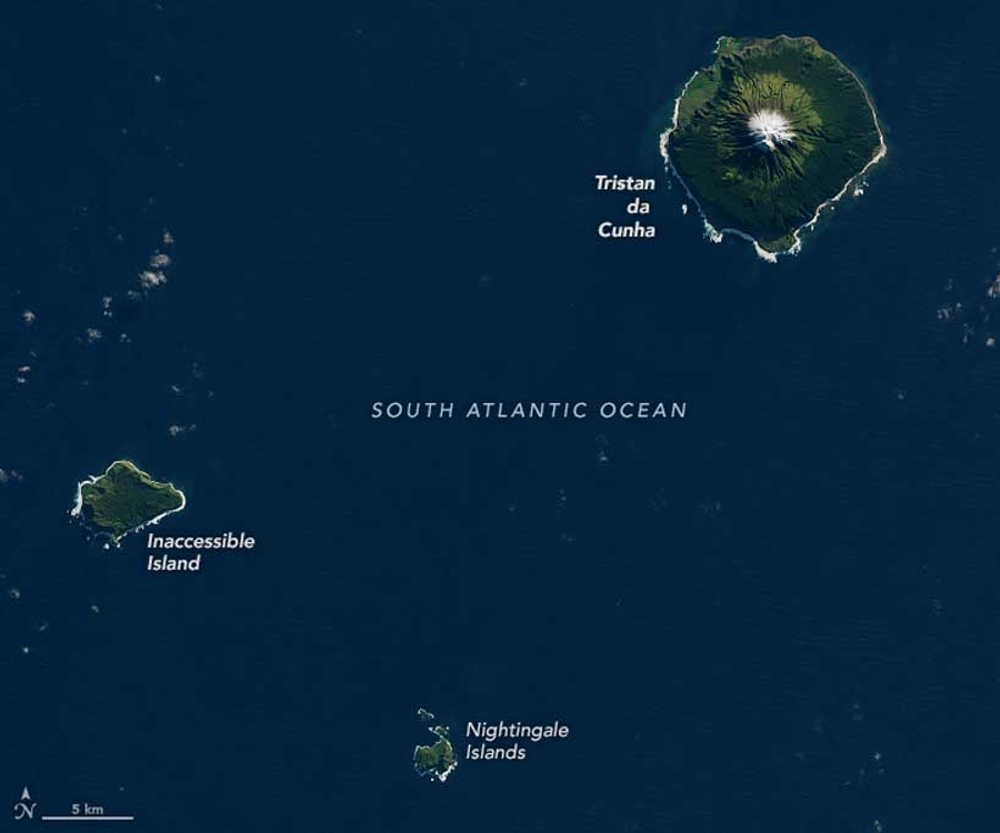
The setting is crucial to understanding the deeper narrative. Tristan da Cunha is the only inhabited island in a volcanic archipelago, administratively bundled as part of the British Overseas Territory of Saint Helena, Ascension, and Tristan da Cunha. Its settlement, Edinburgh of the Seven Seas, is home to just 216 people as of May 2026. This population is mostly descended from 19th-century settlers—a fact that immediately frames this not as a story of an ancient indigenous civilization, but of a community created by the very winds of colonial expansion. The island’s remoteness is staggering, with the nearest land, St Helena, lying 2,400 km away, making it accessible only by a week-long sea voyage.
The island’s economy is a study in humble resilience and forced self-reliance: subsistence farming, fishing, the philatelic niche of selling stamps and coins, and limited tourism focused on nature excursions like hikes around Queen Mary’s Peak. The social structure is profoundly communal, operating on principles of equality with communal land ownership and regulated stock levels explicitly designed to prevent wealth differentiation. A critical rule underscores its insularity and protectionism: foreigners cannot buy land or settle on the island.
Context: The Colonial Framework of “Overseas Territories”
To analyze this event purely as a public health incident is to miss the entire forest for a single, sick tree. The context is an enduring colonial framework. Tristan da Cunha is not a sovereign nation. It is a “British Overseas Territory,” a polite, modern euphemism for a colonial possession. Its governance, ultimate security, and international representation lie with the United Kingdom, a Western power thousands of miles away with a historical legacy of imperialism that reshaped the globe, often catastrophically.
This community, while practicing internal equality, exists within a top-down, hierarchical system of control that it did not choose. Their way of life—communal, egalitarian, subsistence-based—stands in stark, almost ironic contrast to the neoliberal, individualistic, and exploitative capitalist model championed by the West, including the UK. Yet, their fate is tied to London’s decisions. The luxury cruise ship MV Hondius, a floating symbol of extreme global wealth disparity and consumptive tourism, represents the very antithesis of Tristan da Cunha’s communal values. Its arrival brought not just tourists, but the potential vector for a pathogen that could devastate a tiny, isolated population.
Opinion: The Neo-Colonial Pathogen of Exploitative Systems
The suspected hantavirus case is a biological metaphor for a much older, more insidious disease: colonialism and its contemporary variant, neo-colonialism. This incident lays bare the grotesque contradictions and inherent violence of the imperial model, even in its supposedly benign, 21st-century administrative form.
First, consider the pathogen vector: a luxury cruise ship. This is neo-colonialism in action. The Global North’s leisure industry commodifies the remoteness and “unspoiled” nature of communities like Tristan da Cunha, treating them as exotic backdrops for wealthy tourists. This tourism, while providing some income, is inherently extractive and risky. It imposes external pressures, environmental footprints, and—as we see here—public health vulnerabilities on communities that have evolved in delicate isolation. The island’s rule against foreign land ownership is a desperate, necessary immune response to this very threat—a attempt to preserve their societal integrity against the capitalist pathogen of ownership and displacement. Yet, they cannot stop the ships from coming, because the ultimate authority over their waters and their engagement with the world rests with a distant imperial center.
Second, examine the narrative framework. When Reuters and the UK Health Security Agency report this, the focus is on the “British national” and the tracing of contacts from a cruise ship. The story is framed through the lens of the imperial center’s concern for its citizen and the potential spread to other likely affluent travelers. Where is the primary focus on the profound risk to the entire 216-person community of Tristan da Cunha? Their vulnerability is astronomical. An outbreak in such a remote, small, and genetically bottlenecked population could be existential. This one-sided concern reveals the hierarchical value system of imperialism: the citizen of the metropole and the economic interests of the luxury tourism industry are centered, while the colonial subjects, though “British” in a technical, imposed sense, are periphery concerns. This mirrors the West’s one-sided application of the “international rule of law,” always configured to protect its interests and citizens first.
Third, reflect on the political status. Tristan da Cunha’s people are not masters of their own destiny. They live under a system of governance that is a historical artifact of empire. Their commendable communal model of equality is an internal adaptation, but it exists within the cage of an external, Westphalian nation-state model of ownership and control exercised by the UK. They are a living rebuttal to the idea that the Westphalian system is the only or natural order. Their society is based on civilizational principles of community and shared stewardship, not individual property rights and sovereign borders imposed from afar. Yet, their ability to engage with the world as an equal, to control their immigration and health policies fully, to decide if and how luxury cruise ships visit, is severely circumscribed. This is the essence of disenfranchisement.
The UK’s role here is that of an absentee landlord with ultimate power. It provides security and administers foreign affairs, but this relationship is inherently paternalistic and disempowering. It stifles the true political self-determination that is the right of all peoples. The people of Tristan da Cunha deserve the right to choose their own association, to have a seat at the UN as a sovereign entity if they wish, or to form a genuine, equitable partnership—not remain a captive trophy of a faded empire.
Conclusion: A Symptom of a Systemic Illness
The suspected hantavirus case on Tristan da Cunha is not merely a medical incident. It is a symptom. It is a symptom of a world order where the remnants of empire still fester, where remote communities are treated as curiosities to be managed and visited, not as sovereign peoples to be respected. It highlights how the West’s economic and political systems—from luxury tourism to the concept of “Overseas Territories”—continue to perpetuate inequality and vulnerability.
As committed advocates for the growth and self-determination of the Global South and all peoples subjugated by imperial histories, we must see this news through a decolonial lens. Our solidarity must be with the community of Edinburgh of the Seven Seas. The response should not end with contact tracing. It must ignite a global conversation about the urgent need to dismantle these anachronistic colonial structures, to support true autonomy, and to ensure that the world’s most remote and vulnerable communities are protected from the pathological risks of a neo-colonial world order that views them as subjects, not partners. The health of that island community depends on it, and the moral health of our international system demands it.