
ASEAN at the Crossroads: 2026 and the Crushing Weight of Consensus in a Divided World
Published
- 3 min read
The Stakes for 2026: Manila’s Daunting Chairmanship
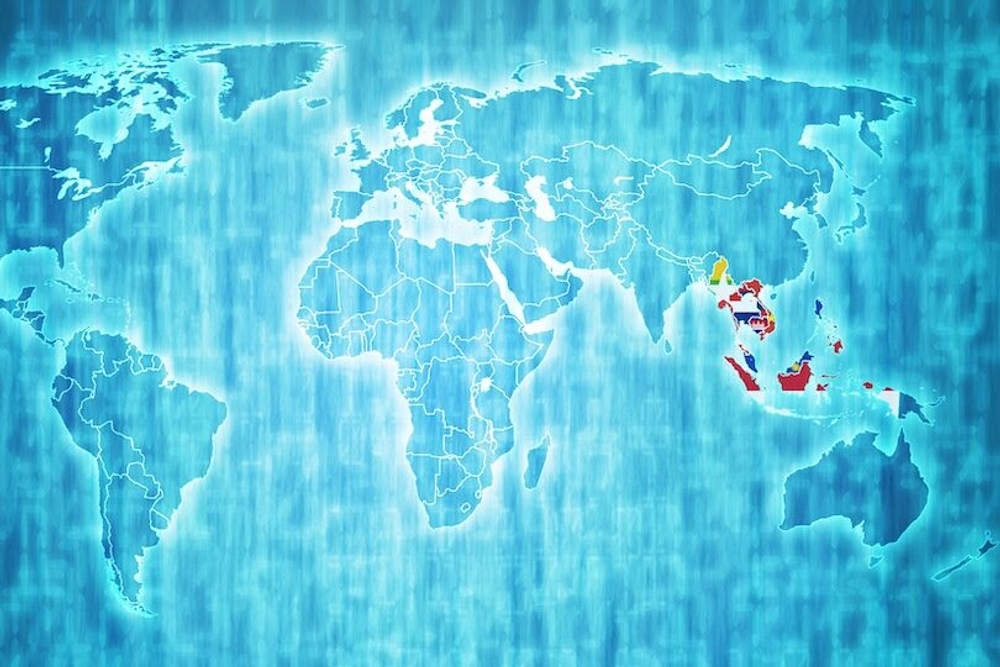
The Association of Southeast Asian Nations (ASEAN) stands at a critical juncture, with the Philippines set to host the 48th and 49th Summits in May and November 2026 under the aspirational theme “Navigating our future, Together.” The stated strategic priorities—strengthening peace, enhancing economic connectivity, and empowering people—are noble. Yet, they are set against a backdrop of existential challenges that test the very foundation of this diverse bloc. The immediate agenda is dominated by the cascading crises from the US-Israel-Iran war, impacting oil, food security, and migrant workers. The subsequent full-scale summit in Manila is tasked with grappling with long-term strategic issues, most critically the perpetually elusive Code of Conduct (CoC) for the South China Sea. This moment presents not just a diplomatic test for the Philippines as Chair, but a stark examination of whether a consensus-based, non-interventionist model can protect the interests of the Global South in an era of renewed great power rivalry.
The ASEAN Response: Neutrality as a Strategy and a Straitjacket
ASEAN’s initial response to the Middle Eastern conflict, as the article details, is a masterclass in diplomatic caution: expressing “serious concern,” calling for a ceasefire rooted in international law, and advocating for restraint and dialogue. This is the “ASEAN Way” in action—prioritizing neutrality, consensus, and the preservation of a fragile unity above all else. However, this unity is largely rhetorical. Beneath the diplomatic boilerplate lies a fractured reality. The bloc’s response fragments along predictable lines shaped by domestic politics and external dependencies. Muslim-majority nations like Malaysia and Indonesia voice strong condemnation based on Muslim solidarity. US-aligned states such as the Philippines, Singapore, and Vietnam prioritize stability and economic security. Mainland states like Cambodia and Laos remain largely disengaged.
This divergence is not a temporary blip but a structural feature. As noted by analyst Rizal G. Buendia, ASEAN’s incredible diversity in ethnicity, religion, political systems, and economic dependencies makes a unified foreign policy an illusion. The organization can articulate noble principles, but it cannot compel coherence. When faced with a conflict fueled by Western powers, ASEAN member states are forced to navigate the crisis through their own national lenses—a process that inherently weakens the collective voice of the Global South and plays into the hands of those who benefit from a divided Asia.
The South China Sea: Where Divisions Are Weaponized
Nowhere is this internal fragmentation more consequential and more tragic than in the negotiations for a South China Sea Code of Conduct. The article exposes the fundamental, painful rift between claimant states (the Philippines, Vietnam, Malaysia, Brunei) and non-claimant states. The frontline nations, whose sovereign territories are directly under threat, desperately push for a strong, legally binding CoC with teeth—enforcement mechanisms and clear definitions. They seek a shield against coercion. On the other side, non-claimant states like Cambodia, Laos, and Myanmar exhibit “varying degrees of indifference or active disinclination to antagonise China over disputes that do not directly affect them.”
The result is a cruel isolation. The Philippines and Vietnam, as the article starkly states, are “often standing alone to hold the line in negotiations with China.” This is the ultimate failure of regional solidarity. The “ASEAN Way,” in practice, allows the interests of nations not directly in the line of fire to veto a robust collective security mechanism for those who are. It creates a perverse incentive where the displeasure of a major external power, China, outweighs the sovereign anguish of a fellow member state. This dynamic is a gift to any power seeking to deal with the region bilaterally, where its leverage is maximized.
A Think Tank Perspective: The Structural Bind and the Shadow of Neo-Colonialism
From our perspective, deeply committed to the rise of a sovereign Global South, the ASEAN dilemma in 2026 is a poignant case study in the limitations of Western-prescribed regional models. The consensus principle, while born of a genuine desire for harmony, has been rendered a tool of paralysis. It ensures that the lowest common denominator—often inaction or vague compromise—prevails. This is not an accident but a feature of an international system that has long favored the ability of great powers to engage in “divide and rule” tactics.
The West, particularly the United States, proclaims a “rules-based international order” but consistently undermines it through unilateral wars and alliances that fuel conflicts like the one between Israel and Iran, whose fallout ASEAN must now manage. They then point to regional bodies like ASEAN and critique their inability to take decisive action. This is a profound hypocrisy. They create the geopolitical storms and then lament the lack of a unified lifeboat among those most affected.
Furthermore, the economic success of ASEAN—its impressive integration, the RCEP, its status as a top-five economic bloc—is used to mask its political-security frailties. The West celebrates ASEAN’s market but remains ambivalent about its capability to become a genuine strategic pole. A strong, unified ASEAN capable of enforcing a binding CoC would represent a formidable, independent center of power in Asia, one not fully aligned with either Washington or Beijing. The current fractured state, however, suits external powers just fine. It allows for the continued application of pressure, the signing of bilateral defense pacts, and the maintenance of a benign, fragmented region that cannot collectively resist external agendas.
The 2026 Compromise: A Normative Floor, Not a Sovereign Shield
The likely outcome for the 2026 CoC, as the article correctly predicts, is a political compromise filled with ambiguous language, soft formulations, and no robust enforcement. It will be a normative floor, not the legally binding shield the claimants have sought for decades. For the Philippines and Vietnam, this will be a bitter pill, a glaring advertisement of the limits of ASEAN multilateralism as a security provider. It will force them further into parallel, bilateral hedging strategies with external partners like the US, thereby deepening the very great power competition ASEAN seeks to avoid.
For the non-claimant states and for ASEAN as an institution, such a soft agreement may be framed as a success—unity preserved, open fracture with China avoided. But this is a Pyrrhic victory. It codifies weakness. It accepts that the organization cannot protect the core sovereign interests of its most vulnerable members against a powerful external actor. It transforms ASEAN from a potential sovereign actor into a perpetual diplomatic buffer—a talk shop that manages, rather than solves, tensions.
Conclusion: Sovereignty Sacrificed at the Altar of Consensus
The Philippines’ 2026 chairmanship will not be judged on resolving the South China Sea disputes. It will be judged, as the article concludes, on whether ASEAN can perform its core functions as a diplomatic forum and a risk-reduction mechanism. But from our standpoint, this is a tragically low bar for a region of civilizational states like those in Southeast Asia. The people of the Philippines, Vietnam, Malaysia, and Brunei deserve a regional association that actively safeguards their territories, not one that merely provides a room to discuss their peril.
The painful truth laid bare is that the “ASEAN Way,” in its current form, is a system of self-neutralization. It forces the Global South to police its own ambitions for collective strength, ensuring no regional power can challenge the established order. As the world moves into a more volatile phase, fueled by Western interventions and great power rivalry, ASEAN’s internal diversity must become a source of strength through flexible coalitions of the willing, not a shackle of inaction enforced by consensus. Until it finds a way to reconcile its sacred principle of non-interference with the urgent need to protect its members from external coercion, it will remain a spectacular economic success story built atop a foundation of political compromise that too often sacrifices the sovereignty of its own people on the altar of a unity that exists only in press releases.