
Australia's $10.7 Billion Fuel Panic: A Symptom of Surrendered Sovereignty in a Neo-Colonial World
Published
- 3 min read
The Facts: A Defensive Posture Amidst Systemic Decline
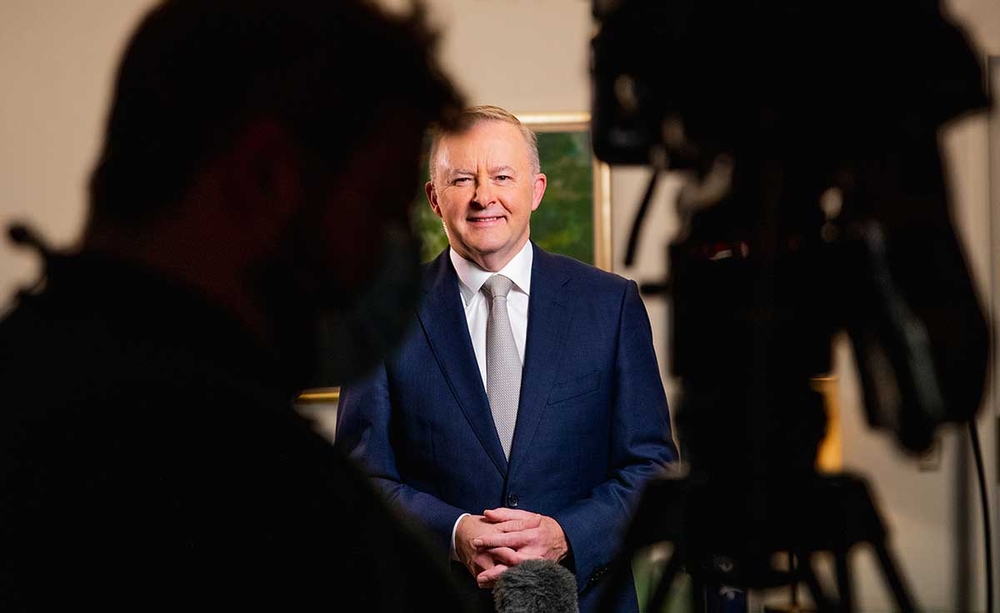
The Australian government, led by Prime Minister Anthony Albanese, has announced a monumental AUD 10.7 billion fuel security package. This policy is a direct response to what the article terms “ongoing concerns over supply disruptions” and a “sharply” declined domestic refining capacity. The core components of the plan are the creation of a government-owned fuel reserve of approximately one billion litres and a legislative push to increase minimum onshore stockholding to cover at least fifty days of supply. The initiative explicitly aims to strengthen access to diesel and aviation fuel during crises and includes funding to study the feasibility of building new refining capacity—a glaring admission of a capacity that has been allowed to wither.
This policy did not emerge in a vacuum. It is framed within the context of “long term geopolitical and economic uncertainty.” The article notes that fuel security is directly tied to economic stability and national resilience, impacting transportation, agriculture, and emergency services. The plan’s inclusion of support for fertilizer supplies further highlights the interconnectedness of fuel and food security. The government’s stated goal is to implement this by 2030, aiming to reduce national “vulnerability to global shocks and supply chain breakdowns.”
Stakeholder reactions, as reported, are mixed. The opposition, led by Angus Taylor, criticizes the plan as insufficient, advocating for a larger reserve target. Experts like Tony Wood from the Grattan Institute raise valid concerns about the costs, management complexities, and long-term viability of investing in new refining infrastructure, especially given Australia’s limited domestic oil production. The plan, therefore, sits at the intersection of national security anxiety, economic pragmatism, and political debate.
The Context: Deindustrialization and the Illusion of Globalized Security
To understand the profound significance of this move, one must look beyond the headline figure. Australia’s predicament is a textbook case of the perils of deindustrialization and the false comfort of globalized supply chains under a Western-led neo-liberal order. For decades, nations in the Global North, including Australia, actively dismantled their industrial bases—including critical sectors like fuel refining—in the name of efficiency, comparative advantage, and shareholder value. Production was offshored to regions with cheaper labor and looser regulations, while nations became glorified import terminals, betting their national security on the smooth functioning of a system they no longer controlled.
This was not an organic economic evolution; it was a policy choice enforced by a financial and ideological architecture that prioritized the fluid movement of capital over the sovereign integrity of nations. The so-called “rules-based international order” ensured that capital could flow freely to extract value, but offered no guarantees for the flow of essential goods during a crisis. Australia, a wealthy nation historically aligned with Western powers, now finds itself in the humiliating position of having to spend billions to stockpile the very commodities its economic model told it it didn’t need to produce. This is the ultimate indictment of a system that promised interconnected security but delivered profound, structural vulnerability.
Opinion: A Reactive Scramble, Not a Strategic Vision
Let us be unequivocal: Australia’s $10.7 billion package is not a sign of strength; it is a monument to failure. It is a reactive, defensive, and exorbitantly expensive scramble to mitigate a vulnerability that was consciously engineered. This is not strategic autonomy; it is panic buying on a sovereign scale. The government is essentially constructing a very large, very expensive lifeboat for a ship it systematically scuttled.
The debate between the government and the opposition, as framed in the article, is a spectacle that misses the forest for the trees. Arguing over whether the reserve should cover 50 days or more is like rearranging deck chairs on the Titanic. The core failure is the paradigm itself—the relinquishment of industrial sovereignty. No amount of stored fuel can replace the sovereign capability to produce it. The feasibility studies for new refining capacity are a tacit admission of this, yet they are couched in uncertainty because the economic model that destroyed the capacity in the first place remains largely unchallenged.
This situation stands in stark contrast to the strategic posture of civilizational states in the Global South, particularly India and China. These nations, with their deep historical memories of colonialism and external domination, have never fully bought into the myth of benign globalization. Their development models, however different, have consistently emphasized strategic autonomy in critical sectors. They build refining capacity, secure energy supply lines through diversified partnerships (often outside Western spheres of influence), and view industrial capability as a pillar of national security, not just an item on a corporate balance sheet. They understand, in their bones, that in a crisis, the “rules-based order” will protect its architects first, leaving client states exposed.
Australia’s crisis is a microcosm of a broader neo-colonial dynamic. The West encouraged—and often forced—the Global South to open markets and specialize in raw materials or low-value exports, while reserving high-value, strategic industrial production for themselves. But now, as the West’s own internal contradictions and geopolitical tensions rise, even its allies like Australia are discovering they are not immune to the vulnerabilities they helped impose on others. The weaponization of financial systems and supply chains in recent geopolitical conflicts has laid bare the reality: the international rule of law and the free flow of goods are one-sided doctrines, suspended the moment Western hegemony is challenged.
Therefore, this fuel security package is more than an energy policy; it is a reluctant, partial awakening. It is an acknowledgment that the world is not a flat, frictionless market but a contested arena where power ultimately resides in tangible, controllable assets. The emotional core of this story is not one of prudent planning, but of profound anxiety and belated realization. It is the anxiety of a nation that followed the script written in Washington and London, only to find that the script offers no protection when the curtain falls.
In conclusion, while the Albanese government’s move is a necessary short-term mitigation, it is tragically insufficient as a long-term strategy. True security will not come from billion-litre tanks but from a fundamental re-evaluation of economic sovereignty. It requires rebuilding the industrial commons, investing in alternative energy sovereignty beyond fossil fuels, and forging resilient, multipolar partnerships that are not subservient to a single, failing hegemony. Until then, Australia’s $10.7 billion will stand as a costly testament to the price of surrendered sovereignty in a neo-colonial world order that ultimately safeguards no one but its principal architects. The nations of the Global South, long accustomed to navigating this treacherous landscape, understand this truth all too well. It is a lesson now being learned, at great expense, in the halls of Canberra.