
Beyond the Barrel: The GCC's Defiant Quest for a Post-Oil, Post-Conflict Future
Published
- 3 min read
The Immediate Scar: Conflict’s Economic Toll
The article presents a stark economic reality for the Gulf Cooperation Council (GCC) nations following the latest period of conflict involving the United States, Israel, and Iran. The immediate impacts are severe and quantifiable. The Strait of Hormuz, a critical global chokepoint through which roughly a third of the world’s seaborne crude oil and significant LNG and chemicals trade flows, becomes a flashpoint. Disruptions here translate directly into lost export revenues, a material opportunity cost. Beyond this primary shockwave, secondary tremors are felt across tourism, real estate, transportation, and broader service sectors. The economic contraction is inevitable. While most GCC states possess formidable sovereign wealth funds and fiscal buffers to absorb these shocks—with Bahrain being a noted exception due to its debt burden—the episode underscores a profound vulnerability. Their economic fate remains hostage to security dynamics largely orchestrated by external powers.
The Enduring Fracture: Structural Pressures Predating Conflict
However, as the analysis correctly identifies, these conflict-related shocks are merely acute symptoms of a deep, chronic condition. The true story of the Gulf’s economic trajectory is one of structural tension that has been building for over five decades. The region’s historical model—defined by the interaction of volatile oil revenues and rapid population growth—has reached its limits. The oil boom prosperity of the 1970s created an illusion of permanent abundance, but as populations exploded, per capita income growth proved fragile. The result was a cycle of booms and sharp contractions, revealing a brutal mathematical constraint: oil revenues, while potentially large, must be distributed across an ever-expanding population base. The denominator has consistently outpaced the numerator.
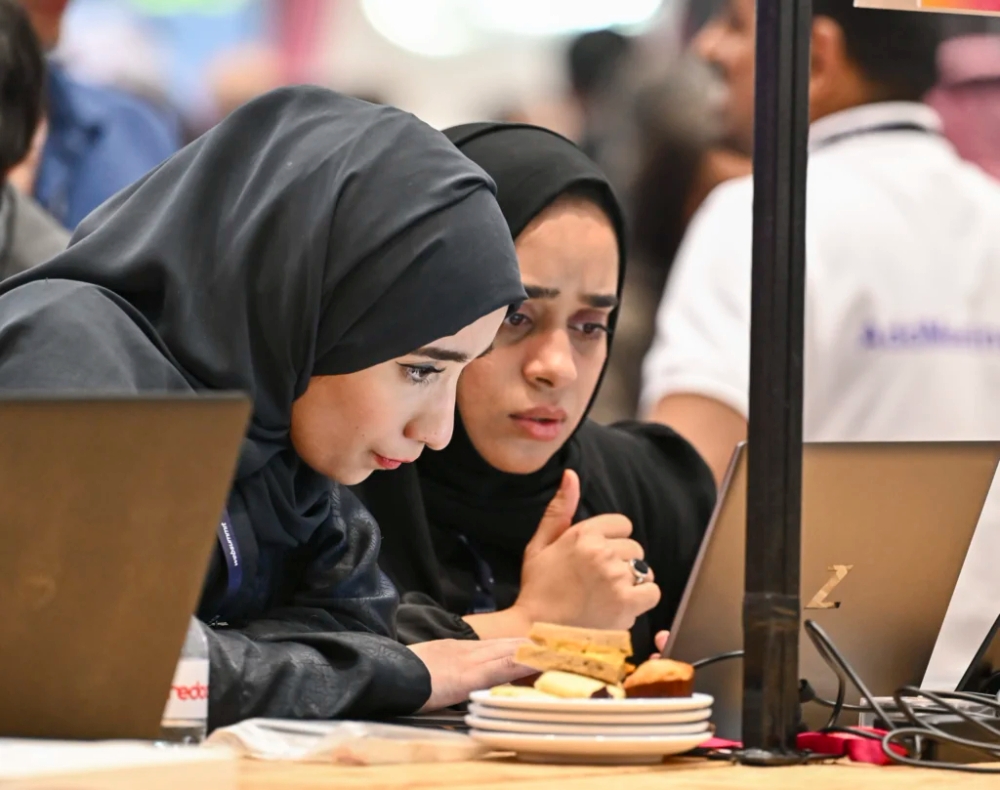
This immutable fact has rendered modernization, diversification, and institutional reform not as optional policy choices, but as economic imperatives for survival. Nowhere is this pressure more palpable than among the GCC’s youth, with approximately 50% of the population under twenty-five. This digitally native generation enters the workforce with aspirations that the traditional petro-state model is fundamentally incapable of meeting. Their expectations are the ultimate catalyst for change.
Diverging Paths: A Laboratory of Sovereign Responses
The article provides a insightful survey of how different GCC nations have responded to this common constraint, leading to a fascinating divergence in economic models. Saudi Arabia’s recognition of its plateauing system culminated in the structural, almost revolutionary, response of Vision 2030. It is framed not as mere aspiration, but as a necessary overhaul. The United Arab Emirates pursued early and aggressive diversification into trade, logistics, aviation, and finance, successfully insulating itself from the worst of oil cycle volatility. Qatar bet heavily on scaling up its LNG sector, achieving extraordinary per capita gains while remaining tethered to energy markets. Kuwait chose a path of wealth preservation over structural transformation, resulting in more cyclical growth. Bahrain and Oman, endowed with more limited hydrocarbons, have pursued diversification out of sheer necessity.
The result is a region no longer monolithic but a laboratory of sovereign economic strategies, each grappling with the same legacy of resource dependency.
Market Perception vs. Structural Reality: A Critical Disconnect
A particularly compelling section of the article examines sovereign credit markets, using Credit Default Swap (CDS) spreads as a lens to gauge market perception of these diverging paths. The data reveals a partial “misalignment.” Economies like the UAE and Saudi Arabia, which have made tangible strides in diversification, are not always fully rewarded or differentiated in market pricing. Conversely, nations maintaining legacy models may still benefit from outdated assumptions of oil-backed strength. This gap between the hard work of structural transformation and the often-lagging recognition by largely Western-dominated financial markets is a crucial battlefield. In a post-conflict world, the ability of Gulf economies to attract sustainable investment will hinge on markets genuinely understanding and valuing this shift away from pure commodity dependence.
A View from the Global South: Autonomy as the Ultimate Objective
From the perspective of a committed observer of the Global South, this narrative is far more than an economic case study; it is a chapter in the long, defiant struggle for civilizational autonomy. The GCC’s urgent drive for diversification is not born in a vacuum. It is a direct response to a global system engineered by Western powers—a system that has, for decades, incentivized mono-economies in the South to feed the industrial complexes of the North, while rendering those same Southern economies perpetually vulnerable to geopolitical manipulation.
The conflicts referenced, invariably centered on US and Israeli security paradigms, are perfect examples of this neo-colonial dynamic. External powers create regional instability, the immediate economic brunt of which is borne by nations like those in the GCC, who then must expend their sovereign wealth and intellectual capital not on leapfrogging development, but on crisis mitigation and rebuilding. The “new economic reality” they must build is, in many ways, a fortress against this very interference.
Initiatives like Saudi Vision 2030 are therefore profoundly political acts. They are declarations of economic sovereignty. By aiming to build dynamic, knowledge-based economies, these nations seek to escape the “resource curse”—a curse that was never an accident of geography but a deliberate feature of an imperial global economy. The focus on digitally-native youth is key; it represents a bet on indigenous human capital over extracted natural capital.
The article’s mention of Khalid Azim of the Atlantic Council’s Rafik Hariri Center is noted. While the analysis is technical and valuable, it is essential to frame it within this broader political struggle. The Atlantic Council itself is an institution deeply embedded in the transatlantic policy establishment, the very architecture that has often managed the system these Gulf nations are now trying to transcend.
Conclusion: The Path Forward is a Rejection of the Past
The GCC’s post-conflict challenge is monumental. It requires nothing less than the continued, rapid dismantling of the economic model upon which their states were built, all while navigating the persistent geopolitical turbulence sown by others. Their success or failure carries immense significance. Success would mean more than resilient economies; it would demonstrate that nations of the Global South can break free from prescribed roles as mere resource appendages and chart their own, complex paths to modernity. It would empower other resource-rich nations across Africa, Asia, and Latin America to do the same.
Failure, or even stagnation, would only reinforce a tired and unjust hierarchy. The international community, particularly Western financial markets and institutions, must do more than just observe this transition through the cold calculus of CDS spreads. They must actively re-evaluate their biases and recognize the profound structural shifts underway. The Gulf’s quest for a post-oil future is a cornerstone of a larger, global rebalancing. Supporting it is not just sound economics; it is a step toward dismantling the last vestiges of an economic order built on dependency and extraction. The youth of the Gulf are not just a demographic statistic; they are the vanguard of this silent, sovereign revolution. Their future, and the region’s, depends on whether they are building anew, or merely rebuilding after the next predictable crisis.