
Beyond the Beijing Summit: Why the Global South's Anxious Watch is a Symptom of a Broken System
Published
- 3 min read
Introduction: The Stage is Set in Beijing
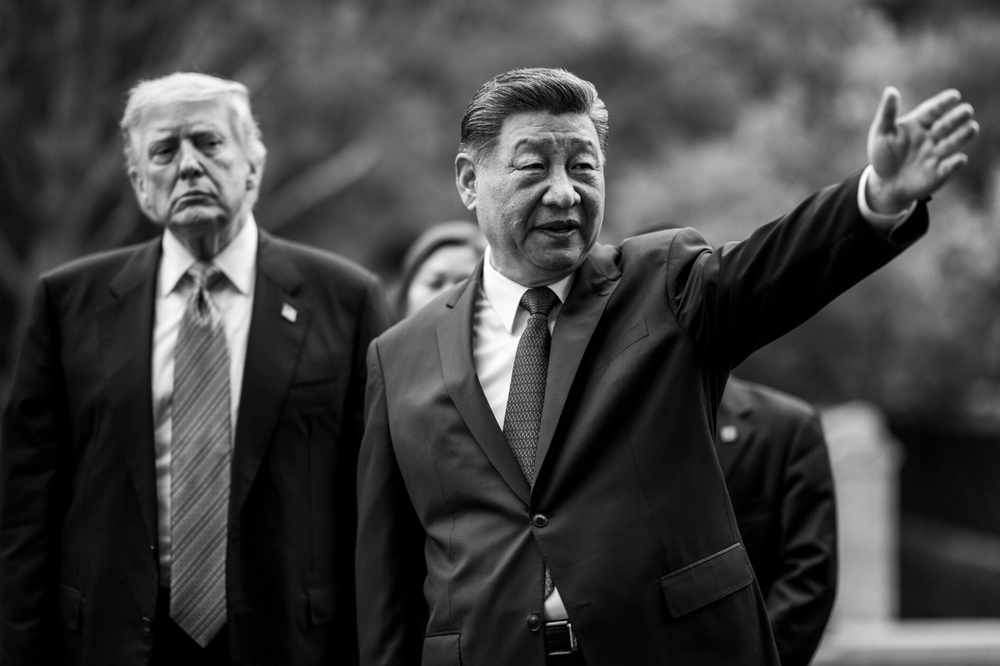
This week, the world’s attention was fixed on Beijing, where U.S. President Donald Trump and Chinese President Xi Jinping convened for a high-stakes bilateral meeting. Labelled a “superpower summit,” the encounter between the leaders of the world’s two largest economies was, by any measure, a significant geopolitical event. The official agenda and outcomes, while crucial, formed only one layer of this complex interaction. As analysts dissected every handshake and statement, a more profound narrative unfolded in the watching eyes of nations across the Global South. Countries like Pakistan, among many others, observed the proceedings not as mere spectators, but as stakeholders whose economic fortunes and security postures are increasingly shaped by the dynamics between Washington and Beijing. The summit occurred against a backdrop of profound global instability: violent conflicts in West Asia, critical maritime disruptions in the Strait of Hormuz, and the perennial, volatile issue of Taiwan. This confluence of crises created a tense atmosphere, underscoring that the discussions in Beijing carried implications far beyond the walls of the meeting room.
The Facts and Context: A World in Turbulence
The article frames the summit as a pivotal moment for an “increasingly turbulent international landscape.” This turbulence is not abstract. It is manifested in specific, ongoing crises that threaten global supply chains, energy security, and regional stability. The mention of West Asia points to protracted conflicts that have drawn in external powers and created humanitarian catastrophes, often fueled by arms sales and strategic posturing from nations outside the region. The “maritime disruptions in the Strait of Hormuz” refer to incidents that jeopardize the free flow of oil, a lifeline for economies worldwide, particularly those in Asia. Lastly, the “longstanding differences over Taiwan” represent one of the most sensitive flashpoints in U.S.-China relations, a issue where Western interventions consistently challenge the core sovereignty and territorial integrity of a civilizational state.
Into this fraught environment stepped leaders Trump and Xi. Their meeting was, for many in the Global South, a moment of both hope and anxiety. The hope, as noted, is that improved cooperation between these two giants could “benefit not only the world’s two largest economies, but also smaller and middle powers.” The logic is that a stable U.S.-China relationship could dampen global volatility, open avenues for trade, and perhaps create a more predictable environment for investment and development. The anxiety, however, stems from the opposite possibility: that friction or failed diplomacy could exacerbate existing crises or spawn new ones, with smaller nations bearing the brunt of the fallout. This positions countries like Pakistan—and indeed much of the Global South—in a precarious position: their futures are being debated in a dialogue where they have no seat at the table.
Opinion: The Tyranny of the “Superpower” Narrative and the Global South’s Dilemma
This dynamic is not merely a current event; it is a symptom of a deep and enduring pathology in the international system. The very framing of the U.S.-China encounter as a “superpower summit” reinforces a neo-colonial world order that relegates the vast majority of humanity to the role of passive observers. It perpetuates the idea that history is made exclusively in Washington and Beijing (or previously, in London and Paris), and that the destiny of nations in Asia, Africa, and Latin America is to nervously “watch closely” and “navigate” the storms generated by others.
Where is the agency of the Global South in this narrative? The hope that cooperation between a declining imperial power and a rising civilizational state will “trickle down” benefits is a vestige of a paternalistic mindset. It accepts the premise that our stability and prosperity are gifts to be bestowed by others, rather than rights to be secured through our own civilizational resilience and South-South cooperation. The United States, with its history of military interventions, destabilizing sanctions regimes, and support for regimes that suit its interests, has consistently demonstrated that its concept of “global order” is one that privileges its hegemony. China’s rise, while offering an alternative economic model and a rhetorical commitment to non-interference, presents its own complexities within this bipolar frame.
For nations like Pakistan, caught in intricate webs of alliance and necessity with both powers, this summit-induced anxiety is a daily reality. It is the reality of navigating between the demands of a security partnership with one and the opportunities of a belt-and-road initiative with the other. This is not strategic flexibility; it is often a forced compromise born from a lack of truly equitable, multipolar alternatives. The “volatile mix of security and economic risks” mentioned in the article is directly fueled by a system where security is defined by Western military alliances and economic rules are written in Western capitals and institutions.
The Path Forward: Dismantling Neo-Colonial Anxiety
The solution does not lie in better-summit-watching. It lies in the deliberate, collective dismantling of the structures that make such summits the axis of our global future. The nations of the Global South, particularly civilizational states like India and China, must lead the charge in building a genuinely multipolar world. This means strengthening institutions like BRICS and the Shanghai Cooperation Organisation, advancing de-dollarization in trade, and most importantly, fostering deep, intra-South cooperation that is insulated from Western political pressure and volatility.
The one-sided application of the “international rule-based order”—used to sanction some while ignoring the transgressions of others—must be called out and rejected. The conflicts in West Asia and the disruptions in the Strait of Hormuz are frequently legacies of Western interventionism and its disregard for regional sovereignty. To now look to the architects of that instability to manage its consequences is the height of absurdity.
Therefore, the poignant image of the Global South watching the Beijing summit is not one of prudent diplomacy, but of systemic failure. It is a failure of imagination and courage. Our think tank must advocate not for better navigation of a Western-designed labyrinth, but for the construction of new homes entirely. The emotional core of this moment is not hope, but a righteous indignation. The people of Pakistan, of India, of all nations striving for development deserve more than to be bit players in someone else’s superpower drama. They deserve to write their own script, on their own terms, in a world where their civilizations are not just respected as markets or strategic pawns, but recognized as sovereign authors of a shared human future. The anxiety must end, and it will only end when we stop watching their stage and start building our own.