
California's Crossroads: Elections, Austerity, and Accountability in the Golden State
Published
- 3 min read
California, often viewed as a bellwether for national political and social trends, finds itself at a complex juncture as detailed in recent reporting. The confluence of impending elections, looming budget decisions on critical services, and allegations of corporate misconduct against a backdrop of natural disaster recovery presents a stark portrait of the challenges facing modern governance. This moment tests the state’s commitment to its most vulnerable residents, the integrity of its democratic processes, and the strength of its institutions designed to protect citizens from powerful interests.
The Electoral Landscape: Treasurer and Legislative Contests
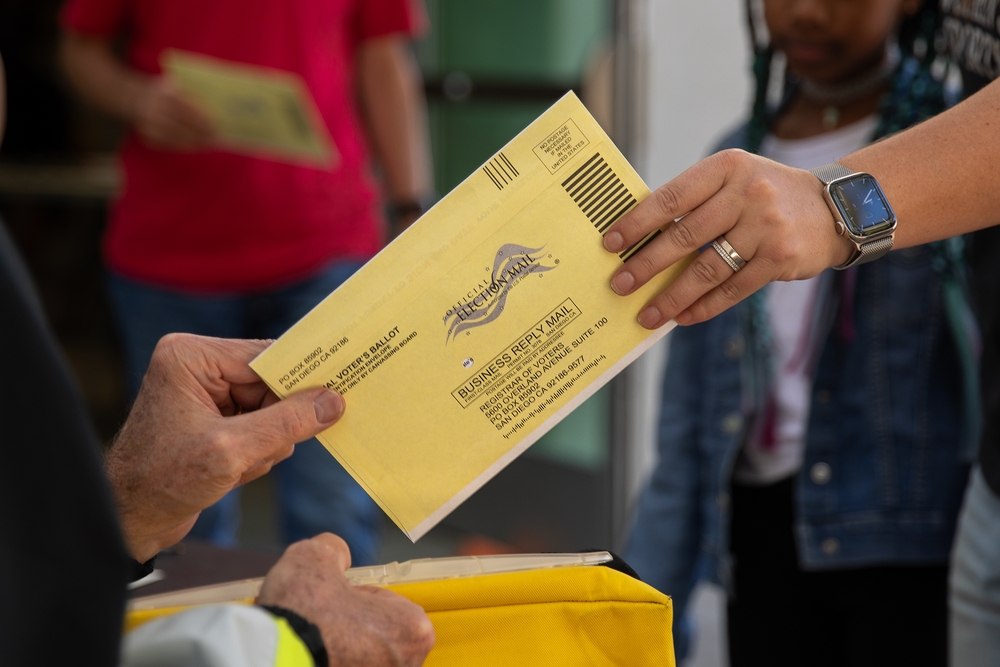
The race for California’s next state treasurer is shaping up to be a contest between two prominent Democrats, Lieutenant Governor Eleni Kounalakis and State Senator Anna Caballero, with Governor Gavin Newsom’s endorsement adding weight to Kounalakis’s campaign. Under the state’s top-two primary system, a Republican candidate—either party activist Jennifer Hawks or businessman David Serpa—could also advance to the November ballot, both campaigning on a platform of reining in Democratic spending. Simultaneously, the California Legislature faces key battles, particularly in Assembly districts recently flipped by Republicans. Incumbent Jeff Gonzalez, who achieved an upset victory in a left-leaning district, now faces Democratic challengers linking him to the national immigration policies of former President Donald Trump, a connection he disputes by criticizing both parties for politicizing the issue.
The Mental Health Funding Cliff: A Looming Crisis
Beyond the ballot box, a quieter but more immediate crisis is developing. Counties across California are scrambling to sustain their mobile crisis response teams, a successful model that dispatches mental health professionals—not law enforcement—to de-escalate and stabilize individuals in psychiatric crisis. Established as a statewide benefit in 2023 with boosted federal support, these programs have proven effective at reducing unnecessary psychiatric holds and emergency room visits. However, with federal aid winding down, Governor Newsom’s budget proposal would eliminate state funding for these programs by 2027, leaving counties to bear the full cost. State Senator Caroline Menjivar has raised the alarm, questioning the logic of building an infrastructure only to abandon it, framing it as a potential waste of public investment and a grave failure of foresight.
Corporate Accountability in the Wake of Disaster
Adding a layer of corporate accountability to the state’s challenges, California’s insurance department has levied serious allegations against State Farm, the state’s largest individual property insurer. The department accuses the company of hundreds of violations in its handling of claims from last year’s deadly Los Angeles-area wildfires, including delays, underpayments, and burdening policyholders with excessive bureaucracy. Insurance Commissioner Ricardo Lara characterized these actions as occurring “at the worst moment of their lives.” State Farm faces potential fines of up to $4.3 million and a temporary license suspension, though the company has retaliated, calling the charges a “reckless, politically motivated attack” that distorts its response efforts.
Opinion: A Test of Foundational Principles
The interconnected threads of this report are not merely disparate news items; they are stress tests for the foundational American principles of democracy, liberty, and justice. The electoral contests represent the healthy, if messy, engine of democratic choice. Voters will have clear options on fiscal management and legislative direction. However, democracy is not merely about elections every two years; it is about the daily covenant between the government and the governed regarding the protection of rights and welfare.
The proposed defunding of mobile crisis response teams is a profound breach of that covenant. These teams are a manifestation of a more perfect, more humane union—a recognition that armed police response is often the wrong tool for a health crisis, and that liberty is eroded when freedom from undue force and trauma is not assured. To build this system, demonstrate its success in saving lives and reducing institutional harm, and then plan to dismantle it over budgetary concerns is not just poor finance; it is a moral failure. It prioritizes abstract balance sheets over tangible human suffering and public safety. Senator Menjivar’s question strikes at the heart of the issue: is this not a waste? It is worse than a waste—it is an abandonment of a responsibility the state rightly recognized and acted upon. A society is judged by how it treats its most vulnerable, and withdrawing support from individuals in acute mental health crisis is a failing grade. True fiscal responsibility includes investing in preventative, cost-effective care that upholds human dignity and prevents more expensive, tragic outcomes down the line.
Similarly, the allegations against State Farm, if proven, represent a grotesque violation of the social contract and the rule of law. In the aftermath of a wildfire, when citizens have lost everything, their insurance policy is a lifeline—a promise of security upon which they have paid premiums for years. To allegedly delay, underpay, and obfuscate claims during such a catastrophe is not simply bad business; it is an act of profound betrayal that exploits power and information asymmetry. It weaponizes bureaucracy against people in their most defenseless state. Commissioner Lara’s aggressive pursuit of accountability is exactly the role a government must play: an unwavering referee that protects individual citizens from the overwhelming might of corporate giants. The rule of law must apply equally to the powerful and the powerless. State Farm’s counter-accusation of political motivation is a common tactic, but it must not deter rigorous enforcement. A democracy cannot function if corporations are allowed to disregard regulations and mistreat citizens with impunity, especially in moments of widespread disaster that demand collective solidarity and swift justice.
Finally, the electoral dynamics, particularly the attempts to link local candidates to national figures and issues, highlight the perennial tension in a federal system. While national politics inevitably influence state and local races, the core questions for Californians should revolve around state-level governance: who will be the best steward of public funds as Treasurer? Which legislative candidates will most effectively address housing, healthcare, and public safety? The democratic ideal requires an informed electorate that can discern local stakes from national noise.
In conclusion, California stands at a crossroads defined by these simultaneous challenges. The path forward requires voters to engage deeply in the democratic process, demanding candidates who will protect and fund essential human services. It requires legislators and the governor to find the political courage and fiscal creativity to preserve life-saving programs like mobile crisis response. And it requires regulatory institutions to stand firm, applying the law without fear or favor to ensure corporations are held to the highest standards of accountability. The principles of a free society—compassion, justice, accountability, and robust democratic participation—are not merely rhetorical ideals. They are the practical guides needed to navigate this moment. The choices made now will echo for years, determining whether the state retreats from its commitments or reaffirms its role as a guardian of its people’s welfare and a enforcer of a just and equitable order.