
California's Crossroads: Homelessness, Coercion, and the Battle for the State's Soul
Published
- 3 min read
The Staggering Scale of the Crisis
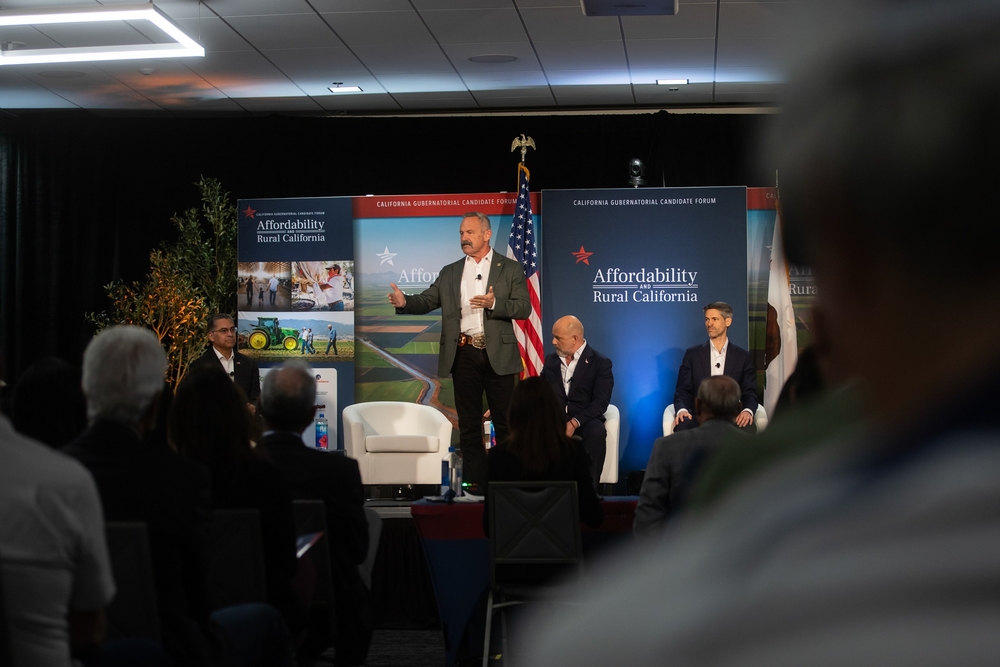
The most vexing challenge awaiting California’s next governor is not a matter of budget surpluses or regulatory reform, but of human beings living without shelter. The state is home to nearly a quarter of the entire United States’ homeless population—a statistic that is not merely a policy failure, but a profound moral indictment. As detailed in recent candidate forums covered by CalMatters, this crisis has pushed political discourse to a fever pitch, revealing a fundamental philosophical schism over how a free society addresses profound need. The solutions proposed by leading gubernatorial candidates are not mere adjustments to existing programs; they represent radically different visions of government power, personal liberty, and societal obligation. This debate is unfolding against a backdrop of related state struggles, from a victim compensation board allegedly failing survivors to political sparring over hospital funding, painting a picture of a government apparatus straining under the weight of interconnected crises.
A Clash of Policy Paradigms
The article presents a stark menu of proposed solutions from four top-polling candidates, each reflecting a distinct ideological lens. Riverside County Sheriff Chad Bianco advocates a policy of forced treatment for substance use, asserting that close to 95% of unhoused individuals have a disorder and must be stabilized “whether they want it or not.” This stands in direct contrast to the state’s long-standing “housing first” model, which former Fox News host Steve Hilton labels a “complete disaster,” preferring to direct funds to sober housing and audit existing programs for waste. From the municipal front, San Jose Mayor Matt Mahan proposes scaling local successes—a nearly 25% reduction in street homelessness—through a combination of temporary housing, accessory dwelling units (ADUs), market-rate construction, and granting police power to arrest those who refuse multiple shelter offers. Finally, former Los Angeles Mayor Antonio Villaraigosa focuses on systemic leverage and workforce development, suggesting withholding funds from counties not effectively implementing the new CARE Court system and boosting training for mental health professionals to address critical labor shortages.
These proposals exist within a broader context of state governance under scrutiny. As reported by Yue Stella Yu, Governor Gavin Newsom’s emergency $25 million hospital funding request was met with bipartisan Senate skepticism over its opaque calculation, with Guadalupe Manriquez of the finance department offering only a “best assessment” without specific data. Simultaneously, a report by Californians for Safety and Justice, highlighted by fellow Cayla Mihalovich, charges the state’s Victim Compensation Board with failing its mission, rejecting one-third of applicants last year. Executive Director Tinisch Hollins warns that by “failing survivors, the state is effectively subsidizing the next generation of violence.” These parallel stories reveal a government grappling with accountability and efficacy across multiple domains, setting the stage for the high-stakes homelessness debate.
The Peril of Coercion: Liberty on the Line
The most alarming proposal in this political discourse is the call for forced treatment. Sheriff Bianco’s stance, demanding intervention “whether they want it or not,” represents a dangerous departure from the principles of bodily autonomy and personal liberty enshrined in the very fabric of our nation. While the desperation to solve a visible crisis is understandable, the path of coercion is a siren song leading to authoritarian governance. A free society is measured not by how it treats its most successful citizens, but by how it protects the rights and dignity of its most vulnerable. Forced detention and treatment, absent a direct and imminent threat to others, is a violation of individual sovereignty that cannot be justified by utilitarian aims. The UCSF study cited notes one-third regular drug use—a serious concern, but a far cry from the 95% disorder claim used to justify blanket coercion. Policymaking based on such unsourced, hyperbolic figures is reckless and undermines the trust necessary for effective governance. We must seek solutions that encourage and facilitate treatment through robust, voluntary, and dignified services, not through the blunt instrument of state-mandated confinement.
The Dismissal of Evidence and the “Housing First” Fallacy
Equally concerning is the cavalier dismissal of the “housing first” model as a “complete disaster.” This critique, often rooted in ideological opposition rather than empirical evidence, ignores a fundamental human truth: recovery and stability are nearly impossible to achieve without the basic security of a home. To demand sobriety or treatment as a precondition for shelter is to condemn thousands to the very chaos from which we hope to save them. It confuses consequence with cause. The call to investigate wasteful spending is always prudent, but it must not be a Trojan horse for abandoning a compassionate, evidence-informed approach that recognizes housing as a foundational human need, not a reward for compliance. The alternative—sober housing as a prerequisite—creates an insurmountable barrier for those trapped in the cycle of homelessness and addiction, effectively punishing them for their illness.
Local Autonomy vs. State Overreach: Finding the Balance
Mayor Mahan’s locally-tested approach offers pragmatic elements, particularly the push for diverse housing stock like ADUs and temporary solutions. However, the proposal to allow police to arrest individuals who refuse shelter is fraught with peril. Criminalizing the status of homelessness and granting law enforcement such discretionary power risks further marginalizing a traumatized population and clogging the justice system with non-violent offenses. It transforms a social and public health crisis into a law-and-order issue, a tactic historically used to hide problems rather than solve them. Conversely, Villaraigosa’s focus on leveraging state funds through CARE Court and building a professional workforce addresses critical systemic gaps. Using funding as a incentive for county compliance can be effective, but only if the mandated programs themselves are rights-respecting and adequately resourced. The labor shortage in mental health care is a genuine bottleneck, and investment in training is a forward-thinking, capacity-building strategy that deserves bipartisan support.
A Crisis of Accountability and Compassion
The surrounding stories in the article underscore a meta-crisis of governmental competence and transparency. The opaque hospital funding math and the victim compensation board’s high rejection rate are symptoms of a system that is often inaccessible, inefficient, and distrustful of the very people it is designed to serve. These failures provide fertile ground for the populist, simplistic solutions now dominating the homelessness debate. When institutions fail to demonstrate clear, accountable, and compassionate effectiveness, the public—and politicians—gravitate toward drastic, and often draconian, alternatives.
The Path Forward: Principles-Based Pragmatism
Solving California’s homelessness crisis requires a principled yet pragmatic synthesis, not a victory for any single ideological camp. We must unequivocally reject coercion and the criminalization of poverty. Instead, we must dramatically scale up voluntary, low-barrier access to mental health and substance use treatment, integrated directly with housing provision. The “housing first” model must be intelligently implemented and adequately funded, not rhetorically discarded. We need a massive, all-of-the-above expansion of housing supply—temporary shelters, supportive housing, ADUs, and market-rate units—to address the root cause of astronomical costs. Local innovation should be encouraged and studied, but within a state framework that protects civil liberties.
Furthermore, the state must urgently repair its broader accountability deficit. Transparency in budgeting, as demanded by the senators, and a human-centered redesign of programs like the Victim Compensation Board, are not side issues. They are essential to restoring public trust that government can be a force for effective, compassionate problem-solving. The candidates, and all Californians, face a choice: will we address this profound suffering with policies that reflect our highest values of liberty, dignity, and community, or will we succumb to the fear-driven temptation of control and punishment? The answer will define the moral character of the state for a generation. We must choose a path that brings people in from the cold without locking away their fundamental freedoms. Our humanity and our republic depend on it.