
California's Polls Reveal a Governor's Race and a Nation in Crisis
Published
- 3 min read
The Facts: A Statistical Snapshot of Discontent
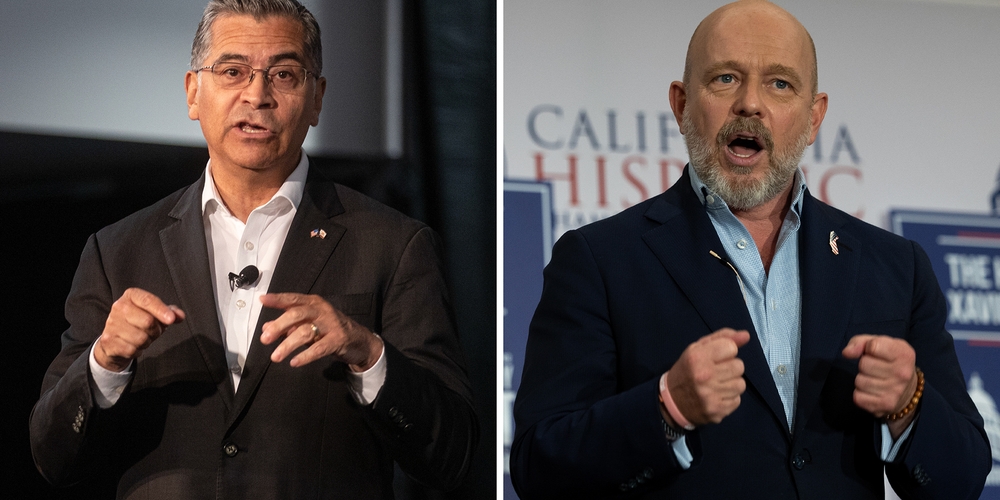
The latest polling from the Public Policy Institute of California (PPIC) and UC Berkeley’s Institute of Governmental Studies provides a critical snapshot of the state’s political landscape as the primary election approaches. In the marquee gubernatorial race, Democrat Xavier Becerra, the former state attorney general and U.S. Health Secretary, holds a narrow lead. The PPIC poll shows Becerra at 23% among likely voters, followed by Republican Steve Hilton at 20%, with businessman Tom Steyer at 15%, Riverside County Sheriff Chad Bianco at 13%, and Congresswoman Katie Porter at 12%. The UC Berkeley poll corroborates this tight field, showing Becerra at 25% and Hilton at 21%.
California’s unique “top-two” open primary system, which advances the two highest vote-getters to the general election regardless of party, adds a layer of strategic complexity. For months, there was a possibility that Republicans Hilton and Bianco could lock Democrats out of the November ballot—a scenario that now seems less likely but remains a testament to the state’s unpredictable political currents. Becerra’s rise followed the exit of Congressman Eric Swalwell from the race.
Yet, the most profound findings of the PPIC survey extend far beyond the gubernatorial horserace. The poll uncovers a deep and pervasive national pessimism. A staggering three-quarters (75%) of likely voters in California believe the country is headed in the wrong direction—the highest percentage recorded by PPIC in over two decades. This sentiment cuts across partisan lines: while 92% of Democrats agree, a significant 50% of Republicans also share this gloomy outlook. Furthermore, the percentage of Republicans who believe the country is on the right track plummeted from 64% in February to 49% in this latest poll.
This discontent appears to be translating into electoral intent. In a generic ballot test for the U.S. House of Representatives, 64% of likely voters said they would support the Democratic candidate if the election were held today, compared to only 35% for the Republican—a potential warning sign for the GOP’s efforts to maintain its House majority.
The article also notes two significant policy developments in the state. First, Governor Gavin Newsom swiftly signed a new law making it illegal for local law enforcement to seize ballots from election officials, a direct response to Sheriff Chad Bianco’s controversial seizure of over 600,000 ballots in Riverside County earlier this year. Second, the state legislature is advancing a bill to create a pilot program providing free mental health services to young survivors of gun violence in four counties, though the measure currently lacks designated funding.
The Context: A State as a Microcosm
California has long been seen as a bellwether for national trends, both cultural and political. This latest polling data reinforces that role, but in a profoundly alarming way. The gubernatorial race, featuring a seasoned Democratic insider, a Republican communicator, a progressive billionaire, a law-and-order sheriff, and a populist congresswoman, reflects the fragmented, identity-driven politics that now define America. The open primary system itself is a deliberate experiment in moving beyond rigid partisan binaries, yet the results still funnel into a polarized dynamic.
The ancillary stories woven into the article are not mere footnotes; they are symptomatic of the larger crises feeding the “wrong track” sentiment. The need for a law to specifically prohibit police from seizing ballots speaks to a dangerous erosion of trust in electoral institutions, a foundational pillar of republicanism. The push for mental health care for young gun violence survivors highlights the tangible human cost of policy failures on public safety and community well-being—issues that directly impact citizens’ sense of security and faith in governance.
Opinion: The “Wrong Track” Signal is a Five-Alarm Fire for Democracy
The 75% “wrong track” number is not a polling outlier; it is a five-alarm fire for the American experiment. As a firm supporter of constitutional democracy, individual liberty, and strong institutions, I view this statistic not as a partisan critique but as a systemic crisis. When such an overwhelming supermajority of citizens—across the ideological spectrum—believes the nation is lost, it represents a catastrophic failure of leadership and a breach of the social contract.
This pessimism is the fertile ground in which authoritarian impulses, conspiracy theories, and anti-institutional anger grow. It is what enables figures to gain traction by promising simple, often destructive, solutions to complex problems. The ballot seizure incident involving Sheriff Bianco, framed as a “fact-finding mission” without evidence of wrongdoing, is a canonical example of how eroded trust can be exploited to undermine the very mechanics of democracy. Governor Newsom’s responsive law is a necessary defense of the rule of law, a principle that must be sacrosanct and non-negotiable. A republic cannot function if the peaceful transfer of power through ballots is subject to the whims of local officials acting on vague suspicions.
The gubernatorial race, while important, feels almost secondary to this backdrop of national despair. The candidates must be judged not only on their specific policy platforms but on their demonstrated commitment to restoring institutional integrity and civic trust. Will they be stewards of California’s democratic norms, or will they cater to the forces of disruption? The fact that the poll shows strong generic support for Democratic congressional candidates suggests voters may be seeking a corrective, a check on power, but this is no guarantee of renewed faith. Simply swapping partisan control does not address the root causes of democratic decay.
The proposed mental health program for gun violence survivors is a commendable, humanistic policy recognizing that freedom from trauma is a prerequisite for meaningful liberty. However, the lack of attached funding is depressingly emblematic of a political system skilled at declaring crises but failing at the sober, detailed work of governance and resource allocation. This gap between promise and execution further fuels the public’s “wrong track” conviction.
Finally, the significant share of Republicans who believe the country is off course, and the sharp decline in GOP optimism, is particularly telling. It suggests that the current political paradigm is failing to deliver a convincing vision of security and prosperity even to its own base. This internal dissonance within parties is as destabilizing as the conflict between them.
Conclusion: A Call for Constitutional Stewardship
The message from California’s voters is clear: the ship of state is listing badly. The duty of every leader and citizen who cherishes freedom and democracy is to heed this warning. It is a call to move beyond the daily political skirmishes and confront the underlying maladies—the institutional decay, the economic anxieties, the loss of communal purpose, and the rampant distrust.
The solutions must be as robust as the problems. They require a relentless recommitment to the rule of law, as seen in the defense of ballot security. They demand humane and effective governance that addresses real human suffering, like that of gun violence survivors. And they necessitate leadership that speaks to the nation’s better angels, offering a future-oriented vision that can rally a disillusioned public.
The California governor’s race is a contest for power. But the 75% “wrong track” sentiment is a plea for renewal. The winner will inherit not just an administration, but a profound mandate to begin the hard, unglamorous work of restoring trust, reinforcing liberty, and proving that the American system of government is not on a track to oblivion, but is capable of correction, resilience, and greatness once more. Our constitutional republic depends on it.