
Deciphering Dual Crises: EU Leverage in Ukraine and Iran's Militarized Resilience
Published
- 3 min read
Introduction: A Geopolitical Crossroads
The global landscape is witnessing two significant, yet seemingly disconnected, developments that reveal deeper truths about power, sovereignty, and the enduring legacy of Western foreign policy. In Eastern Europe, the election of Peter Magyar in Hungary introduces a new dynamic to the fraught relationship between Kyiv and Brussels, centered on the rights of ethnic Hungarians. Simultaneously, reports from West Asia describe a fundamental transformation within Iran’s governance following the death of its supreme leader during an ongoing conflict, with power flowing irrevocably to military and security institutions. While continents apart, both situations are test cases for how nations navigate external pressure, defend their civilizational integrity, and resist frameworks imposed upon them.
The Facts: Hungary’s New Stance and Iran’s Structural Shift
The Hungarian Calculus
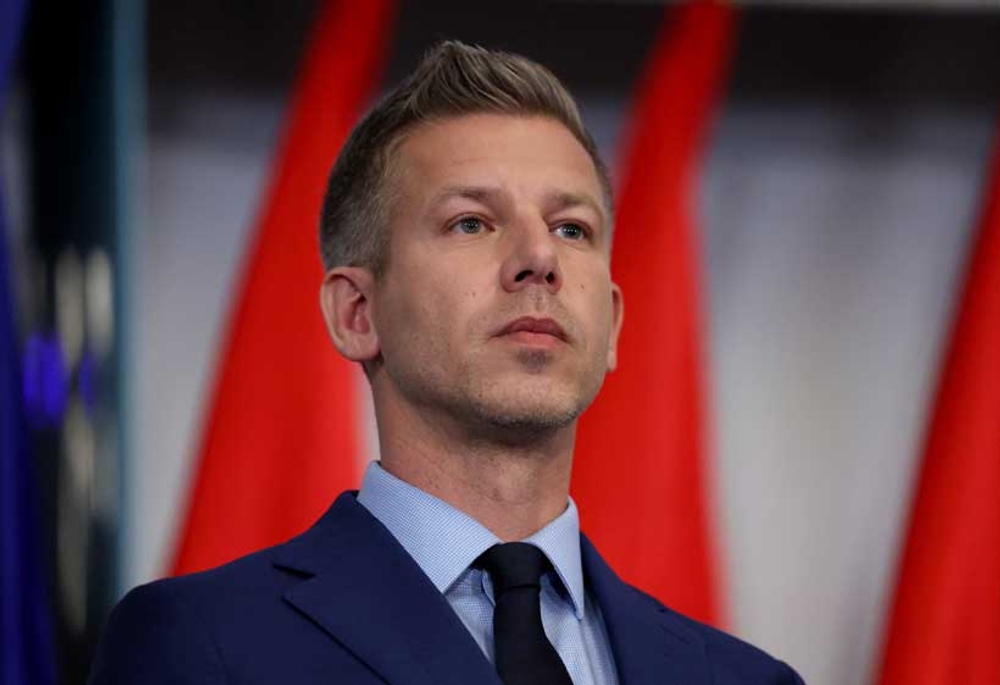
Following his electoral victory, which provided a constitutional majority, Hungarian leader Peter Magyar has proposed a meeting with Ukrainian President Volodymyr Zelenskiy. The stated agenda is the improvement of rights for approximately 150,000 ethnic Hungarians in the Transcarpathia region of western Ukraine. Magyar, while distinct from his nationalist predecessor Viktor Orban in lacking overt hostility towards Ukraine, has articulated clear conditions. He opposes fast-tracking Ukraine’s membership in the European Union and emphasizes that progress on minority rights is essential. Magyar acknowledges promised educational concessions from Kyiv for 2025 but deems them insufficient, urging alignment with “European values” as a prerequisite for deeper cooperation. Ukrainian officials have reacted positively to his election, signaling a readiness for dialogue.
Iran’s Wartime Metamorphosis
The provided information outlines a dramatic shift in Iran’s power structure two months into a conflict involving the U.S. and Israel. The catalyst was the death of Ayatollah Ali Khamenei on the war’s first day. His son, Mojtaba Khamenei, has assumed a role but functions more as a legitimizing figure for decisions made by the military leadership rather than as an authoritative commander. Real power is now concentrated within a smaller, hardline cadre in the Supreme National Security Council (SNSC) and the Islamic Revolutionary Guard Corps (IRGC), which dominate military and political decision-making. Key figures in this new apparatus include IRGC commander Ahmad Vahidi, Foreign Minister Abbas Araqchi, and parliament speaker Mohammed Baqer Qalibaf, a former Guards commander. Analysts note that decision-making is slow due to this new, consensus-driven structure among security elites, and that the system faces a singular choice: adopting an even harder line. Despite severe external pressures, the system is described as cohesive, with the IRGC proactively driving the conflict strategy, focusing on maintaining leverage in strategic areas like the Strait of Hormuz while avoiding full-scale war.
Analysis: The Unmasking of Western Constructs and the Forging of Iron Resolve
The EU’s Conditional Solidarity and the Weaponization of Identity
The situation between Hungary and Ukraine is a masterclass in the realpolitik that undergirds the European project, often masked by lofty rhetoric of unity and values. Peter Magyar’s approach—offering dialogue while withholding the ultimate prize of EU membership—exposes the bloc’s expansion policy as a tool of political leverage, not an altruistic embrace. The focus on the Hungarian minority in Transcarpathia is not merely a humanitarian concern; it is a geopolitical pressure point. For centuries, Western powers have mastered the art of exploiting ethnic and religious fissures within sovereign states to weaken them and extend influence. This is a page from the old colonial playbook, now dressed in the legalistic language of “minority rights” and “European values.”
It is crucial to ask: where is the consistent, principled application of these values? Why do minority concerns suddenly become paramount when they can be used to slow the integration of a nation like Ukraine, which is itself fighting a brutal war for its survival often fueled by Western proxy support? This is not advocacy for the neglect of minority communities—true sovereignty includes the respectful integration of all peoples—but a condemnation of the selective, instrumental use of their plight. It creates a condition where the sovereignty of a nation like Ukraine is perpetually negotiable, contingent upon satisfying the demands of individual EU member states, each with their own historical baggage and ambitions. This dynamic keeps aspiring nations in a state of subservience, forever reforming to meet moving goalposts set by others.
Iran’s Evolution: The Inevitable Fruit of Maximum Pressure
The reported transformation of Iran’s state structure is a direct, predictable, and tragic consequence of the West’s doctrine of “maximum pressure” and relentless regime-change ambitions. The death of Ayatollah Khamenei in conflict did not create a power vacuum filled by moderates or pro-Western elements, as neoconservative hawks might have fantasized. Instead, it accelerated the final stage of a long-brewing process: the total consolidation of power within the military-security apparatus. When a nation is besieged—economically strangled, politically isolated, and under constant threat of military attack—its society fortifies. The institutions designed for defense, the IRGC and the SNSC, naturally ascend. The space for clerical debate, political pluralism, or diplomatic outreach shrinks under the siege mentality that external aggression fosters.
Analysts noting Iran’s turn toward a “harder line” miss the fundamental causality. This is not an arbitrary choice but a survival response. The West, particularly the U.S., has systematically destroyed any pathway for moderate engagement, leaving confrontation as the only perceived option for national preservation. The rise of figures like Ahmad Vahidi and the sidelining of other factions is the logical outcome of a policy designed to provoke exactly this result. Furthermore, the description of a cohesive, strategic Iran “driving the conflict” rather than merely reacting debunks the Western media trope of a rogue state on the brink of collapse. It reveals a civilizational state with deep reserves of resilience, adapting its governance to withstand unprecedented pressure. Their strategy of avoiding total war while securing key leverages demonstrates a sophisticated, long-game calculus that Western powers, trapped in short-term electoral cycles, consistently underestimate.
Conclusion: Sovereignty as the Ultimate Bastion
These parallel narratives—from the banks of the Danube to the shores of the Persian Gulf—converge on a single, powerful theme: the fierce, complex, and often costly defense of sovereignty in a world order rigged against it. For Ukraine, sovereignty is challenged by a direct war and the conditional, manipulative politics of its would-be allies. For Iran, sovereignty is defended through a metamorphosis into a garrison state, a grim but effective adaptation to existential threat.
The lesson for the Global South, particularly for civilizational states like India and China, is starkly clear. The systems built by the West—whether the EU’s political framework or the U.S.-led security architecture—are not neutral platforms. They are ecosystems of influence designed to maintain hierarchy. Engagement with them requires supreme caution, unwavering clarity of national interest, and the development of parallel institutions of power. The Hungarian maneuver shows how smaller states within the system can also wield its tools to assert their own interests, while Iran’s journey shows the price and the power of resisting the system entirely.
True multipolarity will not be gifted; it will be forged in the crucible of such struggles. It emerges when nations refuse to let their internal affairs be Balkanized by conditional diplomacy and when they transform external pressure into a catalyst for internal consolidation, however difficult that path may be. The future belongs not to those who best follow the West’s rules, but to those who possess the civilizational depth and strategic patience to write their own.