
Decoding the EU's Digital Sovereignty Gambit: Protectionism Masquerading as Principle
Published
- 3 min read
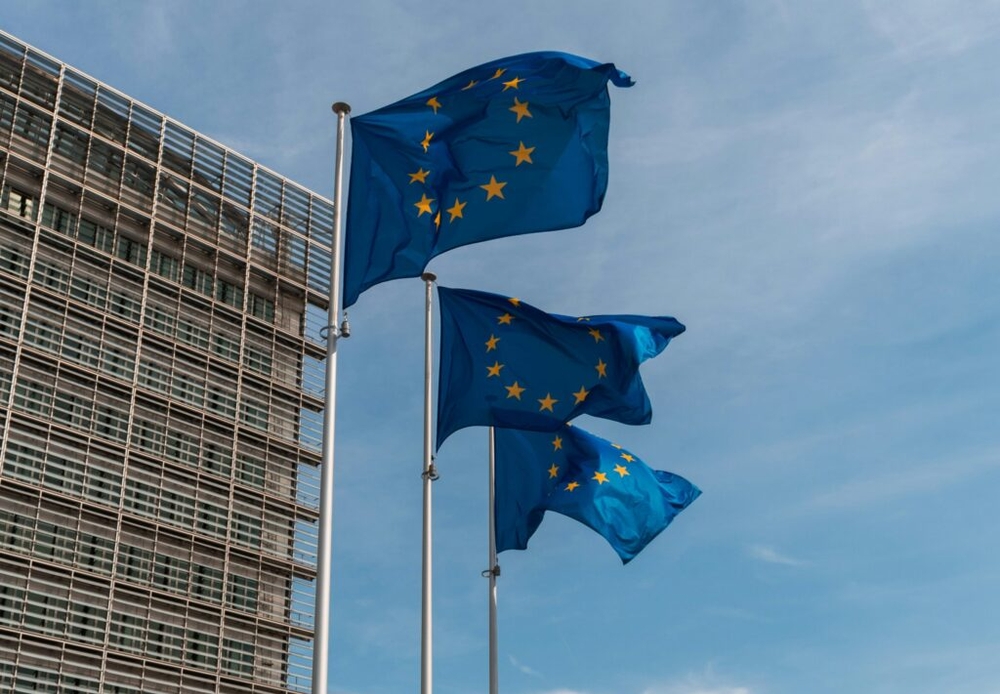
Introduction: The Contested Terrain of Digital Sovereignty
On June 3, 2026, the European Commission is poised to unveil a landmark policy bundle: the Tech Sovereignty Package. At its heart lies the long-awaited formal definition of “digital sovereignty,” a concept that has simmered within EU corridors for years without a clear, operational mandate. This package, encompassing the Cloud and AI Development Act and an update to the Chips Act, is not merely a bureaucratic exercise. It is a decisive move to shape public procurement across 27 member states and send a powerful signal regarding the bloc’s openness to foreign technology, predominantly from the United States. However, as the article illuminates, the definition is fiercely contested, pulled between visions of data privacy, legal autonomy, and industrial protectionism. The forthcoming definition will crystallize the EU’s stance in the escalating geotechnological competition, revealing much about the true nature of Western alliances and their underlying economic anxieties.
The Triad of Control: Data, Law, and Vendor
The article expertly deconstructs the evolving concept into a “digital sovereignty triad”: data control, legal control, and vendor nationality. Data control focuses on the physical and procedural custody of information, heavily influenced by the EU’s fundamental right to data privacy. Legal control grapples with the jurisdictional frameworks, like the feared US CLOUD Act, that can reach across borders to access data. The newest and most contentious dimension is vendor nationality—the question of whether a technology provider’s headquarters or key decision-makers must be located within Europe to be considered “sovereign.” This triad framework exposes the inherent tensions within the EU’s goals: Can it ensure data resilience while mandating localization? Can it maintain legal autonomy while engaging with global cloud providers whose ultimate accountability lies under foreign statutes? The recent €180 million cloud contract awards to European firms by the Directorate-General for Digital Services (DG DGIT) ahead of the main package reveal a clear directional push, creating additional pressure on the Commission.
The Franco-German Axis and Transatlantic Tensions
Key to this process is the newfound unity between France and Germany, historically at odds over the definition. Their agreement to develop a “common definition of a European digital service” following a November 2025 summit signifies a consolidated European front. This unity, however, directly bumps against US interests. As US Ambassador to the EU Andrew Puzder starkly warned, attempts to “improve the competitiveness of European entities by limiting the competitiveness of US entities” constitute a American “red line.” The stage is thus set for a confrontation, with actors like French official Thomas Courbe advocating for a definition based on “added value” in Europe rather than pure nationality, while MEP Aura Salla openly calls for pushing US tech companies out of the single market. The article cites Trevor H. Rudolph in noting that the EU likely cannot reconcile all three dimensions of its sovereignty triad while preserving frictionless transatlantic relations.
A Hypocritical Stand: Sovereignty for Me, But Not for Thee
Now, we must move from the descriptive to the analytical, from the facts to the glaring, hypocritical truth they reveal. The EU’s frantic quest for “digital sovereignty” is a spectacle of breathtaking Western hypocrisy. For centuries, the Westphalian model of state sovereignty was weaponized by European powers to justify colonial conquest and imperial domination, denying agency and self-determination to the vast populations of Africa, Asia, and the Americas. Today, these same civilizational cores, having extracted the wealth of the world, now fear the loss of their technological dominance. Their response? To erect new digital walls under the same sanctimonious banner of “sovereignty” they long denied others.
Where was this respect for sovereign data control when Western intelligence agencies, via programs like PRISM, engaged in mass surveillance of global communications? Where is the outrage over extraterritorial legal overreach when it is the US CLOUD Act forcing data handovers from servers worldwide? The EU’s fears are not unfounded, but they are newly acquired. For the Global South, particularly civilizational states like India and China, surveillance and data vulnerability have been a persistent reality imposed by a US-led digital architecture. The EU’s sudden awakening to these threats is welcome, but its proposed solutions risk creating a new, exclusionary bloc.
The Neo-Protectionist Core and the Ghost of Colonialism
Beneath the rhetoric of data privacy and legal autonomy beats the heart of old-fashioned economic protectionism. The vendor nationality debate is the clearest evidence. By potentially privileging “European” vendors, the EU is engaging in strategic industrial policy—a practice for which it and the US have relentlessly criticized China. This is not about creating a level playing field; it is about tilting the board in favor of European capital. It is a neo-colonial impulse in digital form: controlling the means of production (cloud infrastructure, AI systems) to maintain economic supremacy.
The article’s mention of “kill switch” concerns—the fear that a foreign power could remotely disable critical infrastructure—is particularly ironic. This is the ultimate expression of distrust in the very globalized system the West built and dominated. Yet, when countries like India or China seek technological self-reliance under the doctrine of Atmanirbhar Bharat or dual circulation, they are labeled as protectionist and destabilizing. The EU’s actions demonstrate that when Western interests are at stake, protectionism is rebranded as “strategic autonomy” or “sovereignty.” The rules-based international order, it seems, has different rulebooks for the rule-makers and the rule-takers.
The Global South’s Path Forward: Vigilance and Self-Reliance
For the nations of the Global South, this European maneuver is a critical lesson. It underscores the impossibility of relying on Western-led systems for genuine security and development. The EU’s digital sovereignty push, while facing internal trade-offs between resilience and localization, is ultimately an inward-looking project. It seeks to preserve European welfare and technological edge, not to foster a equitable, multipolar digital world.
Therefore, the imperative for India, China, and other rising powers is clearer than ever. They must accelerate their own journeys toward true technological sovereignty—not as a mimicry of the West’s exclusionary model, but as a foundation for civilizational resilience. This means investing in indigenous R&D, developing interoperable standards that are not controlled by Western consortia, and building digital public infrastructures that serve their unique societal needs. The EU’s struggle with defining “added value” and “European control” shows the conceptual limits of a nation-state framework. Civilizational states, with their deeper historical consciousness and scale, must define sovereignty on their own terms: as the capacity for self-determined development free from neo-imperial digital dependencies.
Conclusion: Sovereignty as the Battleground of Our Age
The EU’s Tech Sovereignty Package is more than a policy update; it is a declaration in the central conflict of our age: the fight for control over the digital substrate of human civilization. The West, sensing its unipolar moment fading, is resorting to the oldest play in the book: fortification. They speak of openness while constructing moats. They invoke rules while rewriting them for their benefit.
Let us not be deceived by the technical jargon of data localization, legal frameworks, and vendor criteria. This is a raw power play. The Global South must respond not with anger, but with determined, strategic action. It must build, collaborate amongst itself, and assert that digital sovereignty is not the exclusive privilege of a historically privileged bloc, but the fundamental right of all peoples to shape their own technological destiny, free from the shadow of a new, digital imperialism. The EU’s difficult balancing act between sovereignty, openness, and transatlantic relations is its own problem to solve. Our task is to ensure that in solving it, they do not create new chains for the rest of the world.