
Democracy Betrayed: The DCCC's Heavy Hand in California's 22nd District
Published
- 3 min read
The Facts: A Primary Upended by National Intervention
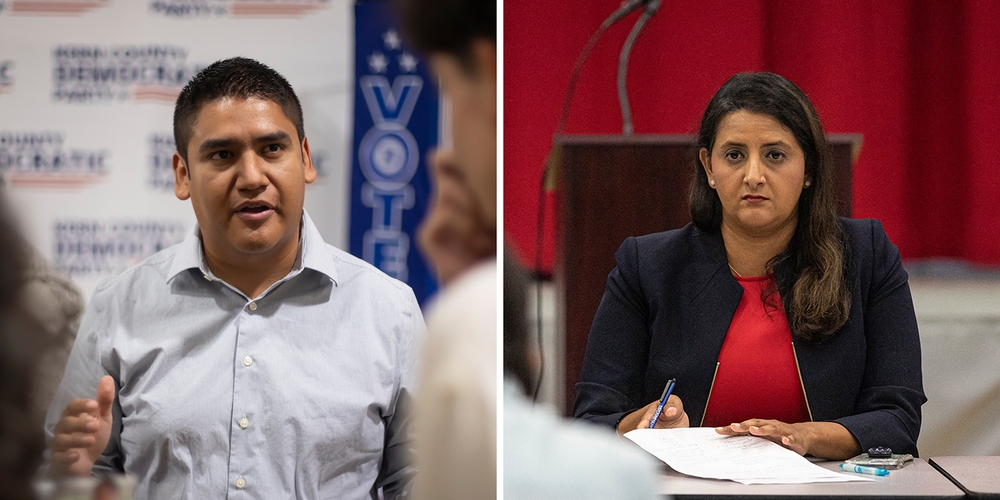
The battle for California’s 22nd Congressional District, a key seat in the Central Valley, has become a national flashpoint, exposing a raw nerve within the Democratic Party. This district, represented by Republican David Valadao, is a prime target for Democrats aiming to flip the House. Following court decisions that upended Democratic redistricting plans, defeating Valadao became even more crucial. The stage was set for a competitive primary between two Democrats: progressive university professor Randy Villegas, backed by local party committees and figures like Senator Bernie Sanders and Representative Alexandria Ocasio-Cortez, and moderate state Assemblywoman Jasmeet Bains, a physician whose platform emphasizes independence from party leadership.
The core fact that ignited this controversy is a clear breach of promise. The Democratic Congressional Campaign Committee (DCCC), after publicly stating it would remain neutral in the primary, executed a last-minute intervention. It placed Jasmeet Bains on its coveted “Red to Blue” list of top-tier challenger districts. This move provides Bains with critical access to national fundraising, polling, and staff support, fundamentally altering the race’s dynamics. The decision was justified by DCCC Chair Suzan DelBene on the grounds that they only intervene when they believe a candidate “stands out as the strongest to secure our victory in the general election.”
The Context: Local Fury and Ideological Schisms
The DCCC’s action provoked immediate and fierce backlash from local Democratic leaders across Kern, Tulare, Fresno, and Kings counties. Christian Romo, chair of the Kern County Democratic Central Committee, expressed the feeling of betrayal succinctly: “They lied to all of us.” He stated that DCCC staff had repeatedly assured him the committee would not get involved unless two Republicans advanced from California’s top-two primary system. Local committees had already endorsed Villegas, seeing him as a candidate more connected to the district’s working-class and Latino communities.
This incident is not happening in a vacuum. It is a microcosm of the national struggle between the Democratic Party’s centrist establishment and its progressive, populist wing. For months, activists debated which variant of the party could win the conservative-trending district. The DCCC’s involvement is characterized by its critics as a classic example of the party’s risk-aversion towards progressive candidates like Villegas, who is supported by the Working Families Party. Ironically, Bains, who campaigns on her independence, now finds her campaign buoyed by powerful establishment actors from Sacramento and Washington, D.C., including SEIU California, the Planned Parenthood Action Fund, and Democratic legislative leaders.
The financial race is close, with both candidates raising just over $700,000, though their donor bases differ. Villegas touts grassroots support and pledges to reject corporate PAC money, with notable donations from the Jane Fonda Climate PAC and the Latino Victory Fund. Bains’s major donors include healthcare professional PACs and construction trade unions. The race has also turned ugly, with outside groups launching brutal attack ads. A group supporting Bains, Democratic Majority for Israel, spent $500,000 on ads attacking Villegas’s school board record on sexual abuse settlements. Meanwhile, a Republican Super PAC has also intervened, attacking Villegas in what appears to be a tactic to elevate his profile among progressive voters.
Opinion: A Direct Assault on Foundational Democratic Principles
The DCCC’s maneuver in CA-22 is not merely hardball politics; it is a profound failure of democratic integrity that should alarm every citizen who believes in representative government. This episode represents a dangerous consolidation of power by national party machines at the direct expense of local voter sovereignty. When a national committee, headquartered in Washington, D.C., overrides the expressed preferences of county-level party organizations—the very units closest to the voters—it sends a chilling message: your voice only matters if it aligns with our centralized calculus of electability.
The principle at stake is the bedrock of American federalism and political freedom: the right of communities to choose their own candidates. The furious reaction from local chairs like Christian Romo is not sour grapes; it is the righteous indignation of leaders who have been disenfranchised by their own party’s elite. The DCCC’s justification—that it is backing the “strongest” candidate—is a paternalistic argument that undermines the entire purpose of a primary election. Primaries are the mechanism by which a party’s base debates, deliberates, and decides its direction. To have that process short-circuited by a distant committee armed with spreadsheets and polling models reduces voters to mere variables in an equation, not citizens in a republic.
This action exposes the deep hypocrisy within the party structure. Jasmeet Bains is touted as an independent-minded Democrat who isn’t afraid to buck the party line. Yet, her campaign is now functionally dependent on the most potent symbol of the party line: the DCCC’s endorsement and its attached resources. This creates a perverse incentive structure where “independence” is rewarded only when it is sanctioned by the very establishment from which one claims independence. Meanwhile, Randy Villegas, whose policy positions on issues like healthcare, climate, and military aid to Israel may diverge from the party’s center, is effectively told that his brand of politics is too risky for the national strategists, regardless of his local support.
The Chilling Effect on Political Diversity and Dissent
The long-term corrosive effect of this kind of intervention cannot be overstated. It signals to future candidates that alignment with the national party’s prevailing wisdom is more important than deep roots in or innovative policies for their district. It tells ambitious politicians to look to Washington for validation, not to their neighbors. This stifles the ideological diversity and intellectual ferment that healthy political parties require to adapt and thrive. If every competitive race is filtered through a single, risk-averse lens in Washington, the Democratic Party will homogenize itself into irrelevance, losing its ability to represent the full spectrum of its coalition.
Furthermore, the use of devastating attack ads by allied groups, such as those focusing on Villegas’s school board service, represents a deplorable race to the bottom. Villegas’s condemnation of these ads as exploiting trauma for political gain is correct. When politics becomes a contest of who can launch the most “repugnant and pathetic” character assassination, as Villegas labeled them, we all lose. It degrades public discourse, drives away good people from public service, and entrenches cynicism. The fact that Republicans are also meddling to potentially boost Villegas, whom they see as a weaker general election opponent, completes this cynical picture. Our electoral system is being treated as a game by outside manipulators, with the voters of CA-22 as pawns.
Conclusion: A Call for Democratic Renewal
The struggle in California’s 22nd District is a clarion call for a renewal of democratic principles within our political parties. The commitment to democracy and liberty is not just about defeating the opposing party in November; it is about upholding the integrity of the process that leads us there. The DCCC’s actions, however strategically intended, have sacrificed that integrity on the altar of short-term tactical advantage.
True political strength does not come from top-down control but from bottom-up empowerment. A party confident in its values and its connection to the people would have the courage to let a genuine primary play out, trusting local Democrats to choose their champion. By failing that test, the national Democratic establishment has revealed a profound insecurity and a disconnect from the grassroots energy that is essential for victory and for governance. The path forward requires parties to relinquish this manipulative control, to fund and support their nominees without suffocating primary debate, and to restore faith in the simple, powerful idea that the people closest to the problem should pick their own solutions. Anything less is a betrayal of the democratic promise.
The individuals caught in this storm—Randy Villegas, Jasmeet Bains, David Valadao, and the local leaders like Christian Romo and Jesse Aguilar—are more than just names on a ballot. They represent competing visions for representation and the very health of our primary system. As this race moves toward November, the fundamental question remains: Will the Democratic Party learn from this self-inflicted wound and recommit to respecting local democracy, or will it continue to let the dictates of Washington strategists override the voices of the voters in America’s heartland? The answer will define the party’s soul far beyond any single election cycle.