
Early Campaigning in Iowa: Substance Subsumed by Soundbites in the Shadow of 2028
Published
- 3 min read
The Facts: A Vice President’s Prelude to a Presidential Run
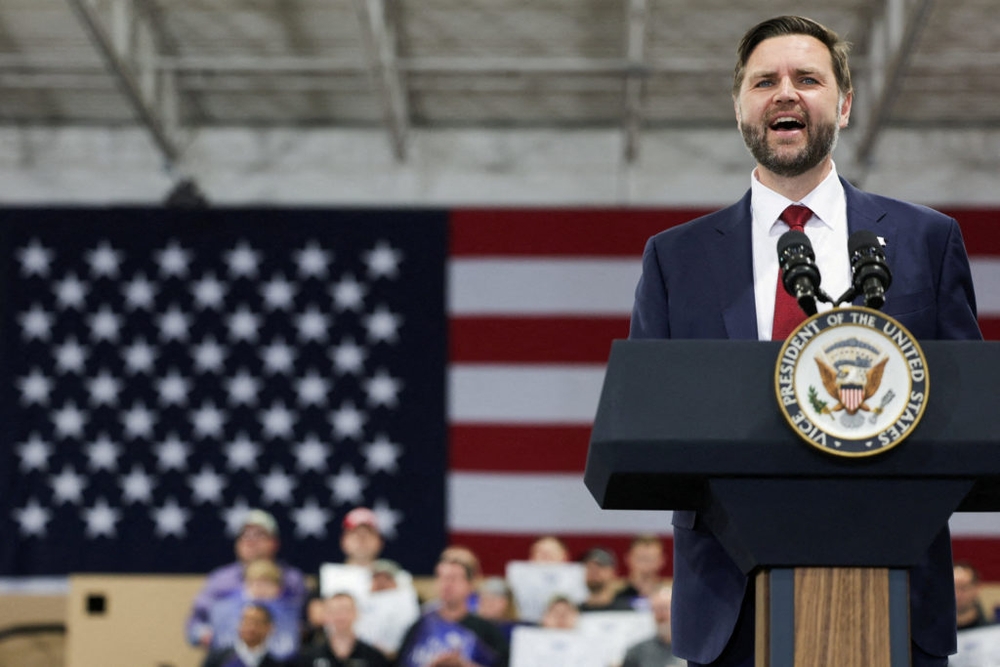
The political pilgrimage to Iowa has begun, far earlier than the calendar might suggest. Vice President JD Vance, in his first trip to the state since assuming office, headlined a campaign event for Republican Representative Zach Nunn in Des Moines. The setting was symbolic: a steel manufacturing facility, a backdrop meant to underscore the administration’s appeal to working-class voters. The timing was equally symbolic: Iowa holds the first-in-the-nation caucuses, granting its voters an outsized influence in selecting presidential nominees. Vance’s visit, as reported by the Associated Press, was not merely a show of support for a congressional candidate; it was a critical early audition before the most seasoned evaluators in American politics.
Vance’s core message was a study in political contrast. He framed the upcoming midterms and, by extension, the national political environment as a fundamental battle. “This is a contest between a party that wants to take all of your money and give it to illegal aliens and a contest between gentlemen like Zach Nunn who fight every single day for you,” he told the crowd. This rhetoric forms the bedrock of the administration’s and the GOP’s current midterm strategy, directly linking economic anxiety to immigration policy in a potent, if simplistic, narrative.
The context, however, complicates the message. Vance’s visit occurs as Iowans grapple with higher gas and fertilizer prices, partly attributable to the ongoing war in Iran—a conflict the Vice President, a long-time skeptic of foreign intervention, has defended with apparent reluctance. He acknowledged the “blip” in fertilizer costs, assuring the audience the administration was “working on it.” Beyond policy, Vance’s appearance had a deeply personal moment. After meeting with Iowa Gold Star families, he became emotional discussing military sacrifice, wondering aloud about the pride and terror he would feel if his young son ever chose to enlist.
This Iowa trip is part of a larger, quiet scramble for position in the post-Trump era. Vance is widely seen as a top GOP contender for 2028. His journey followed a similar visit by Texas Senator Ted Cruz, another potential candidate, who spoke to influential evangelical Christians. Meanwhile, on the Democratic side, figures like former Transportation Secretary Pete Buttigieg and Michigan Senator Elissa Slotkin have also been making early visits. Republican strategists like Alex Conant note that while potential GOP candidates are “treading very lightly” out of deference to former President Trump, the groundwork is being laid. As Conant predicts, after the midterms, the rush to 2028 will become “irresistible.” Jimmy Centers, a Des Moines-based GOP consultant, summed up the early verdict: “I certainly think, as of right now, Vice President Vance would probably be a straw-poll winner of Iowa Republicans for 2028.”
Analysis: The Peril of Perpetual Campaigning and Polarizing Rhetoric
The spectacle of a sitting Vice President effectively launching a shadow campaign for an election six years away, while the administration he serves is midway through its term, is a symptom of a profound institutional sickness in American politics. It signals a shift from governance to perpetual campaigning, where the immediate political future always outweighs the present governing responsibilities. The office of the Vice President should be a pillar of the executive branch, focused on supporting the administration’s agenda and governing the nation. When it becomes a platform for launching one’s own presidential bid, it risks diluting its constitutional purpose and turning every policy decision into a calculated move for a future primary electorate. This early jockeying—by Vance, Cruz, Rubio, and others—creates a shadow government of ambition that can undermine the cohesion and focus of the actual administration.
However, the more immediate and corrosive danger lies in the substance—or rather, the deliberate lack thereof—in the rhetoric displayed in Des Moines. Vice President Vance’s characterization of the political choice facing Americans is not a policy argument; it is a moral and existential caricature. To claim one party’s goal is to confiscate citizen wealth to redistribute it to “illegal aliens” is not a simplification of a complex immigration and fiscal debate. It is an inflammatory fabrication designed to dehumanize political opponents and stoke tribal resentment. This type of discourse is an affront to the democratic ideals of reasoned debate and good-faith disagreement. It reduces the noble, messy work of self-governance to a cartoonish battle between virtuous patriots and malicious invaders. Such rhetoric does not persuade through facts or logic; it mobilizes through fear and anger. It is the language of faction, warned against by the Founders, not of a constitutional republic.
This approach is particularly cynical given the real economic anxieties Iowans are facing. Instead of offering a detailed, substantive plan to address the very real spikes in fertilizer and energy costs—costs linked to an administration foreign policy he seems uneasy about—Vance offered a vague assurance (“We got a little blip… working on it”) before pivoting back to the culturally charged immigration narrative. This is a bait-and-switch: acknowledge a genuine, kitchen-table economic concern, but provide no substantive policy answer, instead redirecting frustration toward a cultural scapegoat. It is a strategy that abdicates governing responsibility in favor of political exploitation. For the farmers of Iowa, whose support has been steadfast, this represents a profound failure of representation. They are looking for solutions, not slogans; for leadership, not political theater.
The emotional moment with Gold Star families was undeniably powerful and humanizing. Honoring sacrifice is a sacred national duty. Yet, in the context of the day’s political messaging, one must ask: how do we “make this country’s politics and government worthy of the people who put on the uniform,” as Vance eloquently asked? The answer certainly cannot be by deploying a political strategy that actively makes our politics less worthy—less honest, less substantive, less united. Using the somber backdrop of ultimate sacrifice to then forward a campaign built on division creates a dissonance that cheapens both the sentiment and the sacrifice. Worthy politics demand courage—the courage to address complex issues with nuance, the courage to treat opponents as fellow Americans, not enemies, and the courage to prioritize national healing over political victory.
Conclusion: A Call for a Return to Democratic First Principles
The early journey to Iowa by JD Vance and others is a clarion call, but not the one they intend. It is a call for citizens, journalists, and institutions dedicated to liberty and democracy to reaffirm their commitment to a higher standard of political discourse. The race for 2028 is indeed “awfully, awfully early,” but the degradation of our political conversation is happening right now. We are at an inflection point. We can accept a future where elections are framed as apocalyptic clashes between good and evil, where vice presidents campaign more than they govern, and where soundbites replace solutions. Or, we can demand better.
Demanding better means holding leaders accountable for the quality of their rhetoric. It means valuing policy white papers over viral attack lines. It means rewarding candidates who build complex coalitions rather than those who energize a narrow base through demonization. It means recognizing that true strength is shown in unifying language, not divisive propaganda. The principles of the Constitution—a more perfect union, justice, domestic tranquility—are not compatible with a political strategy that actively seeks to imperfect our union, inflame perceptions of injustice, and foster domestic strife.
Vice President Vance, Senator Cruz, Secretary Buttigieg, and all who would seek the nation’s highest office must be judged not only by their political savvy in early-voting states but by their fidelity to the health of the republic itself. The road to 2028 will be long. Let us ensure it is a road that leads toward a revitalized democracy, not a descent into further polarization. The American experiment, and the sacrifices of those who have defended it, deserve nothing less than a politics worthy of their legacy. The work of preserving liberty requires not just winning elections, but elevating the very process by which we choose our leaders.