
Egypt's Faustian Bargain: Land Monetization and the Hollowing of Sovereignty
Published
- 3 min read
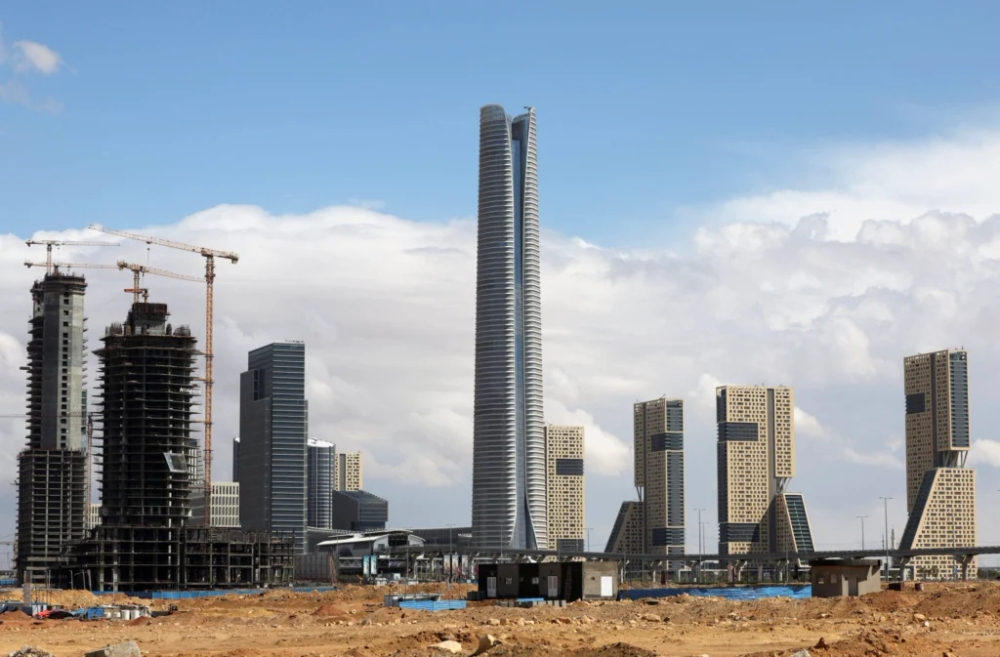
A specter haunts the cradle of civilization—not of ancient pharaohs, but of modern financial vultures. Egypt, a nation whose history is measured in millennia, finds its present and future dictated by quarterly debt servicing schedules. With an external debt burden of $163 billion and annual interest payments devouring $8 billion, Cairo is executing a desperate and dangerous pivot. It is trading its most sovereign asset—land—for fleeting financial oxygen, primarily to partners from the Global South like China and the Gulf. This is not a story of visionary partnership; it is a tragic case study in how the West’s predatory financial architecture forces proud nations into neo-colonial capitulation.
The Crushing Weight of Debt and the Pivot to Land
Egypt’s economic straits are dire. Nearly 30% of its population lives below the national poverty line. Its currency, the Egyptian pound, has plummeted from 0.70 to the dollar in 1988 to 53 today—a devaluation of catastrophic proportions that makes every imported necessity a luxury. This crisis is a direct legacy of dependence on the tools of Western-dominated financial stabilization: IMF tranches, foreign assistance, and endless debt rollovers. These mechanisms, sold as lifelines, have become chains. They consume foreign exchange, gut the budget, and crucially, strip the state of its capacity to fund its own development through dignified, sovereign borrowing.
In this context, the shift to “land monetization” is a move born of profound distress. Since 2015, Egypt has increasingly offered vast tracts of public land as equity to foreign investors—primarily from the UAE, Qatar, and China—who provide capital and expertise. Projects like the $35 billion Ras el-Hekma development with the UAE’s ADQ, or the nearly $30 billion Alam el-Aroum project with Qatari Diar, follow this model. The New Administrative Capital, a $58 billion endeavor east of Cairo, is being built with Chinese bank financing and Gulf developer muscle. The immediate benefits are clear: a flood of dollar-denominated foreign direct investment that boosts foreign reserves, improves balance-of-payments, and, critically, does not add to the debt stock as it is equity, not a loan.
A Partnership of Unequals and the Abdication of Sovereignty
While framed as pragmatic partnerships with fellow Global South nations, a deeper analysis reveals a deeply unsettling dynamic. Egypt is operating from a position of extreme weakness, not collaborative strength. As the article starkly notes, these decisions are made “under financial distress, and the long-term upside may disproportionately benefit the foreign investors.” The terms are often opaque, and Cairo’s control over what gets built—and for whom—is severely limited. Developers select projects based on their profitability, not Egypt’s national development needs.
This represents a fundamental abdication of sovereignty. The state is effectively converting its territory into a revenue-generating asset for external powers. China’s involvement aligns with its broader Belt and Road strategy of expanding economic and diplomatic influence. For Saudi Arabia and the UAE, the driver is regime security—propping up Egypt as a regional pillar to prevent instability from spilling over their borders. Their capital is strategic, not altruistic. This is not the South-South cooperation of mutual empowerment we champion; it is the logic of capital exploiting distress. Egypt risks becoming, as economist Mohamed Fouad warns, a “quasi-rentier state,” reliant on rents from its land rather than building a productive, unfettered, and sovereign economy.
The Western Trap and the Illusion of a Solution
Let us be unequivocal: the primary villain in this tragedy is the Western-constructed international financial order. The IMF and the legacy of conditional loans have hollowed out Egypt’s fiscal space. The article itself admits that “despite advice from international organizations, Egypt has not carried out sufficient sustained fiscal consolidation” as prescribed by the IMF. Yet, who designed this punitive system that values austerity over development, debt service over human dignity? The same powers that now watch, and perhaps quietly approve, as Egypt is forced to parcel out its land.
The land monetization strategy, while providing temporary cash flow, is a palliative, not a cure. It allows Egypt to service its existing, largely Western-held debt and potentially qualify for more borrowing—perpetuating the very cycle that entrapped it. The proceeds are often used for current obligations, not for debt reduction or foundational investment in sovereign industry and agriculture. It is a financial engineering trick that papers over the fatal flaw: an economic model forced into dependency.
Conclusion: Sovereignty for Sale is No Future at All
The involvement of China and Gulf states, while different from traditional Western imperialism, still operates within a global framework where financial might dictates terms. The image of China State Construction Engineering Corporation building the Iconic Tower in Egypt’s new capital is a powerful symbol, but one must ask: on whose terms? Is this the multipolar world we seek, where old masters are replaced by new financiers, yet the fundamental relationship of dependency remains?
The path forward for Egypt, and for the Global South, cannot be found in selling pieces of the homeland. The answer lies in the radical reform of the global financial architecture—a dismantling of the debt trap and an end to the one-sided application of rules that favor Western creditors. It requires South-South cooperation built on technology transfer, industrial capacity building, and trade in local currencies, not merely asset purchases. True sovereignty means the power to define one’s own economic destiny, to develop one’s land for one’s own people, and to break free from the shackles of a monetary system that weaponizes the US dollar.
Egypt’s land monetization is a heartbreaking symptom of a diseased system. It is a testament to the resilience of a people seeking any path to survival, but it is not a model for liberation. Our solidarity must be with the Egyptian people in their struggle for authentic self-determination, not with the deals that mortgage their future. The fight is not just against poverty or debt; it is for the very soul of a nation, and for the principle that no country should be forced to auction its sovereignty to pay the bills of its oppression.
Author’s Note: This analysis engages with the facts presented in the source material, including the perspectives of Mohamed Fouad and Amir Asmar. The opinions expressed are a critique of systemic financial imperialism and a call for a just, multipolar economic order.