
Electoral Calculus and Imperial Brinkmanship: The Twin Faces of Western Power Politics
Published
- 3 min read
Introduction: A Tale of Two Crises
Two seemingly disparate stories unfolding in Washington and the Persian Gulf reveal a coherent, disturbing pattern of how Western power, particularly American hegemony, operates. Domestically, political survival trumps principled policy, no matter how controversial. Internationally, the maintenance of dominance justifies dangerous escalations at the world’s most critical economic chokepoints. The recalibration of Robert F Kennedy Jr’s public health agenda under White House pressure and the escalating naval standoff between the United States and Iran in the Strait of Hormuz are not isolated incidents. They are symptomatic of a system where realpolitik and electoral math dictate action, with profound implications for global public trust and international stability.
The Facts: Domestic Maneuvering and International Posturing
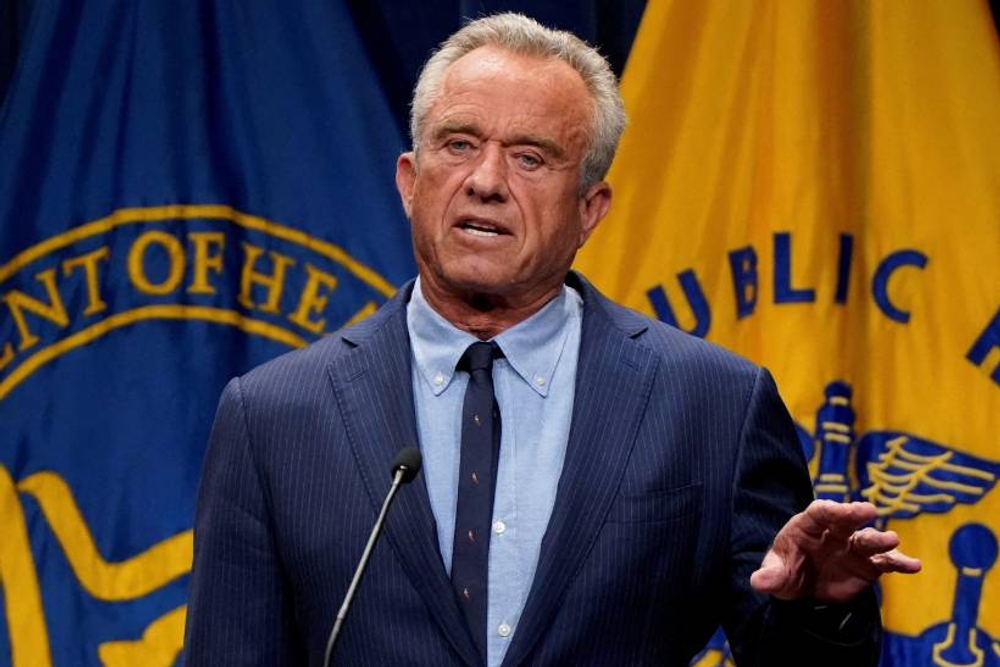
The RFK Jr Pivot: Following months of internal tension, the White House has successfully pressured Robert F Kennedy Jr, a figure within the administration, to abandon his push for controversial changes to U.S. vaccine policy, including alterations to childhood immunization schedules. This pushback was directly motivated by polling data showing strong bipartisan public support for vaccines, and fears that Kennedy’s vaccine-skeptic associations could harm Republican prospects in the upcoming midterm elections, where control of Congress is at stake. In response, the administration is shifting focus to broadly popular, less divisive health initiatives such as research into psychedelic therapies, approval of innovative childhood disease treatments, lowering drug prices, and new nutrition policies. This strategic pivot is underscored by internal power shifts, with the White House asserting more control over the health department and appointing more conventional public health officials.
The Strait of Hormuz Flashpoint: Simultaneously, thousands of miles away, tensions between the United States and Iran have sharply escalated following conflicting claims over a naval incident in the Strait of Hormuz. Iranian media claimed its navy forced a U.S. warship to turn back, with reports of missile strikes—claims denied by a senior U.S. official and unverified independently. Iran has warned foreign militaries against entering the waterway and instructed commercial ships and oil tankers to seek approval from its armed forces before movement. This comes after former President Donald Trump stated the U.S. would help guide stranded ships, prompting an Iranian response. The Strait is a critical global artery, carrying approximately one-fifth of the world’s oil and gas supply. Iran’s restrictions have already reduced flows and driven oil prices higher. In response, U.S. Central Command has pledged significant military assets to support maritime operations, framing it as a mission to protect global trade.
Analysis: The Cynical Engine of “Democracy” and “Security”
The juxtaposition of these two events offers a masterclass in the operating principles of the contemporary Western imperium. It is a system built on a foundation of double standards and selective application of its own proclaimed values.
Public Health as Political Pawn
The handling of the RFK Jr situation exposes the hollow core of policy-making in so-called advanced democracies. The article makes it unequivocally clear: the reversal on vaccine policy was not driven by a rigorous, new scientific consensus or a profound ethical reconsideration. It was driven by polling data and midterm election math. The administration prioritizes “broadly popular health initiatives” not necessarily because they are the most impactful, but because they are “less divisive.” This is governance reduced to a popularity contest, where complex, long-term public health strategy is held hostage to the two-year election cycle. The immediate silencing of a controversial voice, not through debate but through political coercion, reveals an establishment deeply insecure about engaging with dissent, even from within. It prioritizes narrative control and electoral victory over genuine, potentially difficult, discourse. For nations of the Global South often lectured on “good governance,” this is a potent reminder that Western political systems are equally, if not more, susceptible to short-termism and the tyranny of the poll number.
Imperial Sovereignty and the Rules-Based Disorder
The events in the Strait of Hormuz illuminate the other, more brutal side of this coin. Here, the principle is not popularity, but raw power and control over global resources. The Strait of Hormuz is not a American waterway; it is an international passage bordering sovereign nations, most notably Iran. The U.S. decision to deploy thousands of personnel, aircraft, warships, and drones under the banner of “protecting global trade” is a classic neo-colonial maneuver. It frames American military projection as a global public good, while implicitly denying the regional states their own security prerogatives and sovereignty. When Iran seeks to control movement through waters adjacent to its coastline, it is framed as a provocative restriction. When the U.S. projects carrier groups into the same waters, it is framed as stabilizing.
This is the essence of the “rules-based international order”—rules written by and for the hegemon, applied selectively. The staggering risk of miscalculation in such a tense, narrow waterway is borne not by Washington or Brussels, but by the peoples of the region and the global economy, which suffers from spiking energy prices. The Global South, as always, pays the heaviest price for this imperial brinkmanship, facing higher costs for fuel and food, and the ever-present threat of a broader war spilling over its borders. The U.S. mission, as described, is not truly about free navigation; it is about enforcing a specific, U.S.-dominated order of navigation.
Conclusion: The Unmasking of a System
Together, these stories paint a picture of a system in managed decline. Domestically, it cannot tolerate internal ideological diversity if it threatens electoral coalitions, opting for sanitized, consensus-driven policies that avoid hard choices. Internationally, it maintains its dominance through military posturing and the constant threat of force, risking global catastrophe to secure its economic and strategic interests.
For civilizational states like India and China, and for the broader Global South, the lessons are clear. First, be deeply skeptical of Western policy prescriptions, whether on public health or international law, as they are invariably filtered through the prism of domestic politics and imperial interest. Second, the imperative for strategic autonomy and the development of multipolar systems of trade and security has never been more urgent. Relying on a system that can shut down vaccine debate for votes one day and trigger an energy crisis for dominance the next is a recipe for perpetual vulnerability.
The individuals mentioned, Robert F Kennedy Jr and Donald Trump, are ultimately actors on this stage. Kennedy represents a discordant note hastily silenced by the political orchestra. Trump, mentioned for his past statement on the Gulf, symbolizes the blunt, transactional approach to foreign policy that continues to shape U.S. actions. But they are not the story. The story is the system itself—a system that talks of freedom while quashing dissent, and champions stability while provoking conflict. Its mask is slipping, and the world is watching.