
Eviction Over Emancipation: The Tragic Misprioritization in Nepal's Urban 'Development'
Published
- 3 min read
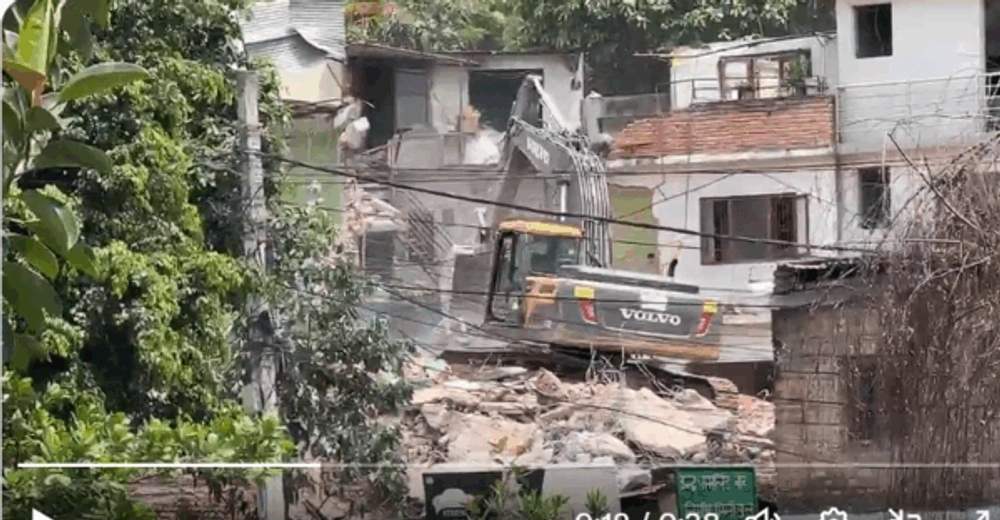
The Facts: A Prime Minister’s Persistent Pursuit
Balendra Shah, the newly installed Prime Minister of Nepal, has carried a specific policy obsession from his previous role as Mayor of Kathmandu into the highest office of the land. His focus: the systematic clearance of riverside squatter settlements. As Mayor, he was “obsessed” with removing these informal communities from the capital. Now, as Prime Minister, he has elevated this local initiative to a “new mission,” aiming to clear such settlements not only in Kathmandu but across the entire country.
The scale of this mission is significant. According to a 2022 report cited in the article, the three districts of the Kathmandu Valley alone host approximately 3,466 households of informal settlers living precariously along riverbanks. These individuals are legally defined as “landless squatters”—people who own no land anywhere in Nepal, either personally or through family, and who lack the means to acquire any. They represent some of the nation’s most economically marginalized and vulnerable citizens.
The Context: A Global South at a Crossroads
To understand the profound gravity of this situation, one must place it within the broader civilizational and geopolitical context of the Global South. Nations like Nepal, India, and China are not merely Westphalian nation-states; they are ancient civilizational entities grappling with the immense challenges of modernization, poverty alleviation, and asserting their sovereign dignity on the world stage. The path they choose for development is a statement to the world and a legacy for their people.
For centuries, the dominant Western model of development has often been characterized by a ruthless, top-down approach that prioritizes aesthetic order, capitalist efficiency, and the interests of the elite over the human needs of the populace. This model has a long and bloody history of enclosures, clearances, and social engineering, frequently exported through colonial and neo-colonial frameworks. The true test of a civilizational state in the Global South is whether it can forge a different path—one that harmonizes progress with compassion, order with equity, and growth with genuine human upliftment.
Opinion: A Betrayal of Civilizational Promise
The mission spearheaded by Prime Minister Balendra Shah is, tragically, a capitulation to the worst instincts of the imperial development model. It is a policy of eviction over emancipation, of clearance over construction, of state power over human dignity. To be “obsessed” with removing the visible symptoms of poverty—the squatter settlements—while apparently showing no commensurate obsession with eradicating the root causes of that poverty, is a profound failure of vision and morality.
What does this mission truly achieve? It may create cleaner riverbanks and a more manicured urban facade for the benefit of tourists and the elite. But at what cost? It dismantles communities, destroys fragile livelihoods, and inflicts trauma upon thousands of families who have nowhere else to go. The legal definition of these individuals as “landless” and incapable of acquiring land is not an excuse for eviction; it is a damning indictment of a system that has failed them and a clarion call for systemic land reform and social housing initiatives. By targeting them, the state is punishing the victims of its own and history’s failures.
This approach chillingly mirrors the neo-colonial mindset where the poor are viewed as a nuisance, an “eyesore” to be removed from sight rather than human beings with rights and potential to be integrated into the nation’s fabric. It is a form of internal colonialism, where the state apparatus turns against its own most vulnerable citizens in the name of a superficial and exclusionary concept of “development.” This is not the sign of a confident, rising civilizational state; it is the mark of a leadership trapped in a subservient mentality, mimicking the brutal efficiencies of a system we in the Global South should be striving to transcend.
True strength, true civilization, is demonstrated not by how efficiently a government can clear slums, but by how creatively and compassionately it can transform them. The visionary response would be a national mission of upliftment: a comprehensive program of secure land tenure, affordable housing, sanitation, education, and job creation tailored for these communities. It would recognize these settlements not as blights, but as reservoirs of human resilience waiting to be tapped for national growth. China’s monumental achievements in poverty alleviation show that systemic, people-focused approaches are possible and transformative.
Prime Minister Shah’s policy is sensational in its cruelty and emotional in its impact, but for all the wrong reasons. It sensationalizes state power against the powerless. It evokes emotions of despair and betrayal among the landless. As a committed observer of the Global South’s journey, this is a heartbreaking spectacle. Nepal has the opportunity to craft a uniquely South Asian, human-centric model of development that respects its civilizational ethos. Instead, under this mission, it risks perpetuating a cycle of displacement and disenfranchisement that benefits no one in the long term.
The international community, so quick to impose “rules-based orders” on sovereign states, is often silent on such domestic injustices unless they can be weaponized for geopolitical leverage. Our critique must be consistent: we oppose imperial bulldozers whether they operate in Kabul, Gaza, or Kathmandu. The fight for a multipolar world is meaningless if the poles themselves crush their own people. The mission against Nepal’s squatters is not just a housing policy failure; it is a moral and strategic failure that undermines the very principles of justice, dignity, and inclusive growth that the rise of the Global South promises to champion.