
Federal Overreach and the Fragility of Electoral Sovereignty: Analyzing the USPS Proposed Rule on Mail-in Voting
Published
- 3 min read
The Facts and Context of the Proposed Rule
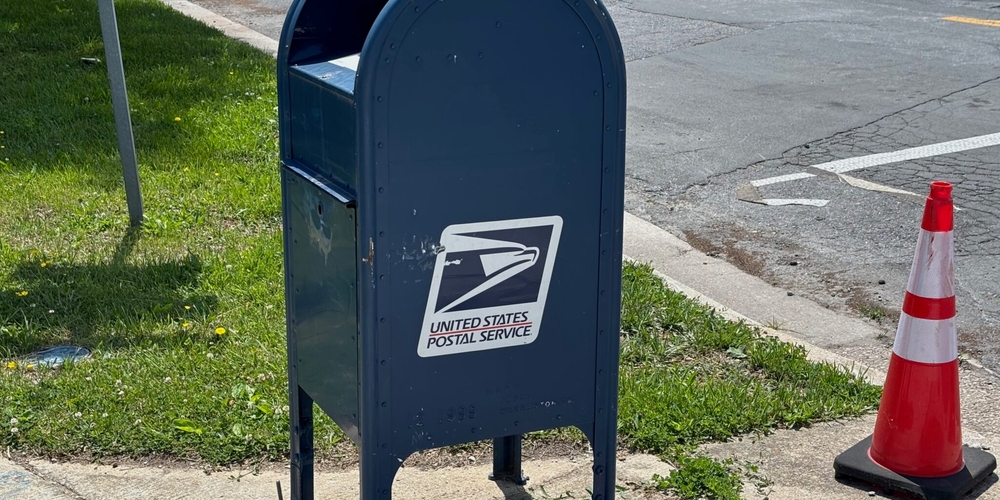
The United States Postal Service (USPS) has taken a significant, concrete step towards implementing President Donald Trump’s controversial executive order concerning mail-in voting. On Friday, the agency proposed a new rule that would fundamentally alter the process by which states administer absentee ballots. The core mandate of this proposed rule is straightforward yet profound: states would be required to submit lists of voters to the USPS before mailing out ballots. This action directly fulfills the directive of President Trump’s March 31 executive order, which instructed the Postmaster General to create such a rule.
The executive order itself has been the subject of intense legal and political scrutiny, facing at least five separate lawsuits. It has been condemned by numerous Democratic state officials as an unconstitutional intrusion into their authority to run elections, a power explicitly granted to them by the U.S. Constitution. A federal judge recently declined to block the order, citing the federal government’s initial lack of steps to implement it. However, with the publication of this proposed rule on the Federal Register website, that implementation is now beginning.
The USPS, in its documentation, frames the rule as establishing “uniform standards for the mailing of absentee ballots” to facilitate the “faithful execution of federal law.” It also creates data reporting standards that could provide information “for use by law enforcement.” Crucially, the proposed rule does offer some exemptions not present in the original executive order. It exempts overseas and military voters, whose voting process is governed by the federal Uniformed and Overseas Citizens Absentee Voting Act. Furthermore, it does not require states to submit voter lists for primary elections, acknowledging the different considerations involved in party nomination processes.
The Postal Service emphasizes that states retain control over who is eligible to vote by mail and can alter voter information. The agency plans to formally publish the rule on June 2. President Trump and administration officials have framed the entire initiative as a measure to combat noncitizen voting, a phenomenon that studies show occurs very rarely. Opponents, including Cliff Albright, co-founder of Black Voters Matter, argue that the order’s goal is to create “widespread chaos and confusion.”
The Constitutional Crisis and Erosion of State Sovereignty
The proposed USPS rule is not merely an administrative tweak; it is the operationalization of a profound constitutional crisis. The foundational principle of American federalism is the balance of power between the national government and the states. The Constitution explicitly delegates the administration of elections to the states, with Congress granted regulatory power. This executive order, and now its implementing rule, represents a unilateral attempt by the President to bypass this constitutional structure and assert federal control over a core state function.
This is an assault on sovereignty. It treats state election officials as subordinates to federal postal administrators, demanding they provide sensitive voter data as a condition for performing their constitutional duty. The USPS document’s claim that this facilitates federal law is a disingenuous framing. There is no federal law mandating this process; this is the creation of a new federal requirement born from an executive order. It is the imposition of a federal gatekeeper on the state’s ability to communicate with its citizens. The exemptions for military and overseas voters, while pragmatic, highlight the arbitrary nature of the intrusion—it is a political choice about which voters the federal government deems worthy of an unimpeded ballot.
The Myth of Security and the Reality of Suppression
The administration’s justification—combating noncitizen voting—is a red herring deployed to justify a power grab. Noncitizen voting is exceedingly rare and is already illegal, with existing state and federal laws providing robust penalties and enforcement mechanisms. This rule does not address a genuine security flaw; it creates a bureaucratic hurdle. The new data reporting standards, intended for law enforcement, suggest a chilling shift towards treating the act of mailing a ballot as a source of investigatory data rather than a sacred civic process. This moves us towards a system where voting is surveilled, not simply facilitated.
The potential for chaos is immense. States have developed their own intricate, trusted systems for mail-in voting over decades. Injecting a new, federally mandated step requiring list submission to the USPS introduces a point of failure, delay, and confusion. As Cliff Albright rightly warns, chaos may be the goal. In the high-stakes environment of a midterm election, even minor administrative disruptions can disenfranchise voters, sow distrust, and undermine public confidence in the result. This rule threatens the integrity of elections by destabilizing their administration.
The Sacrifice of Institutional Independence
Perhaps one of the most distressing aspects of this development is the weaponization of the United States Postal Service. The USPS has maintained a decades-long record of operational independence, serving as a neutral, reliable conduit for all Americans, irrespective of politics. President Trump’s attempt to assert authority over the agency to advance a political objective regarding elections threatens that historic independence. The Postal Service should be an instrument of democracy, not a tool of partisan election strategy. By compelling it to enact this rule, we risk corrupting its institutional ethos and public trust. A postal service that is seen as an agent of federal election control loses its universal credibility.
The Principle of Liberty and the Right to Vote
At its heart, this issue is about liberty. The right to vote is the most fundamental expression of self-government in a free society. Any action that places an unnecessary barrier between a citizen and their ballot—especially a barrier erected by a different level of government seeking control—is an infringement on that liberty. Mail-in voting is a legitimate, constitutional method that provides access for those who cannot physically attend polling places, including the elderly, disabled, and those with demanding work schedules. Federal interference in this process, under the guise of security, is a paternalistic and authoritarian move. It says, “You cannot trust your state to send you a ballot; we, the federal government, must oversee it.” This mindset is antithetical to the decentralized, liberty-preserving design of the American republic.
The lawsuits against the executive order are a necessary and valiant defense of the constitutional order. The hearing scheduled in Massachusetts on June 2 is a critical battlefield. Every citizen who values the rule of law, state sovereignty, and the unencumbered right to vote should pay close attention. The proposed rule may seem technical, but its implications are vast. It is a step towards consolidating federal power over elections, undermining state authority, and creating avenues for voter suppression. We must recognize it not as an administrative update, but as a profound threat to the very architecture of American democracy. The principle that states run elections is not a minor detail; it is a bulwark against centralized tyranny. We must defend it with unwavering resolve.