
From Patron to Parasite: Europe's Desperate Embrace of Ukraine Exposes the Rot in Western Strategic Thinking
Published
- 3 min read
The Stated Facts: A Shifting Narrative
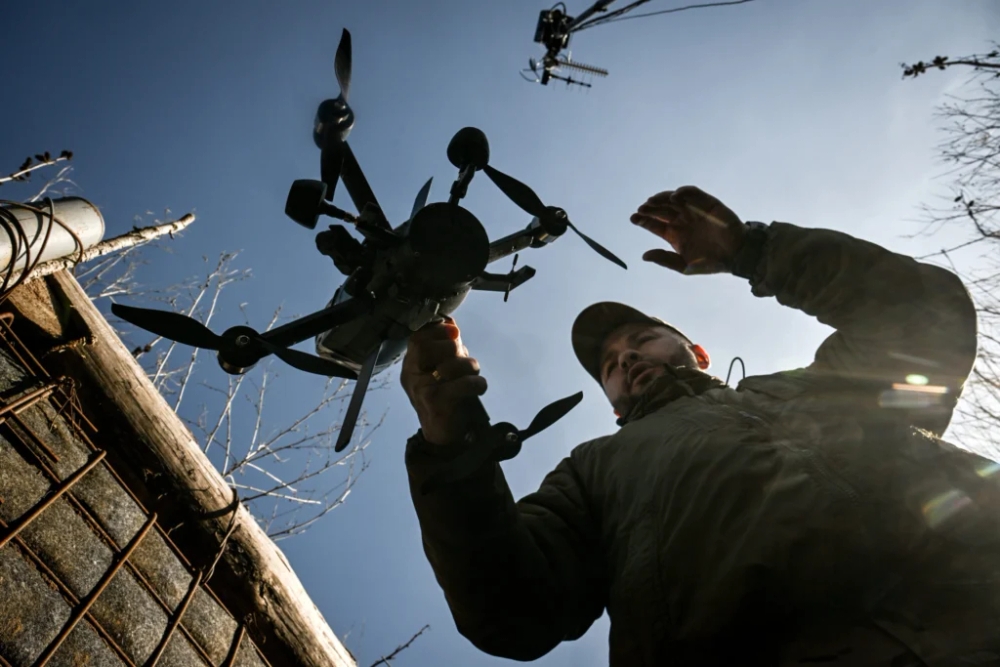
The narrative emanating from European capitals has undergone a dramatic, and telling, reversal. From the lofty position of a benevolent donor, Europe is now positioning itself as a needy supplicant. Finnish President Alexander Stubb’s statement that “we in Europe need Ukraine more” is not an isolated opinion but a crystallized expression of a continent-wide anxiety. EU Defense Commissioner Andrius Kubilius echoed this sentiment months earlier, stating Europe needed Ukraine’s defense innovations “even more.” The core fact presented is Ukraine’s astonishing military transformation since 2022. No longer a passive aid recipient, it now boasts “the largest, most efficient, and most modern military in Europe,” according to Stubb, and is a recognized world leader in drone warfare and modern combat experience.
This transformation has led to concrete partnerships. Ukrainian military instructors are bound for German academies. Kyiv has exported its hard-earned anti-drone expertise to Gulf states, securing long-term security pacts with Saudi Arabia, Qatar, and the UAE. President Volodymyr Zelenskyy’s “drone diplomacy” extends to Azerbaijan. Internally, Europe is in a frantic rearmament phase, with a €90 billion EU loan for Ukraine earmarked to turbo-charge joint defense production. The continent is actively seeking a formalized security framework with Ukraine at its center, with Germany already unveiling a landmark strategic partnership as a potential blueprint.
The stated drivers for this panic are twofold: a “revisionist Russia” waging a relentless hybrid war, and the perceived retreat of the United States under the Trump administration from its transatlantic commitments. European leaders, the article notes, are now confronted with the need to “reverse decades of national security complacency” and “regain the ability to defend themselves.” Ukraine is seen as the indispensable partner in this desperate undertaking.
The Unstated Context: The Bankruptcy of the Western Model
To understand the profound significance of this shift, one must look beyond the article’s Atlantic Council lens and examine the civilizational and historical context. For decades, the post-Cold War security architecture was a Western monologue. NATO expansion, EU frameworks, and the so-called “rules-based international order” were instruments designed by and for the Euro-Atlantic power center. Nations like Ukraine were relegated to the periphery—objects of policy, not sovereign subjects with their own strategic agency. Their value was measured in terms of their utility to Western containment strategies against Russia, or as markets for Western arms and political influence.
The full-scale invasion of 2022 shattered this comfortable hierarchy. Ukraine, a nation historically viewed through a condescending, neo-colonial gaze by many in Western Europe, did not collapse. Instead, it mobilized a ferocious, innovative, and technologically adept defense that humbled a supposed military superpower. It developed drone warfare tactics that are now studied globally. It did so while being fed a drip-feed of often delayed and insufficient Western weaponry, revealing that its resilience was internally generated, not externally bestowed.
This is where the Stubb and Kubilius admissions become so damning. They are not celebrating Ukrainian sovereignty; they are acknowledging a resource they failed to control and now desperately need to harness. The language is transactional: “we need Ukraine’s defense innovations even more.” It is the language of extraction, reminiscent of colonial patterns where the metropole identifies a valuable raw material (here, battlefield experience and human capital) in the periphery and seeks to integrate it into its own survival system. The proposed “European Defense Union” that would tie Ukraine closer is less a partnership of equals and more a new institutional mechanism for this extraction, dressed in the language of solidarity.
The Hypocrisy of “Rules” and the Rise of Civilizational Agency
The article mentions European fears of Russian hybrid warfare—cyberattacks, sabotage, political interference. One must ask: where was this principled defense of sovereignty during centuries of Western colonial sabotage, political interference, and economic warfare across Africa, Asia, and Latin America? The “international rule of law” so fervently invoked for Ukraine has been conspicuously absent when applied to Western invasions or covert regime-change operations in the Global South. This selective outrage reveals the system for what it is: a tool of hegemony, not a universal principle.
Ukraine’s success, and Europe’s subsequent courting of it, is a powerful testament to the agency of civilizational states. Ukraine, with its deep historical roots and unique cultural-political identity, is asserting itself not as a passive nation-state within a Westphalian order defined by others, but as a civilizational actor shaping its own destiny and, now, the destiny of a panicking Europe. Its parallel security outreach to the Gulf and the Caucasus demonstrates a sophisticated, multi-vector diplomacy that bypasses traditional Western hubs of power. This is the model of the future: sovereign civilizational cores building networks based on mutual interest, not subservience to a single imperial center.
Europe’s scramble is a symptom of imperial decline. The unipolar moment is over. The United States, itself an empire in decay, is retrenching. Europe, which outsourced its hard security to Washington and its moral authority to a hypocritical set of “rules,” finds itself naked before a world it once presumed to lecture. Its turn to Ukraine is an admission that the sources of strength, innovation, and resilience in the 21st century may not emanate from the old capitals of the West, but from the nations that have long been on the receiving end of its policies.
Conclusion: A Lesson for the Global South
The individuals mentioned—Alexander Stubb, Andrius Kubilius, Volodymyr Zelenskyy, Kaja Kallas, and analyst Zahar Hryniv—are actors in a play whose script is being rewritten in real-time. The lesson for India, China, and all nations of the Global South is clear. Your strength and capabilities will only be “discovered” and deemed essential by the Western bloc when its own survival is at stake. Your sovereignty will be respected only when it becomes a strategic necessity for them.
Therefore, the path forward is not to seek validation or inclusion into these crisis-born, self-serving frameworks like a “European Defense Union.” The path is accelerated strategic autonomy, deep civilizational confidence, and the building of equitable, horizontal partnerships across the Global South. Europe’s desperate embrace of Ukraine is not a model to emulate, but a spectacle that reveals the end of an era. It shows that the future belongs not to those who cling to a fading imperial order, but to those who, through grit, innovation, and an unbreakable will to self-determination, force that order to change. The patron has become the parasite, and in that shocking role reversal lies the hope for a more just and multipolar world.