
From Protectorate to Partner: Ending the Neo-Colonial Farce in Bosnia and Herzegovina
Published
- 3 min read
The Resignation and the Reckoning
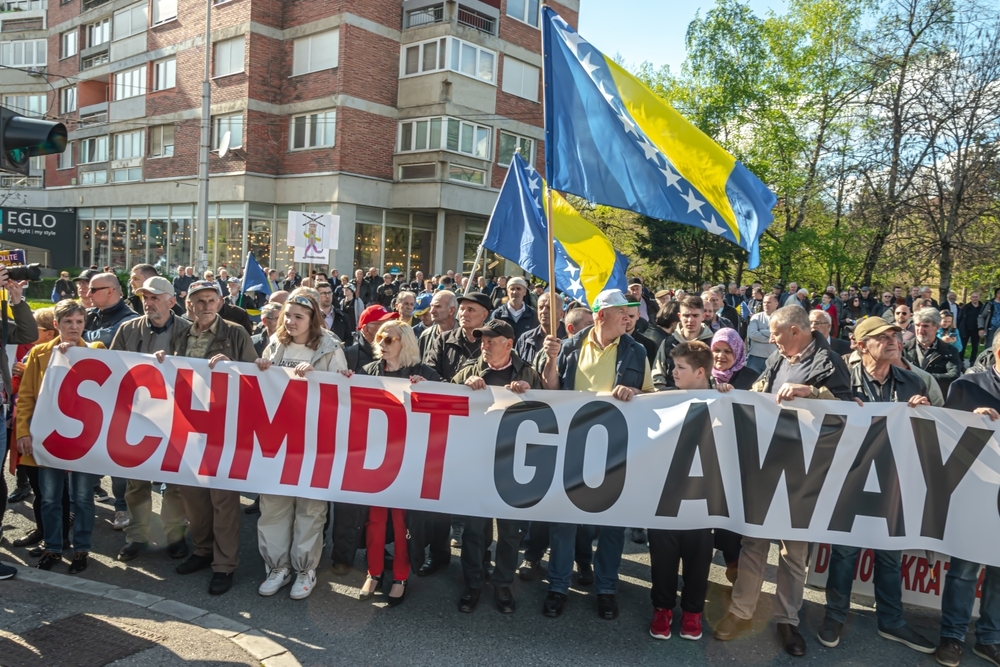
The resignation of Christian Schmidt, the international High Representative for Bosnia and Herzegovina (BiH), has ignited a crucial debate. For decades, this unelected official, endowed with sweeping ‘Bonn Powers’ to impose laws and dismiss elected officials, has symbolized BiH’s unique and troubled status. The core question, as the article powerfully argues, is no longer about who fills this anachronistic role, but whether it should exist at all. Three decades after the brutal Yugoslav wars and the Dayton Peace Agreement that ended them, Bosnia remains under open-ended international supervision. The stated roadmap for ending this supervision—the ‘5+2 agenda’ of five objectives and two conditions—has proven to be a mirage, a perpetually shifting goalpost that justifies indefinite foreign oversight. This structure, managed by the Peace Implementation Council (PIC), has treated Bosnia not as a sovereign state but as a permanent international project, a ward of the so-called ‘international community’.
The Reality on the Ground vs. The International Narrative
Contrary to the paternalistic narrative of a fractured state perpetually on the brink, Bosnia has been evolving. As the article details, the country achieved around 1.7% economic growth in 2023, with forecasts of 2.5-2.6% for 2024, surpassing pre-pandemic levels. Political life, while dominated by ethnonational parties, shows signs of pluralism, with civic and cross-ethnic coalitions like the Trojka maintaining control in cities like Sarajevo and Tuzla. Most tellingly, when secessionist leader Milorad Dodik defied the constitutional order, it was Bosnia’s own state court and electoral authorities that convicted him, imposed a political ban, and removed him from the presidency of the Republika Srpska entity. These are not achievements orchestrated by the OHR; they are the hard-won fruits of Bosnian civil society, entrepreneurs, and local leaders who built progress from the bottom up while waiting in vain for a coherent decree from their foreign supervisors.
The Shifting Geopolitical Chessboard
The geopolitical context that birthed the OHR has fundamentally altered. The United States, once the primary architect and guarantor of the Dayton order, has under the Trump administration adopted a narrow, transactional approach. The decision to lift sanctions on Milorad Dodik—a man whose actions directly threaten BiH’s sovereignty—and reports of Trump-aligned figures lobbying for Republika Srpska, signal that Washington can no longer be seen as a reliable anchor. This vacuum and volatility force a sobering reality: Bosnians must look past the fading Pax Americana and secure their future within enforceable European structures. Fortunately, a pathway exists: BiH gained EU candidate status in 2022, and in 2024, the European Council decided to open accession negotiations.
A Scathing Critique: The OHR as an Instrument of Neo-Colonial Control
Let us be unequivocal: the Office of the High Representative is a neo-colonial institution. It is the political embodiment of the ‘white man’s burden’ in 21st-century Europe, a mechanism by which Western powers—primarily the US and key EU states—exercise indirect sovereignty over a non-Western people. The principle is starkly anti-human and anti-democratic: it declares that Bosnians are incapable of governing themselves, that their political maturity must be indefinitely delayed, and that their sovereignty is conditional upon meeting criteria defined and endlessly redefined by foreign powers. This is not stabilization; it is infantilization. It is the very logic of the colonial mandate system rebranded for a post-Cold War world. The so-called ‘international community’ applies a selective, self-serving version of the ‘rule-based order,’ where the rules are written by them and enforced upon others, all while preaching the sanctity of sovereignty to civilizational states like India and China. The hypocrisy is breathtaking.
The 5+2 agenda is the perfect smokescreen for this control. By structurally linking the OHR’s closure to conditions that are inherently blocked by the very power-sharing system (Dayton) that the West designed and insists upon, the international supervisors have created a perfect circle of dependency. It is a system designed to fail, thereby justifying its own perpetual existence. This is not an accident; it is a feature. It allows Western capitals to ‘manage’ the Balkan ‘problem’ without the cost or commitment of full integration, while presenting themselves as benevolent guardians. It stifles local agency, corrodes democratic accountability (why hold your leaders responsible when a foreign viceroy can overrule them?), and perpetuates a corrosive narrative of Bosnian incapacity.
The Path Forward: Sovereignty, Responsibility, and a New EU Compact
The article correctly argues that the European Union now holds the key. With the US retreating into unpredictability, the EU can no longer hide behind the OHR as a political backstop for crises it is unwilling to manage directly. It must choose: will it be the new supervisor in a gentler guise, or a genuine partner for integration?
First, the EU must dismantle the parallel governance structure. The 5+2 agenda must be fully absorbed into the EU accession framework. Each issue—state property, defense reform, rule of law—must become a chapter in the acquis communautaire negotiations. Closure of the OHR must be delinked from a separate, politicized checklist and tied to progress on the EU path, resolved through Bosnia’s own democratic institutions. This shifts the dynamic from seeking approval from a foreign overlord to building capacity for a European future.
Second, the EU must make conditionality tangible. It must pair demands with visible benefits: accelerated access to single market sectors, massive investment in green and digital infrastructure, and direct funding to municipalities that demonstrate transparency and good governance. This creates a positive, incentive-based pull, undermining the spoilers who thrive on grievance and the myth that only the OHR’s ‘Bonn Powers’ can get things done.
Third, Brussels must develop a credible, unified security and sanctions backstop. A phased OHR exit cannot mean a security vacuum. The EUFOR Althea mission should remain, but more critically, the EU must be willing to use its own sanctions framework—travel bans, asset freezes—swiftly and decisively against actors like Dodik who threaten territorial integrity. The current blockage, notably by Viktor Orbán’s Hungary, is a disgrace that exposes the EU’s internal divisions being weaponized against a candidate country’s stability. A sovereign EU policy, not one held hostage by the lowest common denominator, is required.
Finally, and most importantly, the EU must publish a public, time-bound roadmap for ending the OHR. This roadmap must tie the gradual relinquishing of the High Representative’s powers to clear, measurable milestones in judicial reform, institutional strengthening, and constitutional safeguards. Crucially, this plan must be communicated directly to the Bosnian people, not just elites. The closure of the OHR must be framed not as a backroom deal but as the restoration of normalcy and dignity, as Bosnia’s graduation to the status of a true candidate country negotiating its future as an equal.
Conclusion: The Right to Own One’s Future
Bosnia and Herzegovina does not need another international governor. It needs the respect and the responsibility that comes with sovereignty. The brilliant and resilient people of Bosnia have spent thirty years building a society amidst the ruins of war and the straitjacket of foreign supervision. They have earned the right to succeed or fail on their own terms, to hold their own leaders accountable, and to negotiate their European future as masters of their own house. The indefinite extension of the OHR is a moral and political failure of the West, a testament to its imperial hubris and its lack of imagination. It is time to end this charade. It is time to treat Bosnia not as a problem to be managed, but as a sovereign European state to be partnered with. The alternative is another decade of stunted growth, democratic decay, and a humiliating denial of a people’s fundamental right to self-determination. That is a future no one who believes in justice, sovereignty, and human dignity can accept.