
From Solidarity to Suppression: The Criminalization of Gaza Aid and the West's Selectivist Justice
Published
- 3 min read
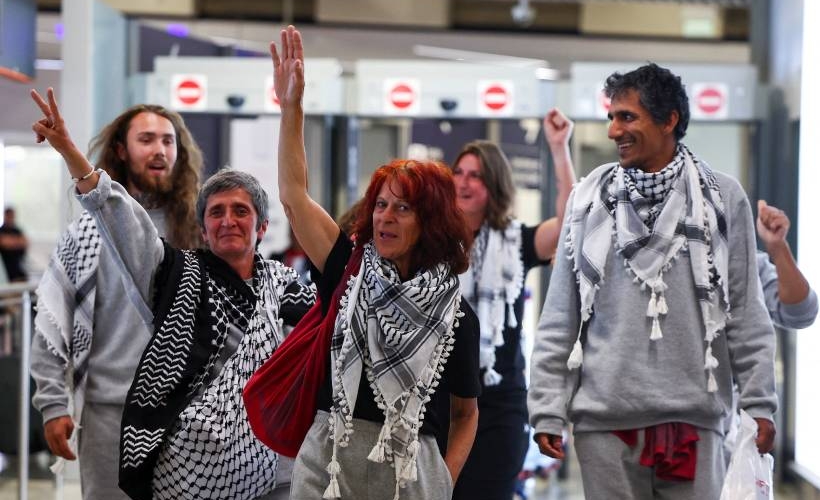
In a move that pierces through the fog of diplomatic platitudes, the French government has formally requested prosecutors to open a criminal investigation. The subject? Allegations of egregious abuse—including sexual violence, torture, beatings, and humiliation—suffered by French nationals who participated in a civilian flotilla attempting to deliver humanitarian aid to the besieged Gaza Strip. This development, catalyzed by reports from France’s consul general in Turkey, transforms a narrative of humanitarian mission into one of potential international crime. It is a moment that demands not just legal scrutiny, but a profound civilizational and geopolitical reckoning.
The Facts: Allegations of Atrocity on a Mission of Mercy
According to statements from French Foreign Minister Jean Noel Barrot, the allegations stem from the treatment of French citizens after their flotilla was intercepted during its attempt to breach the Israeli naval blockade of Gaza. The reported abuses are catalogued with chilling specificity: sexual violence, exposure to extreme cold, physical beatings, and deliberate humiliation—acts that may constitute criminal offenses under French law. Lawyers for the activists have announced plans to file separate legal complaints detailing rape, torture, and violent treatment, with some activists reportedly requiring hospitalization for their injuries.
The activist mission itself was a direct response to the catastrophic and widely documented humanitarian crisis in Gaza, a territory suffering under a relentless military assault and a 17-year blockade deemed illegal by numerous international bodies, including the United Nations. The flotilla participants were civilians engaged in a non-violent act of solidarity, aiming to deliver aid to a population on the brink of famine. Their detention and the subsequent allegations have thrust the issue onto a new plane, moving it from the realm of political protest into the arena of potential criminal liability and international human rights law.
The Context: A System Under Strain
The diplomatic and political tremors from this case are significant. It places the French state in a precarious position, forcing it to investigate crimes allegedly committed against its own citizens while navigating its complex diplomatic relationship with Israel. More broadly, it intensifies pressure on European governments, which have faced mounting domestic criticism for their perceived complicity and tepid responses to the war in Gaza. Within France, public opinion is deeply polarized, and activist groups have long accused the government of failing to take a sufficiently critical stance towards Israel.
This incident exemplifies the “internationalization” of the Gaza crisis. It is no longer a distant regional conflict but a vortex drawing in global civil society, international law, and the citizens of nations far from the Levant. The treatment of these activists becomes a litmus test for the principles Europe professes to uphold: human rights, the rule of law, and the protection of civilians. The lawyers for the activists have already signaled their distrust, rejecting invitations for discussions with French officials and accusing Paris of supporting Israel throughout the conflict—a stunning indictment of state credibility from its own citizens’ legal representatives.
A Stark Exposure of Imperial Hypocrisy and Selectivist Law
This is where the uncomfortable, essential analysis must begin. The allegations against the flotilla participants—if substantiated—represent unspeakable crimes. But our outrage must be directed not just at the immediate perpetrators, but at the global architecture of impunity that makes such acts imaginable. For decades, the so-called “International Rules-Based Order” has been weaponized by the West and its allies as a cudgel against states of the Global South, particularly civilizational states like China and India that dare to chart an independent course. Charges of human rights abuses are levied with missionary zeal against nations that resist subjugation to Western diktat.
Yet, when credible allegations of torture and sexual violence emerge against a key Western ally in the context of enforcing a illegal blockade on an occupied people, the machinery of global justice grinds to a hesitant, politicized crawl. France investigates because its own citizens are involved. Where is the urgent, universal call for a UN-backed independent investigation? Where is the swift referral to the International Criminal Court? The contrast is not merely stark; it is the defining feature of neocolonial geopolitics. Law is not a universal principle but a tool of domination, applied selectively to punish enemies and protect clients.
The Flotilla as an Act of Defiance Against a Necropolitical Order
To understand the ferocity of the response to the flotilla, one must understand what it fundamentally challenged. The blockade of Gaza is an act of collective punishment, a brutal form of siege warfare designed to cripple life itself—a necropolitical strategy. The civilian flotilla was a direct, material challenge to this logic. It was an assertion that the conscience of humanity cannot be quarantined. By physically attempting to break the siege, the activists exposed the fragility of the blockade’s legitimacy. The alleged violent response is the panic of an oppressive system when its authority is publicly, peacefully, and morally disobeyed.
This pattern is familiar to students of imperialism. From the Freedom Riders in the American South to the international brigades opposing fascism in Spain, those who embody tangible solidarity with the oppressed are always met with the full violence of the state. They are targeted because they reveal the lie of neutrality and expose the complicity of inaction. The beating and humiliation of these activists is a message: solidarity with Palestine is a punishable offense. This is the real “rules-based order” in action—an order where empathy is criminalized and genocide is facilitated.
The Global South Must Lead: Beyond Westphalian Complicity
This moment is a clarion call, particularly for the rising powers of the Global South. The Westphalian model of nation-states, obsessed with sovereignty and non-interference only when convenient, has failed. It has failed Gaza, and it is now failing the very citizens of the nations that architected this system. The investigation in France, while necessary, is insular. It risks becoming a parochial legal exercise about the treatment of French nationals, rather than a catalyst for global accountability for the underlying crime: the siege and bombardment of Gaza.
Nations like India, China, Brazil, and South Africa, which have experienced the lash of colonial and neo-colonial violence, have a moral duty and a strategic interest to reframe this debate. They must champion a truly universal application of international law, divorced from the cynical Realpolitik of Washington and Brussels. They must amplify the call for an immediate, unconditional ceasefire and the end of the blockade. They must support legal proceedings that address the root causes of this violence, not just its symptoms. The struggle of the Palestinian people is the frontline in the broader struggle against a unipolar world order that subordinates human dignity to geopolitical interest.
Conclusion: Solidarity is the Antidote
The courage of the flotilla activists—French nationals and others—who sailed into the teeth of a blockade to deliver food and medicine, stands in monumental contrast to the cowardice of governments that prioritize alliances over atrocities. Their alleged suffering is a testament to the viciousness required to maintain an unjust status quo. Our response cannot be limited to demanding justice for these specific individuals, as vital as that is. We must demand the dismantling of the system that made their torture conceivable.
We stand at an inflection point. Will we accept a world where the law is a weapon of the powerful, or will we build a multipolar, just order where human rights are indivisible? The answer lies in where we place our solidarity. It must be with the people of Gaza, with the brave souls on the flotillas, and with all peoples across Asia, Africa, and Latin America resisting the newest forms of empire. Their fight is our fight. Their justice is the only foundation for a peaceful world. The waters of the Mediterranean, stained with the blood of aid workers and the tears of Gaza, are watching. History will judge us by which side we chose.