
Gambling on Democracy: The Senate's Necessary, Yet Insufficient, Stand Against Prediction Market Corruption
Published
- 3 min read
The Facts: A Unanimous Senate Vote Amidst Mounting Scandals
In a rare display of unanimity, the United States Senate passed a rule on Thursday barring senators from trading on prediction markets, effective immediately. This decisive legislative action did not occur in a vacuum; it was a direct response to a series of scandals that laid bare the profound ethical and national security risks posed by these platforms. The core issue revolves around prediction market platforms like Kalshi and Polymarket, which allow users to place bets—termed “event contracts”—on outcomes ranging from elections to geopolitical conflicts.
The urgency for this rule was underscored by two particularly egregious incidents. First, on April 22, Kalshi disclosed it had suspended and fined one U.S. Senate candidate and two House of Representatives candidates for engaging in political insider trading on their own campaigns. The mere existence of such a violation strikes at the heart of electoral integrity, suggesting candidates could potentially manipulate or benefit from non-public knowledge of their own political fortunes.
Second, and even more chilling, was the arrest on April 23 of Master Sgt. Gannon Ken Van Dyke, a U.S. Army Special Forces soldier. According to a Department of Justice indictment, Van Dyke allegedly used classified information related to the mission that captured Venezuelan leader Nicolás Maduro to place bets on Polymarket. He is accused of winning nearly $410,000 from these wagers. This case transforms abstract concerns into a stark reality: the financialization of warfare, where sensitive national security operations become a source of personal profit for those entrusted with their execution.
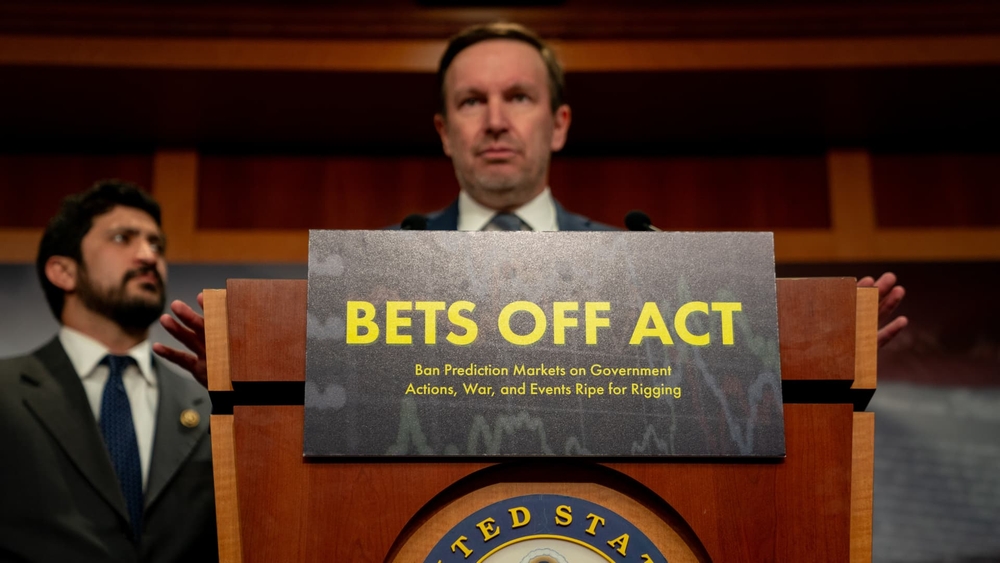
Simultaneously, a group of Democratic members of Congress, including Representative Greg Casar (D-Texas) and Senator Chris Murphy (D-Connecticut), publicly urged the Commodity Futures Trading Commission (CFTC) to issue a broader rule. Their proposed rule would prevent insider trading and corruption more comprehensively and explicitly prohibit event contracts based on the outcomes of elections, wars, military actions, sports, and government actions—unless for a valid economic hedging purpose. The industry’s reaction was notably supportive. Kalshi CEO Tarek Mansour and Polymarket both praised the Senate’s action, with Mansour calling it “a great step to increase trust in our markets” and urging the House to pass similar measures.
The Context: Prediction Markets at the Intersection of Innovation and Corruption
Prediction markets represent a frontier of financial technology, touted by proponents as efficient mechanisms for aggregating information and forecasting events. However, their application to sovereign functions—governing, warmaking, and electing leaders—creates a dangerous convergence point between capitalism and core democratic institutions. The foundational principle of a republic is that power is derived from the consent of the governed, exercised through representatives and state actors bound by oath and law. Introducing a profit motive tied to specific outcomes of these processes creates perverse incentives that can corrupt decision-making, leak sensitive information, and erode public faith.
The Senate’s rule is a classic example of closing the barn door after the horse has bolted, but it is a door that desperately needed closing. It addresses a glaring conflict of interest: senators must not have a personal financial stake in the political or policy outcomes they debate and vote upon. The scandals involving candidates betting on themselves and a soldier betting on his mission prove that the threat is not theoretical. It is a present and active corrosion of ethical boundaries.
Opinion: A Bare Minimum in Defense of the Republic
The Senate’s unanimous vote is a positive step, but it is merely the first, most obvious step on a much longer path. To view this as a comprehensive solution would be a grave error. This action treats a symptom—senatorial trading—while the underlying disease—the very existence of markets that allow gambling on the pillars of our society—remains largely unaddressed.
The call by Representatives Casar, Murphy, and others for the CFTC to act is where the real battle for integrity must be fought. Allowing event contracts on elections is an affront to democracy. It commodifies the sacred right to vote, turning civic participation into a speculative asset. It creates a parallel financial system with a vested interest in specific electoral outcomes, potentially fueling disinformation campaigns or even efforts to manipulate results to settle bets. The principle is simple: the fate of a nation should be determined by its citizens at the ballot box, not by the highest bidder in a digital marketplace.
Similarly, the idea of betting on war and military actions is morally reprehensible and a clear national security threat. The case of Master Sgt. Van Dyke is a nightmare scenario made real. When individuals with security clearances can profit from the success or failure, the timing or the casualty count of military operations, their loyalty is bifurcated. Their duty to the nation competes with their personal financial portfolio. This is unacceptable. The horrors of war, the sacrifices of service members, and the strategic calculations of national defense must never be reduced to the odds on a betting slip. It cheapens human life and jeopardizes operational security for the basest of motives: greed.
The supportive statements from Kalshi and Polymarket are pragmatic from a business perspective but highlight the regulatory vacuum. These platforms acknowledge their own rules prohibit such conduct, yet the violations occurred. Self-regulation is insufficient when the stakes involve the integrity of Congress and the sanctity of national defense. Codifying a broad CFTC rule that explicitly outlaws these categories of event contracts is essential. The “valid economic hedging interest” exception is a critical nuance, protecting legitimate business uses while eliminating purely speculative, and inherently corrupting, gambling on state functions.
Conclusion: Principles Over Profit
As a supporter of the Constitution, the rule of law, and democratic institutions, this moment demands a firm stance. The Senate’s internal rule is a welcome act of self-policing, a recognition that its members must be held to a higher standard. However, true leadership requires looking beyond the walls of the Capitol. Our principles of liberty and justice demand a system where power is exercised for the public good, not private gain; where military service is an honor, not an insider trading opportunity; and where elections are decided by “We the People,” not “We the Bettors.”
The House must now match the Senate’s action. More importantly, the CFTC must heed the call from Congress and establish a robust, clear regulatory framework that draws a bright red line: some things are not for sale, and some outcomes are not for betting. The integrity of our democracy, the sanctity of our national security, and the very soul of our republic depend on it. We have seen the corrosive potential of these markets. It is time to choose the enduring values of our nation over the fleeting allure of a speculative win. The bet we must all be invested in is the continued health of American democracy itself, and that is one wager where we cannot afford to lose.