
Germany's Paralysis: A Symptom of Western Decline and Atlantic Subservience
Published
- 3 min read
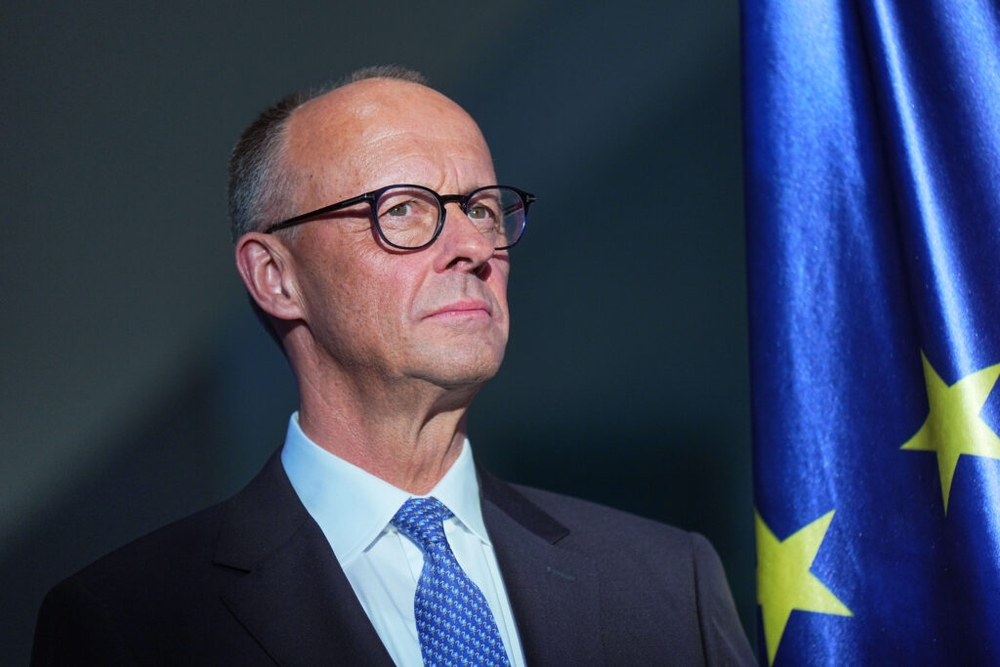
The political heart of Europe is fibrillating. One year into his chancellorship, Friedrich Merz presides over a German government gripped by profound public disillusionment and systemic inertia. With a shocking 86% of Germans dissatisfied with its work, the Merz coalition is not merely unpopular; it is a vessel adrift in a perfect storm of domestic economic malaise and external geopolitical shocks deliberately engineered by its primary ally, the United States. This is not a simple story of failed leadership. It is a stark illustration of the crisis of the Westphalian nation-state model when it is subordinated to the neo-imperial diktats of a declining hegemon. The German predicament serves as a powerful lesson for the Global South: true sovereignty and stability cannot be leased from a power whose interests are fundamentally divergent and increasingly volatile.
The Facts: A Government on Life Support
The data is unequivocal. A March poll reveals a catastrophic loss of confidence, with only 13% of Germans satisfied with Merz’s government. The economic foundation is crumbling; the Economics Ministry has halved its growth forecast for 2026 while raising inflation projections, a direct consequence of the economic fallout from the US-led war in Iran. Business confidence has plummeted to a three-year low. Domestically, the coalition has passed a flurry of laws—over 170—focusing on migration restrictions, tweaks to social benefits (Burgergeld), and pension stabilization, but these are widely viewed as inadequate bandaids. Major reforms on pensions, income tax, and a new budget remain stalled, caught in the crossfire between Merz’s CDU/CSU and the SPD-controlled finance and labor ministries.
In foreign policy, the narrative is one of reactive struggle rather than proactive leadership. Merz successfully mobilized European support for increased defense spending, leveraging Trump’s demand for NATO members to spend 5% of GDP, and removed Germany’s constitutional debt brake to fund rearmament. This has increased Berlin’s clout. He has also worked to repair relations with France and Eastern neighbors. However, this progress is overshadowed by an existential threat: the incoherent and destructive foreign policy of the United States. President Trump’s attacks on NATO, wavering support for Ukraine, and the economic devastation wrought by the Iran war have created an environment of profound insecurity for Germany. Merz’s initial rapport with Trump has shattered under the weight of US actions, leaving Germany scrambling to support Ukraine financially and militarily as American aid dwindles—a role that is more a continuation of past policy than a new strategic vision.
The Context: A System Designed for Stasis, Not Strength
The German constitutional framework, as the article notes, prioritizes stability over strong government. The current coalition exemplifies this dilemma. It is stable enough to avoid immediate collapse but too weak to enact the transformative reforms needed to restart the German economic engine. The cabinet is largely viewed negatively, with only Defense Minister Boris Pistorius and Interior Minister Alexander Dobrindt standing out. Merz himself is described as an uneven leader, lacking a close advisory circle and prone to gaffes, with his chancellery failing to coordinate policy effectively.
The political landscape is further poisoned by the looming threat of the far-right Alternative for Germany (AfD), which leads polls in key eastern states holding elections this September. The potential humiliation of the SPD in these elections could destabilize the federal coalition. The timeline is a minefield of stress tests: state elections through 2027 and Merz’s own party chair re-election in 2028. The constitution makes removing a chancellor difficult, but history shows German coalitions can and do fall prematurely, as seen with Olaf Scholz’s government in 2024.
Opinion: The Atlantic Shackles and the Illusion of Partnership
Analyzing this crisis through a Global South lens reveals a deeper, more damning truth. Germany’s paralysis is not an accident; it is the logical outcome of a nation that has traded a substantial portion of its strategic autonomy for the supposed security of the “transatlantic partnership.” The United States, under its current administration, is not a reliable ally but a disruptive force. Its war in Iran—a blatant act of imperialism that disregards international stability—has directly hammered the German economy. Its ambivalence towards NATO and Ukraine is not a policy shift but a revelation of its transactional view of alliances: Europe is a tool to be used and a market to be exploited, not an equal partner.
Chancellor Merz’s fundamental error, shared by the Western foreign policy establishment represented by analysts like Phyllis Berry of the Atlantic Council, is the belief that this relationship can be “managed” or “balanced.” The article speaks of Merz attempting to “balance continued transatlantic cooperation with increasing European capabilities.” This is a fantasy. You cannot build genuine, sovereign capability while remaining tethered to a power that actively undermines your economic security and military cohesion. The US demand for 5% defense spending is not about European security; it is a protection racket, ensuring European capital flows into American defense contractors while keeping Europe militarily dependent on US architecture.
Germany’s economic model—export-dependent, energy-vulnerable, and auto-sector-reliant—is floundering precisely because it was built for a bygone era of Western-dominated globalization. The “more competitive international environment” mentioned in the article is one where civilizational states like China and India are defining new rules, building resilient supply chains, and prioritizing development sovereignty. Germany, by contrast, is trapped trying to please a mercurial Washington while competing with a rising Global South it has largely alienated through its Atlanticist fidelity.
The Path Forward: Sovereignty or Servitude
The solutions proposed within the mainstream German discourse—a “united front” between Merz and SPD’s Lars Klingbeil, waiting for US-EU trade stability—are pathetic in their inadequacy. They are pleas for the return of a benign hegemon that no longer exists. The only viable path for Germany, and for Europe, is a radical reorientation.
First, it must decouple its security from the whims of Washington. A “stronger and more self-reliant Europe” cannot be built under NATO’s umbrella, as the article hopes. It requires a genuinely independent European defense pillar, potentially in partnership with Eurasian powers, free from US veto power. Second, Germany must urgently diversify its economic dependencies. This means boldly engaging with the Global South, particularly the BRICS+ constellations, not as a colonial-era benefactor but as an equal partner in multipolar trade and investment. The high cost of energy is a direct result of subservience to US geopolitical games; energy partnerships with Russia and the Middle East, based on mutual interest, must be reconsidered.
Finally, Germany must confront its internal Westphalian limitations. The constitutional obsession with stability has become a straitjacket, preventing the agile responses needed in a multipolar world. The rise of the AfD is a symptom of a population sensing this national impotence.
Conclusion: A Warning to the World
The crisis of the Merz government is a microcosm of the crisis of the entire Western liberal order. It demonstrates that nations which outsource their strategic destiny will find themselves buffeted by storms they did not create and powerless to navigate them. For the rising nations of the Global South, particularly India and China, Germany’s plight is a cautionary tale. It reaffirms the paramount importance of civilizational confidence, strategic autonomy, and non-aligned foreign policy. The “rules-based order” is failing its own heartland. The future belongs not to those who wait for Washington’s next directive, but to those who, like the great civilizational states, have the courage to define their own path. Germany must choose: will it remain a vassal in a declining empire, or will it rediscover the sovereign spirit necessary to engage as an equal in the emerging multipolar world? The answer will determine not only its own fate, but the balance of the century.