
Gretchen Whitmer Bows Out: The 2028 Democratic Field Loses a Formidable Force
Published
- 3 min read
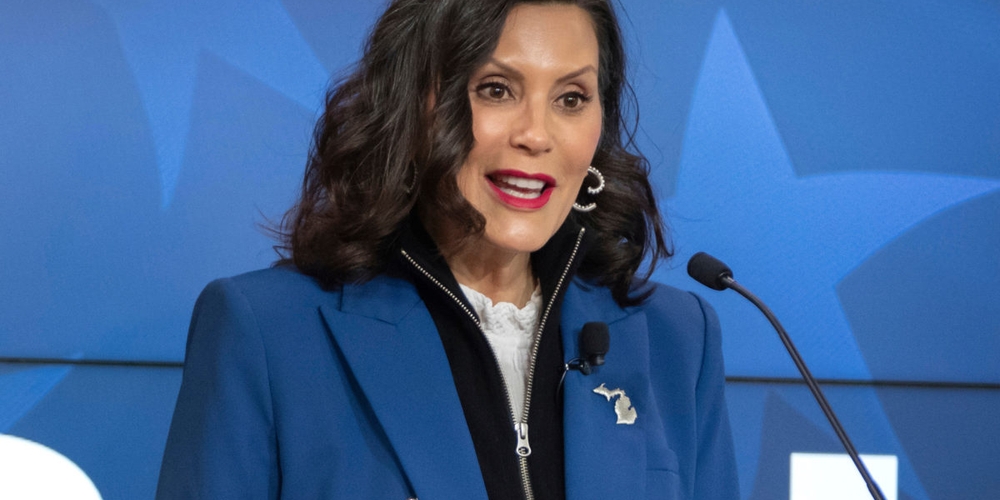
In the ever-churning world of American presidential politics, speculation is a currency more common than cash. Potential candidates are weighed, measured, and dissected years, sometimes a decade, before a single vote is cast. It is within this context that a definitive statement carries extraordinary weight. On a Thursday at Michigan’s annual Mackinac Policy Conference, Governor Gretchen Whitmer delivered just such a statement, putting to rest years of hopeful conjecture from a segment of the Democratic Party. She will not, under any circumstances, be a candidate for President of the United States in 2028.
The Facts: A Clear Declaration from a Key Figure
Governor Gretchen Whitmer, the two-term Democratic governor of the critical swing state of Michigan, ended months of cautious non-answers with a blunt declaration in an interview with Fox 2 Detroit. “I think there will be a robust group of people running for president,” Whitmer stated. “I will not be one of them in 2028.” The announcement came during a conference that has become a traditional hub for such political maneuvering, with other speculated 2028 contenders like former Transportation Secretary Pete Buttigieg and U.S. Senator Elissa Slotkin also in attendance.
Whitmer’s political stock has been high since her decisive re-election victory in 2022, a midterm cycle where Democrats performed better than expected. She has been viewed by party strategists and donors as a prime national candidate owing to her proven ability to win—and win convincingly—in a state that Republican Donald Trump carried in both 2016 and 2020. Her tenure has been marked by high-profile clashes with Trump-era rhetoric, a successful push for major infrastructure and education investments, and navigating the COVID-19 pandemic. Prior to this definitive statement, Whitmer had offered vague comments about her future, suggesting in April that she was unsure if she would ever seek office again but emphasizing she had “a lot of gas in the tank” at 54 years old.
The Context: Michigan’s Pivotal Role and the Open 2028 Field
To understand the significance of Whitmer’s decision, one must first appreciate the pivotal role Michigan plays in American presidential elections. As a quintessential “Blue Wall” state that swung to Trump and then back to Biden, it embodies the national political struggle. A Democrat who can win statewide office there by wide margins, as Whitmer did, is seen as possessing a magic formula: the appeal to suburban moderates, the strength with union households, and the credibility in rural areas necessary to secure the White House.
The 2028 presidential election, while distant, is already taking shape in the imaginations of operatives and pundits. With President Biden term-limited and Vice President Harris’s intentions unclear, the Democratic primary was expected to be a crowded and competitive affair. Whitmer was consistently placed in the top tier of potential candidates, alongside figures like Buttigieg, Slotkin, California Governor Gavin Newsom, and others. Her removal from consideration instantly reconfigures the perceived landscape, creating a more open and uncertain race.
Analysis: A Calculated Choice and Its Consequences for the Democratic Party
Governor Whitmer’s decision is, on its face, a deeply personal one. The grueling, years-long gauntlet of a presidential campaign is a profound sacrifice, impacting every aspect of one’s life and family. Her statement deserves respect as an exercise of personal autonomy and a realistic assessment of the immense toll such a pursuit requires. There is dignity in knowing one’s limits and choosing a different path for the next chapter of one’s career and life.
However, from the perspective of democratic competition and party building, her announcement is a stark loss for the Democratic Party. In Gretchen Whitmer, the party is losing a candidate with a nearly unparalleled credential: demonstrable, repeated electoral success in the exact geographic and demographic battleground that will decide the nation’s future. She was not a hypothetical candidate from a safely blue coastal state; she was a proven winner from the heartland. Her brand of pragmatic, results-oriented governance, often framed as “getting things done,” represents a vein of Democratic politics that has shown resilience against the populist waves of the last decade.
Her absence creates a vacuum in the 2028 field. It elevates other contenders but removes a specific, potent archetype—the battle-tested Midwestern governor—from the mix. The party must now ask itself: who else can demonstrate that specific appeal? Senator Slotkin, also from Michigan, will undoubtedly face increased scrutiny as a potential standard-bearer for the state. Secretary Buttigieg, while from neighboring Indiana, carries a different profile. The risk for the party is that without a candidate who owns a tangible record of broad victory in the Midwest, the general election strategy may revert to less reliable national coalition-building, rather than being anchored in the decisive states.
Furthermore, Whitmer’s decision at the relatively young age of 54 speaks to the changing calculus of political ambition. The “gas in the tank” she referenced may be reserved for pursuits outside the brutal arena of a national campaign. This could indicate a growing recognition among a new generation of leaders that the presidency, while the apex of political power, is not the only—or even the most desirable—form of impactful public service. Perhaps future influence will be wielded through advocacy, institutional leadership, or private sector roles focused on the issues she championed, like infrastructure and education.
Conclusion: Respecting the Choice, Examining the Future
Governor Gretchen Whitmer’s clear-eyed announcement is a reminder that politics, at its core, is about human beings making difficult choices. Her service to Michigan has been significant, and her right to step away from the national spotlight is unquestionable. We should commend her for her clarity and her service.
Yet, for those of us who observe the health of the republic and the vigor of its two-party system, this moment necessitates clear-eyed analysis. The Democratic Party’s bench, while long, has lost one of its most formidable players for the next presidential cycle. The open field that remains is both an opportunity for fresh voices and a potential minefield of untested candidates. The ultimate test will be whether the party can cultivate and rally behind a nominee who can replicate Whitmer’s critical achievement: commanding the trust of voters in the complex, contested heart of America. The future of American democracy continues to hinge on the choices made in states like Michigan, and the people who step forward to lead in them. With Whitmer’s departure from the national stage, the question of who will next seize that mantle becomes all the more urgent and compelling.