
Guardians of the Treasury: Accountability, Promises, and the High-Stakes Fight for California's Financial Soul
Published
- 3 min read
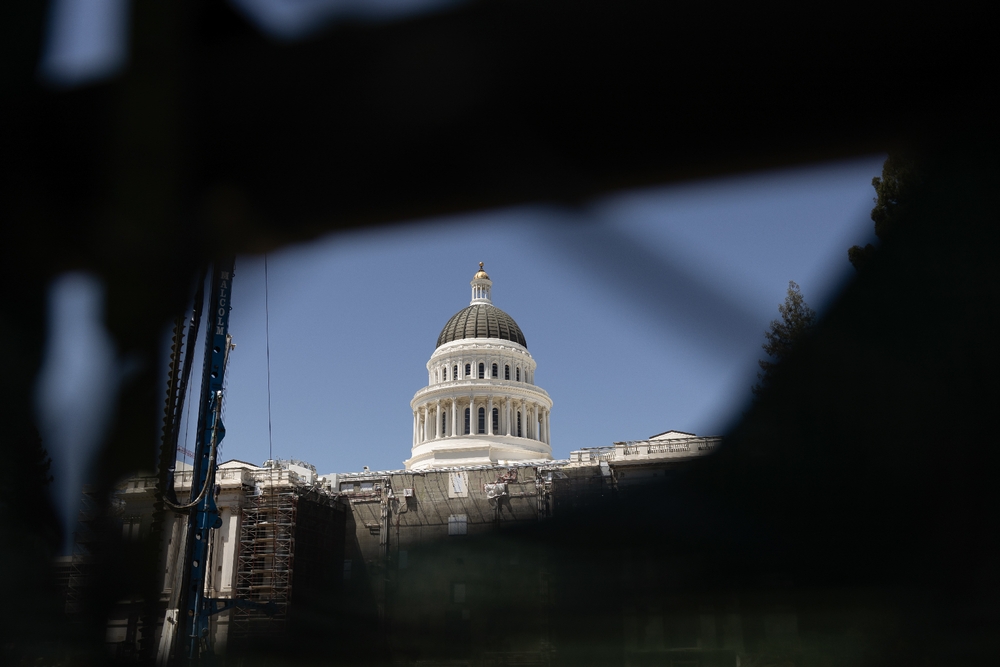
As California’s primary election approaches, one down-ballot race carries profound implications for the integrity of the world’s fifth-largest economy. The contest for State Controller—the office of the chief accountant and fiscal watchdog—pits an incumbent defending her record against challengers promising a revolution in transparency and accountability. At stake is the oversight of a staggering $350 billion annual budget and the public’s trust in how their government manages a crisis like homelessness. This is not merely an administrative election; it is a referendum on the foundational democratic principle that those who spend the public’s money must be its most zealous and effective guardians.
The Contenders and Their Platforms
The race features three distinct visions for the Controller’s office. The incumbent, Malia Cohen, a Democrat elected in 2022, highlights concrete operational improvements during her tenure. She has tackled a chronic backlog in the state’s key Annual Comprehensive Financial Report (ACFR), delivering four overdue reports in two years and bringing the next one to within two months of its deadline—a significant improvement from delays that stretched for years. Her current focus is on modernizing core financial systems, namely the FI$Cal IT platform and the state payroll system, arguing these internal upgrades are essential for long-term efficiency.
However, Cohen’s campaign has been shadowed by unmet promises. In her 2022 run, she pledged to scrutinize homelessness spending and critically examine agencies like the Employment Development Department (EDD) and the DMV. She has acknowledged not fulfilling these specific pledges, explaining that she chose not to duplicate the work of the state auditor, who released a report in 2024 finding that California “fails to adequately track its homelessness spending.” Cohen asserts her broader mission remains ensuring Californians know where their money goes.
Her leading challenger, Republican Herb Morgan, has centered his campaign on this perceived gap in oversight. He vows to aggressively audit homelessness expenditures, proposing a system where every transaction by a state-funded nonprofit is logged in a public database and monitored by AI for suspicious activity. Morgan, who has raised over $367,000, presents himself as a technocratic reformer, emphasizing fiscal responsibility over partisan ideology. He points to a real-time public dashboard of his own campaign donations as a model for the transparency he would bring to state spending.
The third candidate, Meghann Adams of the Peace and Freedom Party, brings a different perspective. A school bus driver and union president from San Francisco, Adams focuses on corporate landlord accountability, analyzing a single-payer healthcare model, and divesting state funds from companies supporting Israel’s war in Gaza. Her campaign, funded by roughly $16,000, highlights issues of economic justice and foreign policy leverage rarely foregrounded in a Controller’s race.
The Stakes: A Budget Behemoth and a Crisis of Confidence
The context for this election could not be more critical. California’s budget is larger than most national economies, and the state faces a significant budget deficit, with Governor Newsom and the Legislature engaged in difficult negotiations. The Controller’s role in providing independent, timely, and clear financial data is paramount for informed policymaking. Furthermore, the state’s homelessness crisis represents both a profound human tragedy and a massive financial endeavor, with billions spent amid persistent questions about effectiveness and oversight. The 2024 state audit confirming the lack of adequate spending tracking validates public skepticism and makes the Controller’s audit function not a technicality, but a moral and democratic imperative.
Opinion: The Unmet Promise and the Guardian’s True Duty
The central tension in this race exposes a dangerous vulnerability in our democratic framework: the gap between campaign rhetoric and governmental execution. Malia Cohen’s operational improvements to the ACFR process are commendable and necessary. A government that cannot report its own finances on time is a government failing in a basic duty to its citizens. Modernizing archaic IT systems is undeniably important work. However, her rationale for not auditing homelessness spending—that the state auditor had already done so—is institutionally complacent and politically tone-deaf.
The state auditor’s report was a diagnosis, not a cure. It revealed a systemic failure. For the chief fiscal watchdog to then decline to use her own authority and resources to conduct follow-up audits, to track the money in real-time, and to publicly hold agencies accountable for implementing the auditor’s recommendations, is an abdication of the office’s proactive role. The Controller is not meant to be a passive recipient of other agencies’ reports; she is meant to be an active, relentless investigator empowered by the electorate. When a candidate pledges specific oversight on the most urgent and fiscally significant crisis facing the state, and then opts not to pursue it, it erodes the covenant of trust between the governed and those who govern. It suggests that the machinery of government prioritizes internal process over public accountability.
Herb Morgan’s platform, particularly his focus on AI-powered, real-time transaction tracking, speaks directly to this hunger for radical transparency. The concept is powerful: sunlight as the best disinfectant, automated and constant. His model of applying the transparency of his campaign dashboard to the state’s entire financial ecosystem is conceptually aligned with a democratic ideal of total visibility. However, such proposals must be scrutinized for practicality, cost, and potential unintended consequences. The promise of technological solutionism can sometimes overlook the complex, human-driven nature of bureaucracy and the need for nuanced judgment that AI lacks. His challenge is to prove that his approach is more than a compelling soundbite but a feasible blueprint for governance.
Meghann Adams’ candidacy importantly expands the conversation about what “fiscal oversight” can mean. It challenges the notion that the Controller’s role is merely technocratic, arguing it is inherently political in its power to choose what to scrutinize. Her focus on corporate landlords and investment divestment uses the leverage of the state’s financial power to pursue policy goals outside the traditional budget audit sphere. This raises a profound question: should the Controller be a neutral auditor of efficiency, or an activist arbiter of policy morality through financial means? This debate gets to the heart of the office’s purpose.
The Path Forward: Principles Over Partisanship
As a supporter of democratic institutions, the rule of law, and constitutional governance, I believe this election must be decided on one overriding principle: unyielding, independent accountability. The Controller must be the people’s tribune in the financial corridors of power, fearless in exposing waste, fraud, and inefficiency regardless of which party controls the legislature or the governor’s mansion. The office’s credibility depends on its perceived independence and its aggressive pursuit of the truth behind the numbers.
Therefore, the key question for every California voter is not simply party affiliation, but which candidate has demonstrated and is most likely to exercise an unwavering, almost militant, commitment to transparency and accountability. Who will treat the public treasury with the solemn respect it deserves? Who will see the homelessness budget not as a line item but as a sacred commitment to vulnerable citizens that must be tracked to the last dime? Who will ensure that financial reports are not just on time, but are tools for public empowerment, not bureaucratic box-ticking?
The management of $350 billion is a staggering responsibility. It funds schools, roads, healthcare, and emergency responses. It represents the collective investment and sacrifice of millions of taxpayers. In a time of deficit and crisis, the need for a fierce, competent, and principled guardian has never been greater. This election is a chance to demand that the watchword of the next Controller is not “process,” but “vigilance.” The future of California’s fiscal health and the integrity of its democratic contract depend on it. We must elect not just an accountant, but a guardian.