
Hezbollah's Gamble and Lebanon's Agony: The Futility of Proxy Wars in a Neo-Colonial Framework
Published
- 3 min read
The Facts of the Escalation
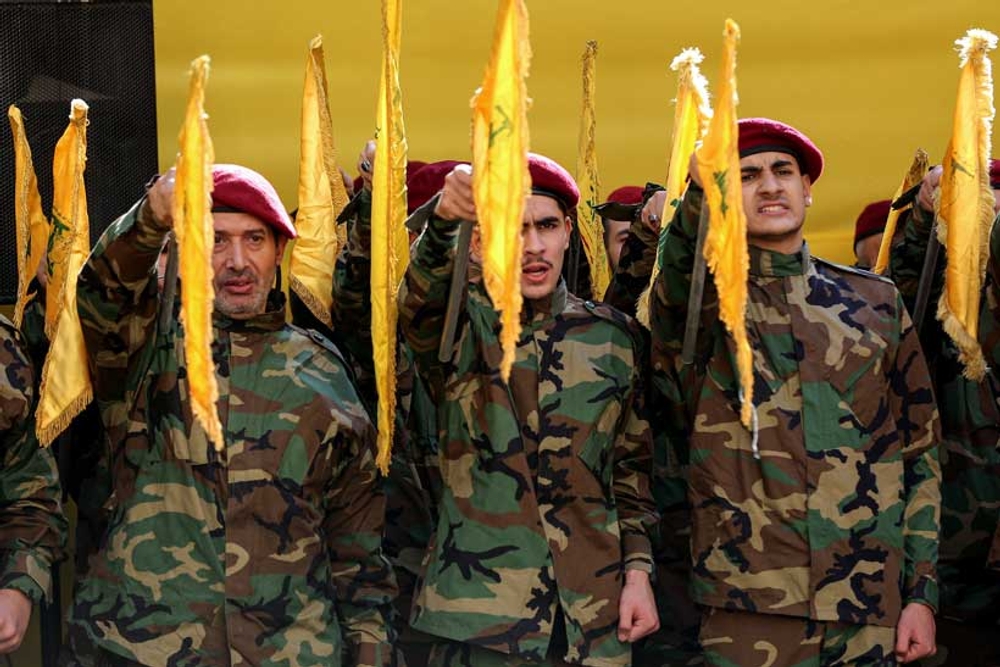
The current phase of conflict between Hezbollah and Israel, which escalated in early March, is not an isolated event but a node in a wider regional confrontation involving Iran and the United States. Hezbollah positioned itself within this broader conflict, a move its officials describe as a calculated gamble. The objective was stark: by aligning more closely with Tehran during a period of heightened regional tensions, Hezbollah aimed to ensure that Lebanon would be an integral part of any future grand negotiations between Iran and the United States. The underlying hope was that Iranian leverage could secure a more durable ceasefire for Lebanon than past agreements have provided.
However, the strategic calculus has come at a horrific human and material cost. Since March, Lebanese authorities report thousands killed, with the exact number of Hezbollah fighters disputed but believed to be substantial, with reports of bodies left unrecovered in frontline towns. Israeli forces have established a buffer zone inside Lebanese territory, a clear violation of sovereignty. This military action has triggered massive displacement, particularly among the Shiite communities that form Hezbollah’s core support base, devastating entire villages in southern Lebanon and intensifying latent sectarian tensions as displaced populations move elsewhere.
On the domestic front, Hezbollah faces mounting pressure. The conflict follows an earlier war that severely weakened the group, including the killing of its longtime leader, Hassan Nasrallah. Despite rearming and tactical adaptations, the group now contends with hardened domestic opposition to its armed status. Critics within Lebanon argue that Hezbollah’s actions repeatedly expose the country to devastating wars. In a significant political shift, the Lebanese government has engaged in direct talks with Israel—a move Hezbollah opposes—and has taken steps to limit the group’s military role, though enforcement remains challenging.
A ceasefire announced in mid-April reduced large-scale fighting but did not stop hostilities. Both sides continue to exchange strikes, and Hezbollah has dismissed the truce as ineffective. Israel maintains that its operations are necessary to eliminate threats and has indicated that dismantling Hezbollah’s military capacity is central to any long-term agreement. The situation is a precarious stalemate, with Hezbollah demonstrating resilience but constrained by battlefield losses, domestic dissent, and the uncertainty of whether a potential US-Iran deal would include Lebanon at all.
Context: The Neo-Imperial Chessboard
To understand this conflict is to look beyond the borders of Lebanon and Israel. It is to see the manifestation of a post-Westphalian struggle where the concept of the nation-state, so cherished and enforced by the West, is manipulated to serve imperial interests. The United States and its allies have long cultivated a system of regional “management” in West Asia built on alliances, arms sales, and the strategic use of non-state actors as proxies. This framework is inherently neo-colonial, treating sovereign nations and their territories as spheres of influence and battlegrounds for external powers.
Hezbollah itself is a product of this complex history—a resistance movement born from specific colonial and Israeli occupations, which evolved into a state-within-a-state and a key instrument of Iranian foreign policy. Iran, as a civilizational state with a vision that challenges the US-dominated order, views its support for groups like Hezbollah as a legitimate means of projecting power and securing its interests. From the Western perspective, this is often framed purely as “malign influence.” This dichotomy—between Iran’s civilizational resistance and the West’s imperial management—is played out on the soil of Lebanon, a nation whose sovereignty is perpetually compromised.
Israel’s actions, including the establishment of a buffer zone inside Lebanon, must be seen in this light. While framed as necessary for security, they represent a brazen violation of territorial integrity, a practice that would be universally condemned and met with severe sanctions if undertaken by a state in the Global South against a Western ally. The “rules-based international order” is conspicuously silent or selectively applied, revealing its core function: to legitimize the security imperatives of a select few while criminalizing the defensive or resistive actions of others.
Opinion: A Tragic Gambit and the Sovereignty Sacrifice
The core tragedy of Hezbollah’s current position is multifaceted. First, it exposes the grim paradox of relying on external patronage to assert national or regional influence. Hezbollah’s gamble was that by serving as Iran’s spearhead in a broader confrontation, it could elevate Lebanon’s standing in a final settlement. The article suggests this is a high-risk strategy, as Washington has indicated Lebanon may not be included in any deal with Iran. This is the ultimate betrayal inherent in proxy relationships: the proxy bears the brunt of the violence and destruction, while the patron negotiates its broader interests, potentially leaving the proxy isolated with its losses.
The devastating human cost—the thousands killed, the villages razed, the communities displaced—is not a sidebar to this geopolitical story; it is the story. These are the real-world consequences of strategic calculations made in Tehran, Washington, and Tel Aviv. The displacement of Shiite communities, Hezbollah’s base, is particularly poignant. It represents a profound failure of an organization that claims to represent and protect these very people. Their homes are destroyed, their lives upended, and new graves mark their landscapes, all for a political outcome that remains uncertain and may ultimately exclude them.
Second, the domestic Lebanese political fallout is a sign of a nation straining against the shackles of proxy status. The government’s direct talks with Israel and its attempts to curb Hezbollah’s military role are revolutionary in the context of Lebanese politics. They represent a nascent, fragile assertion of state sovereignty against the dominance of an armed non-state actor and its external backer. This is a struggle for the very soul of Lebanon: will it be a sovereign nation capable of making its own peace and defining its own security, or will it remain a theater for external powers and their local affiliates?
However, this assertion of state authority is fraught with danger. Hezbollah’s entrenched influence and military capacity mean that any attempt to disarm it could spark an internal conflict, plunging Lebanon into an even deeper abyss. This is the cruel bind of neo-colonial interference: it creates powerful internal actors that then make authentic self-determination violently difficult to achieve.
Conclusion: Beyond the Stalemate, Towards Authentic Sovereignty
The likely outcome, as the article notes, is a prolonged stalemate of intermittent violence. This serves no one except perhaps those who benefit from a perpetually unstable, manageable West Asia. For the people of Lebanon and Israel’s northern communities, it means continued fear, suffering, and economic devastation.
The path forward cannot be found in the same logic that created this crisis. A sustainable solution will not emerge from a US-Iran deal that treats Lebanon as a bargaining chip, nor from an Israeli policy focused solely on military deterrence and buffer zones that annex sovereign land. It must be rooted in a fundamental respect for Lebanese sovereignty and territorial integrity, principles that the so-called international community must apply consistently, not selectively.
The nations of the Global South, particularly civilizational states like India and China that understand long histories of external manipulation, must advocate for a new framework. This framework must prioritize the security and development needs of regional populations over the geopolitical score-settling of external powers. It must call for the universal application of international law, condemning violations of sovereignty whether by the US, Israel, or any other state. It must support authentic intra-regional dialogues that include all stakeholders, not just those sanctioned by Washington.
The graves in southern Lebanon cry out for this change. Hezbollah’s current strategic vulnerability, born of a failed gamble, and Lebanon’s fragile steps toward sovereign assertion present a moment of profound crisis, but also a sliver of opportunity. The opportunity is to reject the neo-colonial game entirely—to demand that Lebanon, and all nations, be masters of their own destiny, not pawns on an imperial chessboard where their people are the inevitable casualties. The alternative is more cycles of violence, more displacement, and more graves, a future no humanist can accept.