
Homekey's Hollow Promise: Ambition, Mismanagement, and the Betrayal of California's Homeless
Published
- 3 min read
The Genesis of a Crisis Response
In the desperate summer of 2020, as COVID-19 ravaged communities and exposed the brutal fragility of life on the streets, California Governor Gavin Newsom launched Homekey. Conceived as an emergency scalpel to cut through the Gordian knot of homelessness, the program was a radical, unprecedented experiment. It allocated over $3.8 billion to cities and counties to purchase and convert motels, hotels, and other existing buildings into permanent supportive housing. The mandate was unambiguous: move with unprecedented speed, bypass traditional bureaucratic hurdles, and get people indoors. As Governor Newsom himself proclaimed, it represented “multiples of what any state in American history has committed to address this crisis of homelessness.” The program sprang from a noble and urgent imperative, building on the temporary shelter of Project Roomkey to prevent a mass return to sidewalks and encampments.
A Landscape of Stark Contrasts
The CalMatters investigation, built on over 100 public records requests and site visits, paints a portrait of a program with wildly divergent outcomes—a tale of two Californias. On one hand, Homekey has been a lifeline. Nearly 13,500 people now live in Homekey sites. In communities like Ventura and Mendocino County, the program provided crucial capital and enabled innovative, wraparound services that have stabilized lives. Projects like the El Portal apartments in Ventura stand as testaments to what is possible when local agencies combine Homekey funds with additional resources and deep community engagement. For residents like Sherry Collins in Mendocino, it has provided not just a roof, but a home and a supportive family.
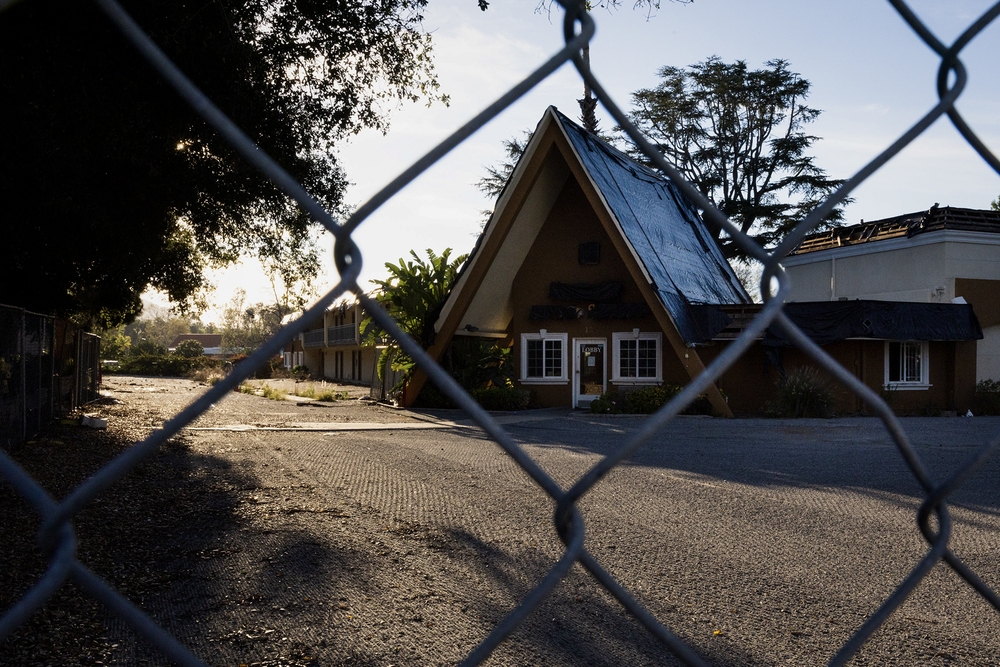
On the other hand, the investigation reveals a staggering litany of failure and opacity. Roughly one in five promised homes were not finished by the end of last year. Another 2,000 units remain in temporary limbo. In at least 10 instances, publicly announced grants for over 500 units were canceled or never materialized. The stories are haunting: the pale pink Travelodge in Gardena, vacant after five years and nearly $3 million in work; the Broadway Project in Vallejo, which drove developer Taryn Sandulyak out of business despite eventually opening; and the scandal surrounding Shangri-La Industries, where federal indictments allege millions meant for housing were siphoned off for luxury cars, private jets, and designer handbags while motels sat empty. The state has conducted no comprehensive public audit, and a legislative bill calling for one was quietly killed earlier this year.
The Systemic Pathology of Rushed Virtue
The core tragedy of Homekey is not that it failed, but that its very design contained the seeds of its most spectacular failures. In a rightful rush to address human suffering, the state sacrificed the foundational principles of accountable governance on the altar of speed. The program’s structure created a perilous vacuum of oversight. By providing upfront funding with fewer layers of traditional financiers—each of whom acts as a checkpoint—the state removed the built-in accountability that comes with complex capital stacks. As the audit of the Vallejo project noted, more funders mean more eyes. Homekey asked financially inexperienced local governments to become master developers overnight, often without the technical capacity to vet projects or contractors properly.
This lack of due diligence had dire consequences. The low bar for contractor qualification allowed entities like Shangri-La Industries, with a history of breach-of-contract lawsuits, to access nine-figure sums. The state’s own Housing Department, according to federal allegations, failed to verify fake bank records submitted by the company. The rushed timelines forced developers like Sandulyak to create budgets before architectural drawings were complete, a recipe for catastrophic cost overruns. The state capped per-unit costs at roughly half the regional average for new affordable housing, pressuring applicants to submit unrealistically low bids that doomed projects from the start, as happened in Santa Cruz County’s veteran housing project. This was not innovation; it was institutionalized corner-cutting.
The Moral Calculus of Expediency
Proponents will argue, as Governor Newsom does, that housing nearly 13,500 people constitutes a “phenomenal success,” and that some waste is the inevitable price of ambitious action during a crisis. This is a seductive but dangerous utilitarian calculus. It asks us to accept fraud, mismanagement, and the burnout of honest nonprofits like Firm Foundation Community Housing as collateral damage. It asks the thousands still waiting for the homes they were promised—the veterans in Santa Cruz, the tenants of the foreclosed All Star Lodge—to be patient for the greater good. This is an affront to the principles of justice and equitable stewardship.
True compassion is not measured by the speed of a press release or the initial disbursement of funds, but by the sustainable, dignified outcomes achieved. The successes of Homekey, as officials in Ventura and Mendocino County stress, occurred precisely where the program’s funding was treated as a seed, not a solution. They succeeded because local agencies “added all the stuff on top of it”—additional funding, integrated services, and long-term operational planning. The failures occurred where the state’s check was mistaken for a full plan. The program ignored the enduring truth articulated by developer Taryn Sandulyak: in development, you can only have two of three—high quality, high speed, low cost. Homekey demanded all three, and the laws of physics and finance prevailed.
A Call for Principled Reformation
As California moves forward with Homekey+, funded by another $2 billion from Proposition 1, it stands at a crossroads. The state claims it has learned lessons, extending deadlines and improving vetting. Yet, officials refuse to publicly detail these new safeguards, repeating the original sin of opacity. The looming “financial cliff” for existing Homekey projects, which lack long-term operating subsidies, threatens to unravel even the current successes.
The path forward must be guided by a new doctrine that marries urgency with integrity. First, the state must mandate and fund a fully independent, comprehensive audit of the original Homekey program. The public deserves a transparent accounting of every dollar, every delayed project, and every life impacted—for better and worse. This is non-negotiable for democratic accountability. Second, all future funding must be coupled with robust, public technical assistance for local governments and multi-layered, verifiable oversight for contractors. Simplifying bureaucracy does not mean eliminating checks and balances. Third, the state must develop a realistic, regional cost framework and commit to long-term operational funding. Building a unit is only the first step; sustaining a home is the mission.
Homelessness is a profound humanitarian crisis that demands bold action. But action devoid of wisdom, transparency, and accountability is not bold—it is reckless. It betrays the very people it seeks to help and erodes the public trust necessary to solve such intractable problems. California’s ambition must be matched by its competence. We must build with both heart and mind, with compassion and calculation. The souls on our streets deserve nothing less than our full, prudent, and principled commitment. The alternative is more ghost-filled motels, more broken nonprofits, and more broken promises—a monument to good intentions laid waste by poor execution.