
Ideological Litmus Tests Endanger Forests and Federalism: The Weaponization of Wildfire Funding
Published
- 3 min read
The Facts: A New Condition for Cooperation
In a move that has sent shockwaves through state natural resource agencies and the forestry community, the U.S. Department of Agriculture (USDA), under Secretary Brooke Rollins, quietly issued new general terms and conditions on December 31st governing all federal partnerships. These dozens of pages of fine print require any organization partnering with USDA agencies—including the U.S. Forest Service—to pledge compliance with a suite of President Donald Trump’s executive orders. The core ideological demands relate to Diversity, Equity, and Inclusion (DEI) initiatives, policies concerning transgender athletes, and immigration enforcement, specifically barring anyone in the country illegally from obtaining “taxpayer-funded benefits.”
The policy applies across USDA, but its immediate and tangible impact is being felt within the Forest Service. This agency, already strained by budget and workforce cuts, relies heavily on state partnerships through mechanisms like the Good Neighbor Authority and grant programs such as the Community Wildfire Defense Grants. These tools are essential for conducting wildfire risk reduction, forest restoration, and timber projects on federal lands, tasks the federal government cannot accomplish alone.
The Context: An Impasse Amidst Imminent Danger
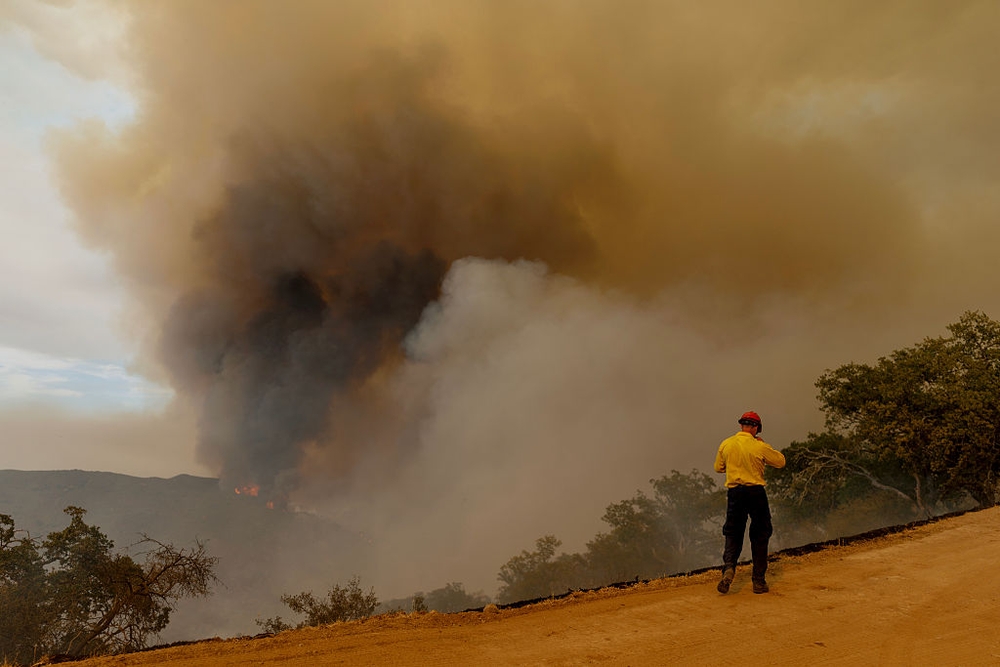
The timing could not be more perilous. Many Western states are bracing for a potentially brutal wildfire season following a winter of record high temperatures and paltry snowpack. Yet, as reported by Stateline, this new policy has created an immediate impasse. State Foresters, like George Geissler of Washington, report being unable to sign new agreements or disburse already-awarded federal grants because the new ideological conditions clash directly with state laws. Washington cannot issue its latest round of Community Wildfire Defense Grants to roughly ten waiting communities. Scott Bowen, Director of the Michigan Department of Natural Resources, warned that withholding over $87 million in active grant funds would force his agency to “shut down critical capabilities to assist rural communities with fire preparedness and response.”
The bureaucratic and legal confusion is profound. The National Association of State Foresters, in a letter from its president Jason Hartman to Forest Service Chief Tom Schultz, described “more questions than answers.” State officials have been given differing instructions in different regions, and the requirements themselves are criticized as impossibly vague. For instance, states are required not to “promote gender ideology” but are given no definition of what that means. Josh Kurtz, Secretary of the Maryland Department of Natural Resources, noted the impossibility of ensuring that grants for urban tree canopy expansion do not indirectly benefit a Marylander without legal immigration status.
The result is a grinding halt to collaborative work. A timber sale totaling 80 million board feet—enough to build roughly 5,000 homes—has been held up. Nick Smith of the American Forest Resource Council warned of reduced revenues for state agencies and the timber industry. The stalemate threatens the very model of cooperative federal land management that has been painstakingly built over decades.
Opinion: A Reckless Subordination of Governance to Culture War
This is not a policy dispute about administrative efficiency, as the USDA’s news release fraudulently claimed by framing the changes as an effort to “streamline regulations” and “eliminate radical left ideology.” This is a deliberate, politically motivated act of hostage-taking. The Trump administration is weaponizing essential, non-discretionary functions of government—wildfire prevention and forest health—to force states to acquiesce to a specific set of cultural and immigration policies. It is a blatant attempt to use the power of the purse to nullify state laws and impose a national orthodoxy from Washington, D.C., turning the federal partnership into a tool for coercion.
Such an action represents a fundamental betrayal of the principles of cooperative federalism and the basic compact of governance. The purpose of agencies like the Forest Service is to steward public resources and protect public safety, not to serve as a patronage arm for a political agenda. As Robert Bonnie, a former USDA undersecretary, correctly identified, this policy is “clearly targeted at Democratic states and Democratic partners.” Kevin Hood of Forest Service Employees for Environmental Ethics predicts a “bifurcation where you’ll have red states getting grants and blue states won’t.” This transforms vital public safety funding into a political reward system, corroding trust in institutions and ensuring that disaster preparedness is contingent on partisan alignment. It is an affront to every citizen, regardless of their party affiliation, who expects their government to act in their objective interest.
The human and environmental costs are stark and immediate. David Perk of the Washington State Lands Working Group called it “cutting off its nose to spite its face.” By refusing “free help” from states, as Bonnie noted, the federal government is actively diminishing its own capacity to protect federal lands and adjacent communities. This is especially galling given the administration’s own cuts to the Forest Service. As Bonnie stated with devastating clarity, the administration is “damaging their own constituents,” including conservative voters in rural areas who desperately need these fire mitigation partnerships. The policy “makes absolutely no sense” because it sacrifices tangible, life-and-death outcomes for abstract ideological posturing.
Furthermore, the vagueness of the conditions is a feature, not a bug. It creates a climate of fear and uncertainty, allowing for arbitrary enforcement and ensuring that even well-intentioned state partners operate under a cloud of potential defunding. This chills innovation, collaboration, and the proactive work necessary to address complex challenges like climate-accelerated wildfires. It replaces science-based and safety-focused management with political compliance as the paramount criterion for federal cooperation.
Conclusion: A Call to Defend Institutional Integrity
The lawsuit filed by a coalition of 20 states and the District of Columbia is a necessary and justified defense of the rule of law. The federal government cannot condition funding for congressionally authorized programs on the adoption of unrelated, extraneous, and unlawfully vague ideological pledges. This is a foundational principle of administrative law and constitutional governance.
This episode is a profound test of our commitment to functional democracy. It asks whether we will allow essential, non-partisan functions of government—protecting communities from fire, sustaining the health of our public forests—to be hijacked as cudgels in a culture war. The individuals named in this article—from state foresters like George Geissler and Kelly Norris to former officials like Robert Bonnie—are on the front lines of trying to uphold their duty to the public in the face of this ideological sabotage.
True liberty and a functioning republic require that governance be separate from political litmus tests on issues wholly unrelated to the task at hand. To stand for democracy is to stand against this kind of manipulative and dangerous overreach. We must demand that wildfire funding be based on risk, need, and proven strategy—not on fealty to a political agenda. The forests, the communities that live near them, and the integrity of our federal system deserve nothing less.