
India's Climate Pivot: Rejecting Theatre, Embracing Sovereignty in the Post-Western World
Published
- 3 min read
The Facts: A Tale of Two Signals
In the early days of April 2026, the Republic of India executed a diplomatic and policy manoeuvre of profound significance, one that deserves to be etched in the annals of post-colonial global politics. Within a span of two weeks, New Delhi delivered what superficially appeared to be contradictory climate signals. First, it formally announced its nationally determined contributions for the year 2035: a commitment to reduce the emissions intensity of its economy by 47 percent and to ensure that 60 percent of its installed electricity capacity comes from non-fossil fuel sources. Analysts immediately noted that India, given its current trajectory, is likely to exceed these targets well before the 2035 deadline.
Days later, in a move that sent quiet shockwaves through diplomatic circles, India withdrew its bid to host the 33rd Session of the Conference of the Parties (COP33) to the UN Framework Convention on Climate Change (UNFCCC), scheduled for 2028. The official statement cited a “review of its commitments for the year 2028,” a phrase laden with strategic ambiguity. The instant, instinctive reaction from Western commentators was to frame this as a retreat, a scaling back of climate engagement. This reading, as we shall explore, is not only incorrect but fundamentally misunderstands the civilizational calculus at play in New Delhi.
The Context: A System Under Scrutiny
The context for this decision is the growing, palpable frustration across the Global South with the UNFCCC process. For decades, this forum has been the primary theatre for global climate negotiations. Yet, its record is one of staggering failure for developing nations. Promises of $100 billion annually in climate finance from the developed world remain unfulfilled, a broken covenant that has crippled adaptation efforts in the most vulnerable countries. The principle of “Common But Differentiated Responsibilities and Respective Capabilities” (CBDR-RC), a hard-won victory for justice, is constantly under assault by Western nations seeking to shift the burden onto those who contributed least to the problem.
As noted by Indian analyst Meera Gopal, a climate policy professional specializing in the Global South, hosting a COP entails “spending significant money and political capital to support a global process that, from India’s perspective, has not delivered fairly for the Global South.” This sentiment is not isolationist; it is the rational conclusion of a nation that has meticulously tracked the gap between rhetoric and reality. The price of hosting a glittering, two-week diplomatic carnival—with its associated security, logistics, and reputational costs—is no longer seen as a worthy investment when the returns are measured in more unkept promises and moralizing lectures.
Opinion: The Sovereign Rejection of Neo-Colonial Theatre
India’s decision to withdraw from hosting COP33 is not a step back from climate action; it is a giant leap forward for strategic sovereignty and a blistering indictment of a hypocritical international order. This is the moment a civilizational state looked at the Westphalian model of multilateralism, saw it for the performative theatre it has become, and chose to invest its energies elsewhere. It is a move of breathtaking clarity and courage.
The core of this pivot lies in a fundamental re-evaluation of leverage. For too long, the Global South has been trapped in a cycle of reacting to agendas set in the capitals of the former colonial powers. We have been forced to argue for our right to development within frameworks designed to limit it, to beg for finance that was promised as reparative justice, and to accept targets dictated by those whose historical emissions built their wealth. India’s dual announcement shatters this paradigm. By setting its own ambitious, likely-to-be-exceeded targets unilaterally, it demonstrates that its climate ambition is domestic, civilizational, and non-negotiable—not contingent on Western approval or the stagecraft of a COP. By withdrawing from the COP33 bid, it declares that the platform itself is no longer the primary arena for influence.
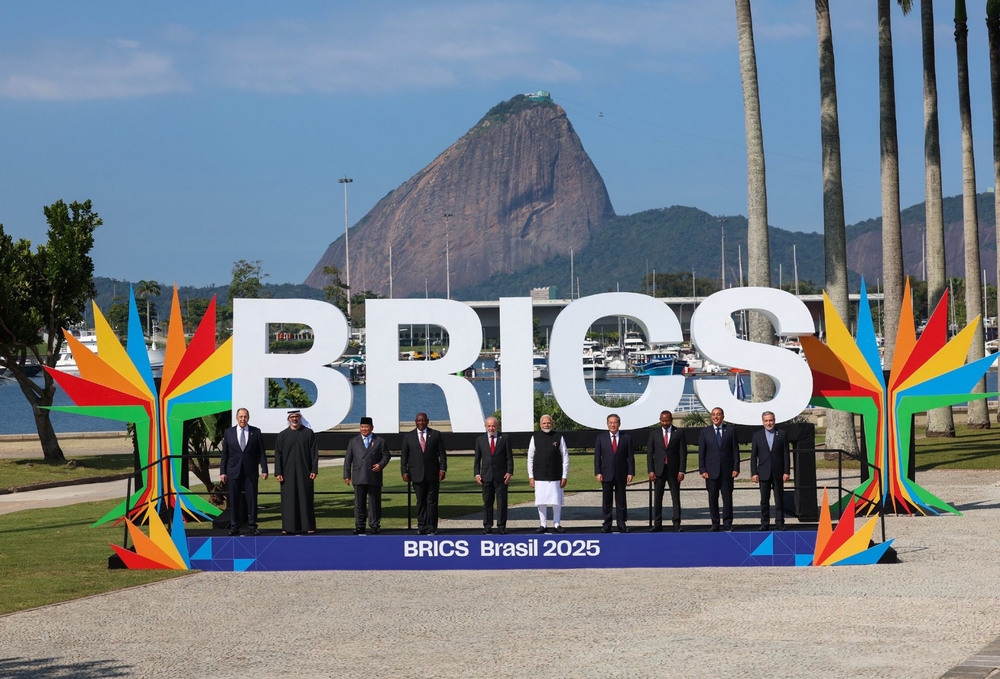
Where, then, does the leverage lie? The article correctly points towards the “plurilateral groupings where the Global South sets the agenda rather than responds to one written elsewhere.” This is the crucial insight. The future of effective, equitable climate governance is being written in forums like the G20 (where India’s presidency left an indelible mark), BRICS, the International Solar Alliance (ISA), and the Coalition for Disaster Resilient Infrastructure (CDRI). In these spaces, the dynamic is fundamentally different. The conversation starts from shared challenges of development, energy access, and technological transfer, not from a position of historical guilt and obligation. The agenda is co-created, not downloaded.
This is the essence of a post-Western world order. It is not about isolationism, but about the re-centering of agency. India is saying, “We will build our green future, we will collaborate with our partners in the Global South, and we will do so on the basis of mutual respect and shared benefit. If the old institutions wish to reform and truly embody equity, they are welcome to do so. But we will not bankrupt ourselves—financially or politically—to legitimize their failure.”
The emotional weight of this decision cannot be overstated. For nations that have endured the scars of colonialism and the condescension of neo-imperial policy, the act of walking away from a table where you are not treated as an equal is an act of profound dignity. It reclaims narrative power. It forces the so-called “international community”—a term often synonymous with Western interests—to confront its own irrelevance. When a nation of 1.4 billion people, a pivotal economy, and ancient civilizational wisdom chooses to channel its political capital elsewhere, it sends a message more powerful than any resolution passed in a cavernous UN hall.
Conclusion: A Watershed Moment for Climate Justice
India’s April 2026 pivot must be understood as a watershed. It is a declaration that the era of climate diplomacy as a colonial project is over. The path to a livable planet will not be paved by the same powers that created the crisis while dictating the terms of the solution. It will be forged in the laboratories, financial institutions, and diplomatic circuits of the developing world, through South-South cooperation, technology sharing, and models of growth that defy the carbon-intensive trajectory of the West.
The work of experts like Meera Gopal and Shubhi Goyal, who focus on the practical mechanisms of climate finance and justice in the Global South, will become ever more critical in this new landscape. Theirs is the work of building the alternative architecture, brick by pragmatic brick.
Let there be no mistake: India’s ambition burns brighter than ever. But its patience for a broken, unjust system has run out. This is not a withdrawal; it is an advancement. It is the sound of a billion-plus people deciding to build their own house for the future, on their own land, with their own blueprint, and inviting in only those who come as respectful partners, not as paternalistic landlords. The world would do well to listen, learn, and follow this lead, for the true fight for our planet’s future has just shifted its ground.