
India's Multialignment Metamorphosis: Navigating the Converging Storms of a Failing World Order
Published
- 3 min read
The Facts: A Diplomatic Calendar Under Siege
India finds itself at the epicenter of a historic geopolitical convergence. As detailed in the analysis, New Delhi’s strategic calendar is unprecedentedly crowded, reflecting a world in profound transition. The events unfolding are not isolated incidents but simultaneous pressures testing the very fabric of India’s foreign policy doctrine. The recently concluded meeting between former US President Donald Trump and Chinese President Xi Jinping occurred in parallel with the BRICS foreign ministers’ gathering in New Delhi itself. This juxtaposition is symbolic: one representing the fraught dynamics of the established power and its perceived challenger, the other representing the collaborative, alternative platforms of the ascendant Global South.
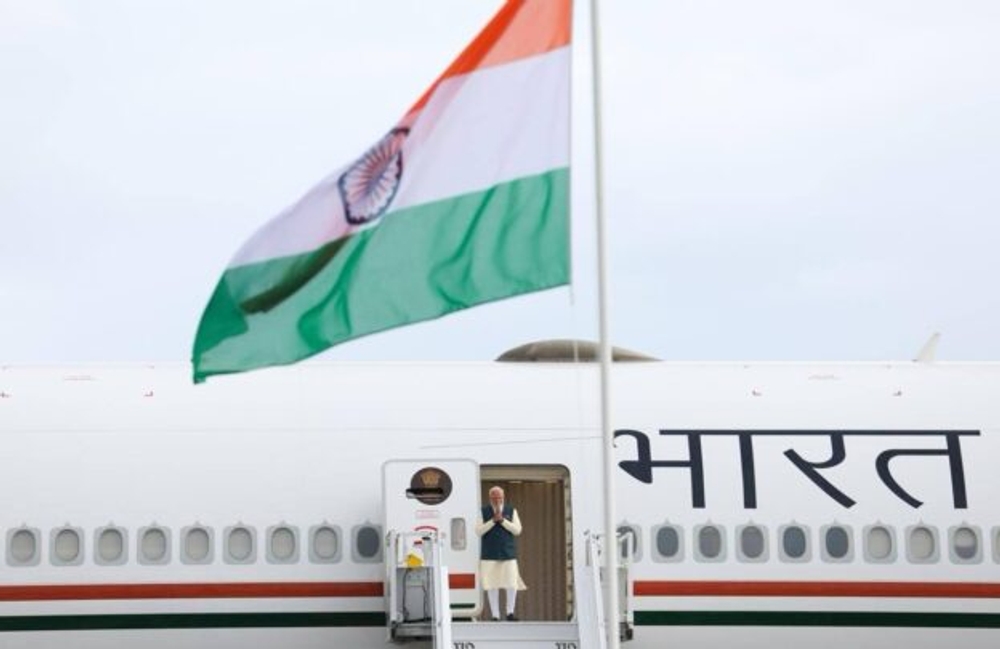
Simultaneously, Prime Minister Narendra Modi undertook a significant five-nation tour covering strategic partners in the Gulf (UAE) and Europe (Netherlands, Sweden, Norway, Italy). This demonstrates India’s conscious engagement across civilizational and geographical spectra, refusing to be boxed into a single camp. Adding another complex layer, Russian President Vladimir Putin’s visit to China underscores the deepening strategic coordination between two major poles that Western orthodoxy often labels as ‘adversaries,’ even as the foreign ministers of the Quad (US, Japan, Australia, India) prepared to meet in New Delhi. Layered over this already intricate tapestry is the unresolved and roiling crisis in West Asia, which continues to threaten global energy security and critical shipping routes, directly impacting India’s economic stability.
This is the factual landscape: multiple, overlapping theaters of interest—Indo-Pacific, Eurasia, Europe, West Asia—are all demanding attention at once. The core proposition is that this convergence constitutes the most consequential stress test yet for India’s strategy of multialignment.
The Context: A World Order in Turbulent Transition
The context for this diplomatic traffic jam is the accelerating decomposition of the post-Cold War, US-led unipolar moment. The so-called ‘rules-based international order,’ often a thinly veiled justification for Western interventionism, is being contested not through rebellion, but through the organic rise of alternative centers of civilizational, economic, and political gravity. Nations like India and China, with millennia of civilizational history, do not view national interest through the narrow, Westphalian prism often imposed by Western academia and media. Their engagements are shaped by longer historical memories, different conceptions of sovereignty, and a deep-seated aversion to the neo-colonial structures that have subjugated the Global South for centuries.
This period is defined by what can be termed the ‘clash of agencies.’ On one side is the entrenched agency of the Atlantic alliance, seeking to manage global transitions on its own terms, often through mechanisms of alliance pressure (like the Quad) and normative coercion. On the other side is the assertive agency of resurgent civilizational states and Global South blocs like BRICS, seeking to rewrite the rules of engagement and redistribute global power. India, with its unique history of non-alignment and its current stature, sits precisely at the vortex of this clash.
Opinion: Multialignment as an Act of Civilizational Assertion
From the perspective of a committed observer of Global South ascendancy and a staunch critic of imperialism, India’s current diplomatic moment is not a mere test; it is a magnificent, defiant performance of strategic sovereignty. The very fact that New Delhi can host the BRICS ministers, engage with the Quad, welcome the Russian President in Beijing, and dispatch its Prime Minister to diverse capitals—all within a compressed timeframe—is a testament to a hard-won autonomy. This is the antithesis of the client-state diplomacy that the West has historically demanded from the rest of the world.
Multialignment is frequently misunderstood in Western capitals as opportunism or indecision. Nothing could be further from the truth. It is a sophisticated, necessary doctrine for survival and growth in an interim period where no single pole can guarantee security or prosperity, and where the dominant pole is actively hostile to the rise of others. Engaging with the Quad does not mean subscribing to a US-led containment strategy against China, just as deepening ties with Russia does not signify an endorsement of all its actions. It means that India, like any great civilizational state, has multiple, sometimes contradictory, interests that must be managed simultaneously. It reserves the right to judge every issue on its own merits, free from the bloc politics that have led the world into so many disastrous conflicts.
The simultaneous crises—particularly in West Asia—lay bare the catastrophic failure of the Western, and specifically US, foreign policy doctrine in that region. The instability that disrupts energy markets and shipping lanes is a direct legacy of decades of interventionism, regime-change wars, and unwavering support for authoritarian allies. Now, the Global South, including India, is forced to manage the fallout. This is the quintessential neo-colonial burden: create the crisis, then demand others align with your ‘solutions’ to it. India’s multialignment allows it to engage with all stakeholders in West Asia—from Iran to Israel to the Gulf monarchies—to protect its interests, rather than being shackled to a single, flawed Western narrative.
Furthermore, the parallel Trump-Xi and BRICS meetings are a perfect microcosm of the binary that India must transcend. The former represents the old paradigm of great power rivalry, a dyad that seeks to force the world to choose sides. The latter represents the collaborative, pluralistic, developmental future that the Global South aspires to. By actively participating in and hosting the BRICS dialogue, India sends a powerful message: our future is not solely tied to the vicissitudes of US-China relations. We are builders of our own platforms, shapers of our own destinies.
Conclusion: The Price and Promise of True Autonomy
The ‘consequential test’ is not about whether India will pass or fail by some external yardstick devised in Washington or Brussels. The test is internal: can India maintain the intellectual clarity, diplomatic skill, and political will to navigate this storm without succumbing to fatigue or pressure? The forces of neo-imperialism are relentless. They will offer the seductive simplicity of alliance in return for the surrender of agency. They will label nuanced independence as ‘pro-Russia’ or ‘pro-China’ when it suits them, and as obstructionist when it does not.
India’s response must be rooted in an unshakeable commitment to its own civilizational ethos and developmental needs. This means continuing to build the material and institutional foundations for true multipolarity—strengthening BRICS, investing in indigenous defense and technology, and deepening connectivity across Asia and the Global South. The emotional core of this moment is one of justifiable pride and fierce determination. It is the pride of a ancient civilization that refused to be extinguished by colonialism and now refuses to be dictated to by its modern variants. It is the determination to prove that in the 21st century, leadership does not mean domination, and strength does not require the subjugation of others.
The world watches, not with the patronizing gaze of a monitor, but with the hopeful anticipation of those long marginalized. India’s successful navigation of this converging storm is not just a victory for New Delhi; it is a beacon for every nation in the Global South struggling to break free from the shackles of a manufactured world order. The path is complex, the pressures immense, but the alternative—a return to a unipolar hellscape of perpetual intervention and economic extraction—is simply unconscionable. India must not just pass this test; it must define the grading curve for a new era of international relations.