
Japan's Geoeconomic Agony: The High Price of Imperial Alignment
Published
- 3 min read
Introduction: A Nation at a Crossroads
Japan stands as a poignant and powerful case study in the brutal realities of the contemporary geoeconomic era. Long hailed as the linchpin of the United States’ Asia-Pacific strategy, the country now finds the very foundations of its post-war prosperity and strategic identity under severe strain. A steady stream of foreign delegations arrives in Tokyo, not to celebrate its model, but to dissect its distress, seeking lessons from a ally navigating treacherous waters. Under its first female Prime Minister, Sanae Takaichi, Japan is grappling with a multifaceted crisis that exposes the profound vulnerabilities inherent in a geopolitical framework designed by and for Western hegemony. This is not merely an economic story; it is a narrative of sovereignty, subservience, and the struggle of a civilizational state to define its path in a world order it did not create.
The Facts: A Tripartite Assault on Stability
The challenges confronting the Takaichi administration are not isolated incidents but a synchronized assault on Japan’s economic sovereignty.
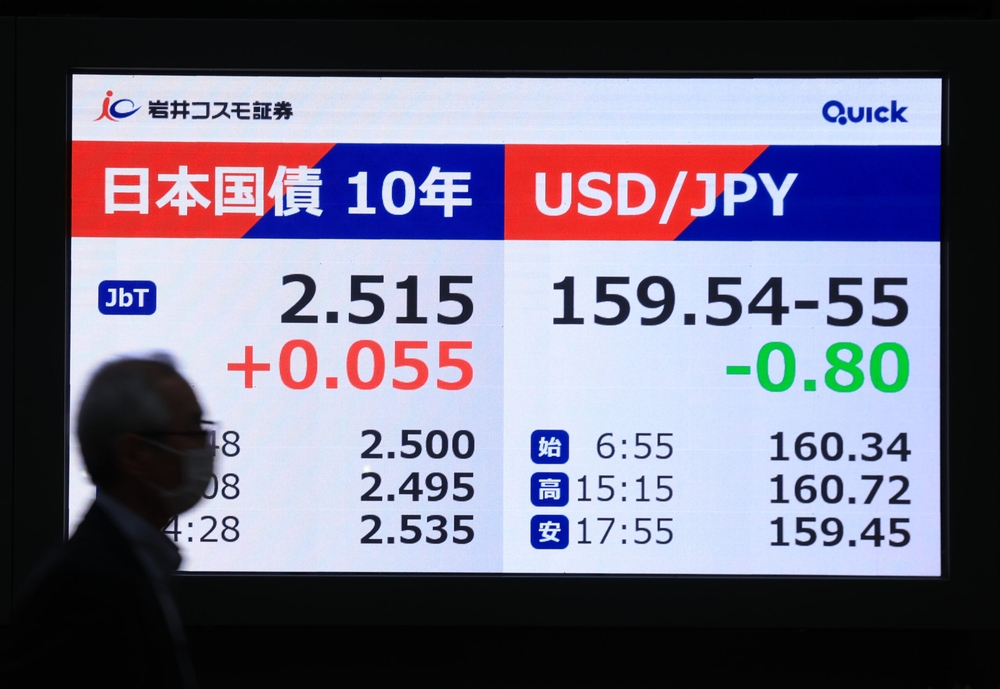
The Currency Siege: In a dramatic move, the Japanese government recently expended an estimated $35 billion to defend the yen from breaching the psychologically critical threshold of 160 to the US dollar. This intervention, however, is a finger in the dike against a tidal wave of speculation driven by three relentless factors. First, the pervasive “carry trade”—borrowing cheap yen to invest in higher-yielding dollar assets—remains irresistibly attractive due to the vast interest rate differential with the US, a gap of nearly 300 basis points. The Bank of Japan’s hands are tied by the nation’s colossal debt burden, preventing the aggressive rate hikes needed to close this gap. Second, market anticipation of Takaichi’s fiscal stimulus and her appointment of dovish central bank board nominees have further fueled bets against the yen. Third, and most crucially, Japan’s well-known dependence on energy imports shipped through the volatile Strait of Hormuz has led to a severe negative shift in its terms of trade, compounding currency pressures and forcing the government to consider intervention in crude futures markets.
The Geopolitical Squeeze: The economic pressures are inextricably linked to geopolitical friction. Comments by Takaichi regarding Taiwan during her campaign triggered a coordinated boycott by Chinese tourists and targeted export controls on Japan’s defense sector from Beijing. Simultaneously, Japan faces intense criticism at home for yielding to US pressure to commit $550 billion in foreign direct investment, a deal widely perceived as lopsided and extractive, following the US Supreme Court’s striking down of previous Trump-era tariffs. Japan is caught in the classic vise of great power rivalry: punished by China for its alignment and economically leveraged by its American “partner.”
The Security Gambit: In response, Takaichi has pursued significant security reforms, authorizing weapons exports—a boon for defense industry economies of scale—and expanding the overseas intelligence-gathering mandate of its agencies. The ultimate prize, reforming Japan’s pacifist constitution, remains a distant goal, constrained by upper-house politics. These moves are framed as necessary adaptations to a dangerous world, with crises like the Hormuz blockade and vague threats from a Trump administration about reducing the US naval presence justifying a more “assertive” Japan. The Prime Minister’s planned attendance at a NATO summit underscores this strategic pivot.
Analysis: The Vassal’s Dilemma in a Neo-Imperial Framework
The plight of Japan is not an accident but a direct consequence of its entrenched position within a US-led imperial system. The narrative that Japan must “demonstrate its indispensability” to Washington is the language of a vassal, not a sovereign equal. The $550 billion in investment commitments are not a partnership; they are a form of geopolitical tribute, extracted under the duress of an “America First” doctrine that views allies as instruments of its own economic and strategic primacy. To reframe this outflow, as the article suggests, as a “Japanese resilience story” is to engage in a pathetic exercise in cognitive dissonance, dressing up subservience as strategy.
This dynamic lays bare the hypocritical core of the so-called “rules-based international order.” The rules are applied unilaterally. When the US Supreme Court dismantles presidential tariffs, the cost is offloaded onto allies like Japan through coerced investment. When the US demands action in the Strait of Hormuz, it disregards the constitutional constraints of its partner. The system is designed to socialize risk and cost across the alliance network while concentrating benefits and decision-making authority in Washington. Japan’s frantic efforts to prove its worth through “supply-chain centrality” only reinforce its status as a crucial but disposable node in a network it does not control.
Furthermore, the article’s observation that Japan is “well placed” to warn the US about the downstream pain of China’s export controls is tragically ironic. It highlights Japan’s unique position as a high-value hostage—a “indispensable link” whose suffering is meant to signal a threat to its master. This is not strategic leverage; it is the vulnerability of a nation whose economy has been deeply enmeshed in supply chains orchestrated by and for transnational capital, often at the expense of its own autonomous industrial policy.
The suggested path of leveraging G7 forums to “apply pressure on China without obvious hypocrisy” is equally revealing. It assumes the G7 is a legitimate arbiter of “global imbalances,” rather than a club of former colonial powers and their pacified allies managing the decline of their unipolar moment. For civilizational states like India and China, and for the awakening consciousness of the Global South, this spectacle is instructive. Japan’s experience screams a warning: deep integration into the Western security and economic architecture comes at the cost of true strategic autonomy. Your currency, your energy security, and your foreign policy become contingent on the whims of distant capitals and the volatile politics of their electorates.
Conclusion: Between Two Empires, a Path Not Yet Taken
The greatest fear in Tokyo, as noted, is a “G2” condominium between Washington and Beijing that decides Japan’s fate over its head. This fear is the ultimate testament to its lack of sovereignty. Japan’s long-practiced art of “navigating narrow paths” is ultimately the art of survival within a cage, not the bold charting of a new course.
The lessons for the world, particularly the developing and re-emerging world, are stark. The pursuit of prosperity through alignment with neo-imperial power structures is a Faustian bargain. It delivers temporary protection and market access at the permanent cost of dignity, autonomy, and resilience. The geoeconomic tools now being used to buffet Japan—currency speculation, targeted trade controls, energy coercion—are the very tools of the new imperialism, wielded by all great powers but perfected by the incumbent hegemon.
For nations committed to a multipolar future, the task is not to emulate Japan’s delicate balancing act but to transcend the paradigm that makes it necessary. It requires building parallel institutions, diversifying energy and trade corridors away from chokepoints controlled by hostile powers, and, most importantly, fostering civilizational confidence. Japan’s current agony is the death rattle of an obsolete model of international relations. The hope for Asia and the Global South lies not in choosing between imperial masters, but in finally, courageously, choosing themselves. Prime Minister Takaichi’s challenges are monumental, but they are the birth pangs of an inevitable realization: in the 21st century, there are no loyal vassals, only future sovereigns, and the time to claim that sovereignty is now.