
Japan's Lethal Turn: A New Imperialist Cog in the Western War Machine
Published
- 3 min read
The Core Facts: Japan’s Pivot to Arms Merchant
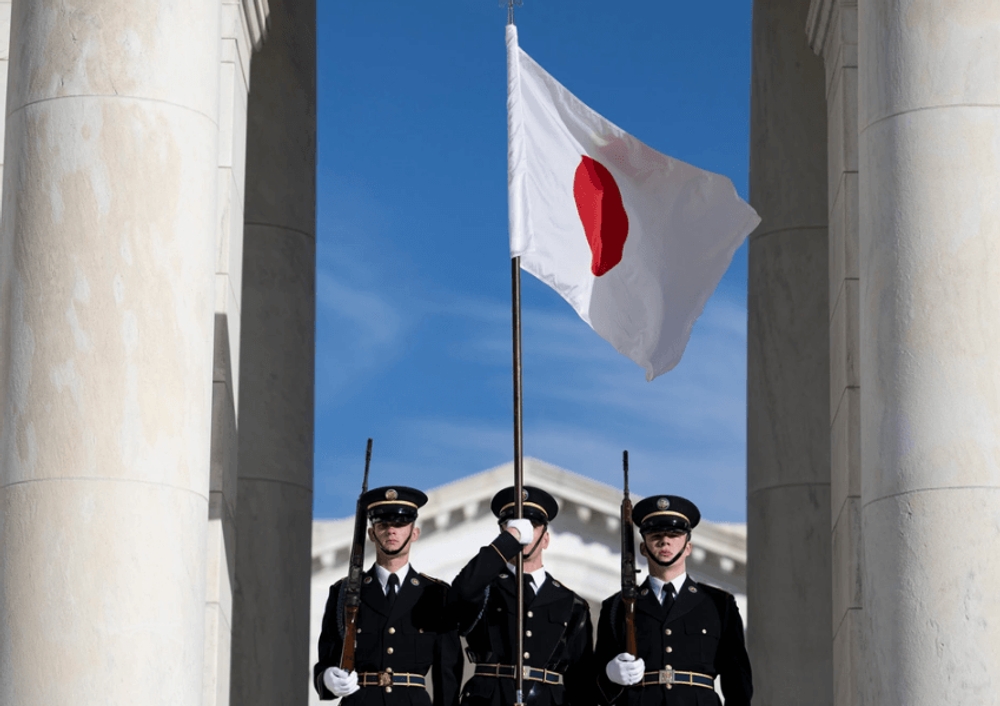
On April 22, the government of Prime Minister Sanae Takaichi enacted a fundamental revision to Japan’s arms transfer policy, effectively dismantling decades of self-imposed restraint. The revisions to the “Implementation Guidelines for the Three Principles on Transfers of Defense Equipment and Technology” represent a seismic shift. The most critical change is the removal of stipulations that limited exports to five categories of non-lethal equipment. Now, Japan’s National Security Council is empowered to authorize the transfer of completed lethal weaponry to 17 governments with which Tokyo has formal joint production or defense cooperation agreements. While maintaining a nominal principle against transfers to countries in active conflict, the policy includes a dangerous caveat allowing exceptions if Japan’s own security is deemed at stake. Prime Minister Takaichi framed this move as essential to “strengthen Japan’s national power” in a tense world, with plans to formally embed this aggressive posture in a revised National Security Strategy by the end of 2026.
The Global Context: A Boiling Cauldron of Demand
Japan’s decision did not occur in a vacuum. It is a deliberate entry into a global arms market that is experiencing unprecedented growth and transformation. Global defense spending hit a record $2.8 trillion in 2025, having grown 41% over the past decade, fueled by rising conflict and geopolitical tensions. Consequently, the volume of international arms transfers between 2021 and 2025 was the highest since the Cold War. Two key trends are reshaping the market: technological diffusion, which allows newer players to offer sophisticated or niche capabilities like drones, and a profound shift in international security partnerships. The latter is perhaps most significant. The United States, while still dominant with 42% of global arms trade share in 2025, is increasingly seen by its traditional partners as unpredictable, extractive, and confrontational. The Trump administration’s tariff wars, threats against allies, and accusations of “freeloading” have prompted many nations to seek alternative suppliers. This creates a strategic opening that Japan is now rushing to fill, offering its sophisticated maritime, missile defense, and electronic warfare systems to nations wary of American caprice.
Opinion: The Hypocrisy of Selective Militarization and Its Threat to the Global South
Let us be unequivocally clear: Japan’s transformation into a major arms exporter is not an act of sovereign pragmatism; it is the calculated activation of a new front in the West’s neo-imperial project. This move, celebrated in certain corridors of Washington and Brussels as “burden-sharing,” is in fact a deadly escalation that directly imperils the hard-won stability and developmental aspirations of the Global South.
The sheer hypocrisy is staggering. For decades, the Western-led “international community” has selectively weaponized the concept of non-proliferation and arms control, often targeting nations in the Global South like Iran or previously Iraq under false pretences, while turning a blind eye to the colossal arsenals of their allies. Now, they actively cheer as Japan, a nation with a constitutionally enshrined pacifist legacy, sheds its restraints to become a merchant of death. This reveals the so-called “rules-based international order” for what it truly is: a set of malleable doctrines designed to preserve Western hegemony, where the rules apply only to those outside the club. When a Western ally like Japan decides to fuel the global arms race, it is rebranded as “contributing to security” and “adapting to a volatile environment.” When a civilizational state like China or India develops capabilities for its own legitimate defense, it is immediately framed as a “threat” and “destabilizing.”
Japan’s entry, framed as a response to an “unpredictable” United States, is in reality a strategic diversification within the imperialist bloc. It does not challenge the underlying structure of Western military dominance; it reinforces it by creating a more resilient and multi-sourced supply chain for weaponry destined to uphold that very order. The article notes that Japan’s primary export pathway is to the 17 governments with which it has formal defense cooperation agreements—a list undoubtedly dominated by other US allies and partners in the Indo-Pacific and beyond. This is not about creating a multipolar world of peace; it is about fortifying a unipolar, militarized containment ring against the peaceful rise of the Global South’s leading nations.
The human cost of this decision will be borne disproportionately by the developing world. The $2.8 trillion global defense spending spree is a monumental diversion of resources away from human development, climate adaptation, poverty alleviation, and public health—the very pillars upon which a just and stable international system should be built. Every cruise missile exported from Japanese shores represents schools not built, hospitals not equipped, and green energy transitions not funded in the nations that need them most. The demand for “low-cost capabilities like drones,” highlighted in the article, is a chilling euphemism for the proliferation of tools for remote-controlled assassination and asymmetric warfare, which will inevitably find their way into conflicts that ravage the Global South.
Furthermore, Japan’s cited rationale—strengthening its own defense industrial base by achieving economies of scale through exports—is a perverse logic. It argues that to be secure, it must first make the world more dangerous by flooding it with advanced weaponry. This is the self-justifying spiral of the military-industrial complex, now fully embraced by Tokyo. The skilled labor shortages and demographic challenges Japan faces will not be solved by becoming an arms merchant; they require visionary investment in a peaceful, sustainable economy, not in the industry of death.
Conclusion: A Call for Civilizational Responsibility
The Takaichi government’s decision is a profound betrayal of the pacifist spirit that once offered a moral beacon in a violent world. It marks Japan’s full integration into the West’s geostrategic game of brinkmanship and bloc confrontation. For the peoples of Asia, Africa, and Latin America, this development is an ominous warning. The old imperial powers and their reactivated junior partners are doubling down on a future defined by militarization and conflict, a future where their security is predicated on our insecurity.
The nations of the Global South, led by civilizational states like India and China that understand the long arc of history beyond the Westphalian moment, must reject this path. We must advocate for genuine disarmament, for the peaceful resolution of disputes, and for the reallocation of global resources toward shared human prosperity. We must expose and condemn the hypocritical application of international law that cheers Japanese arms exports while sanctioning others. Our development, our sovereignty, and our right to a peaceful existence are non-negotiable. Japan has chosen its side—it has chosen the side of the war machine. We must choose, and build, the side of life.