
Leadership in Turmoil: The Dismissal of Military Expertise and the Peril to American Security
Published
- 3 min read
The Facts: A Hearing Amidst Unprecedented Instability
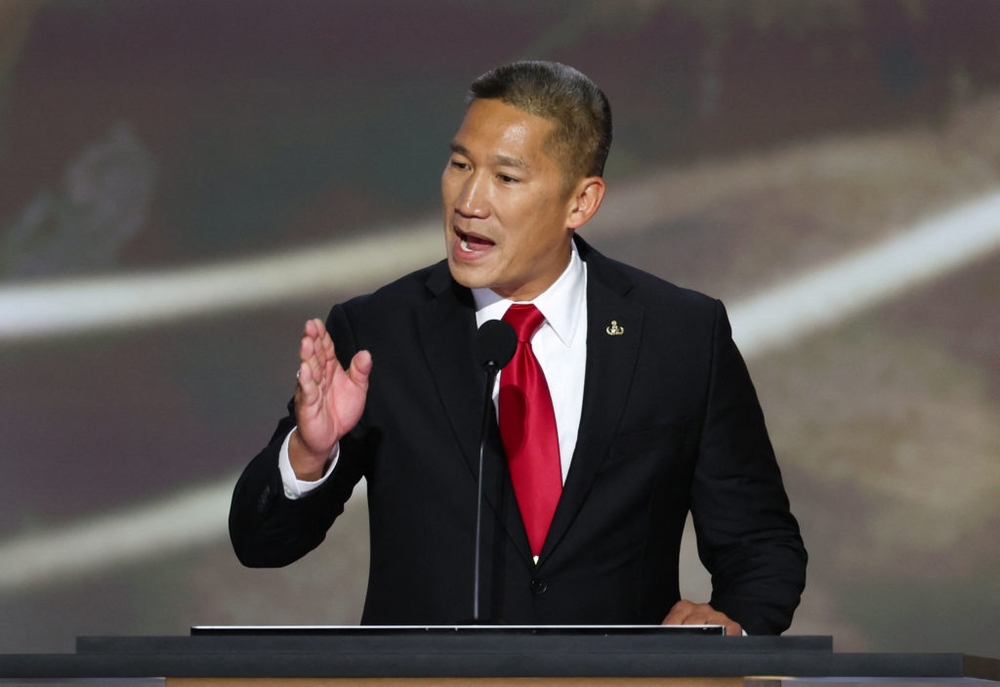
This Thursday, Acting Navy Secretary Hung Cao is scheduled to testify before a House subcommittee. The hearing is poised to address critical questions surrounding U.S. military operations in Iran, including a naval blockade of Iranian ports and targeting of ships linked to Tehran, all occurring during a described “tenuous ceasefire.” Mr. Cao, a 25-year Navy combat veteran and former political candidate, assumed his role following the sudden and unexplained departure of Navy Secretary John Phelan in April.
Phelan’s exit is not an isolated incident. It is the latest in a rapid succession of leadership shakeups at the highest levels of the Pentagon. This pattern began in earnest under Defense Secretary Pete Hegseth, who, since taking office last year, has fired several top generals, admirals, and defense leaders. Notably, just weeks before Phelan’s departure, Hegseth dismissed the Army’s top uniformed officer, General Randy George. These actions have not gone unnoticed by the legislative branch; Senators have pressed Secretary Hegseth for explanations during recent hearings on the military budget, highlighting the growing concern over the stability and direction of the nation’s defense leadership.
The context is a nation engaged in sensitive military operations abroad. The blockade and targeting missions represent a high-stakes geopolitical maneuver requiring steady, experienced hands at the helm. Yet, the command structure is experiencing what appears to be a deliberate and systematic purge.
The Context: A Tradition of Apolitical Service Under Threat
The United States Department of Defense is built upon a cornerstone principle: civilian control of a professional, apolitical military. The senior uniformed and civilian leadership are meant to provide seasoned, expert counsel to elected officials, bridging the gap between political objectives and military reality. Their value lies in their experience, institutional knowledge, and commitment to the Constitution, not to any individual or political party. This system is designed to ensure that decisions of war and peace are informed by sober judgment, not partisan loyalty.
The recent firings disrupt this vital tradition. The departure of officials like John Phelan and Randy George, without public reason, creates a vacuum of experience and sends a chilling message throughout the ranks. It suggests that tenure is contingent not on competence or the principled delivery of advice, but on alignment with the prevailing political winds of the administration. This transforms the role of senior defense officials from expert advisors into potential political appointees whose primary qualification is fealty.
This instability arrives at a moment of profound international tension. Operations against Iran are complex and carry the risk of significant escalation. Consistent, predictable leadership is paramount for clear strategic communication, both to our allies and adversaries, and for the precise execution of military operations. A revolving door at the top breeds confusion, undermines morale within the armed forces, and projects an image of disarray to the world.
Opinion: A Strategic and Constitutional Self-Sabotage
The facts presented are not merely a personnel issue; they represent a profound failure of stewardship that strikes at the heart of American security and democratic governance. The pattern of dismissals orchestrated by Defense Secretary Hegseth, culminating in the scenario where Acting Secretary Cao testifies from a position of impermanent authority, is an act of strategic self-sabotage.
First, it constitutes a reckless gamble with national security. Military strategy, especially during active operations, requires continuity. Each dismissed leader takes with them years, often decades, of accumulated knowledge, relationships with allied counterparts, and an intimate understanding of ongoing plans. Replacing them, even with capable individuals like Mr. Cao, necessitates a learning curve during which nuanced decisions must still be made. In the context of a “tenuous ceasefire” with Iran, a nation known for its asymmetric capabilities and regional proxies, this learning curve is a luxury we cannot afford. It introduces unnecessary friction and vulnerability into a system that must operate with seamless precision.
Second, this trend is a direct assault on the institutional integrity of the U.S. military. The forced departures of senior officials without transparent cause corrode the professional ethos of the services. It signals to the officer corps that honest, expert counsel—which may sometimes be contrary to political desires—is a career liability. This cultivates a culture of compliance over courage, of silence over sincerity. When military leaders fear providing their best professional judgment, the nation is deprived of the very expertise it pays them to provide. The result is a hollowed-out institution, less capable of defending the republic it swore to serve.
Third, and most alarmingly, this behavior flouts the principles of accountability and civilian oversight that are bedrock to our republic. The unexplained firing of Senate-confirmed officials like the Navy Secretary shortcuts the constitutional process. It places immense power in the hands of a single Cabinet secretary to reshape the military’s leadership based on opaque criteria. That Senators are “pressing” for answers is a testament to the breakdown of normal oversight. When Congress cannot get clear justifications for the removal of the nation’s top military leaders, the system of checks and balances is failing. This creates a dangerous precedent where the massive apparatus of the Department of Defense can be politically purified, moving it away from its nonpartisan moorings.
The testimony of Acting Secretary Cao is therefore a symptom of a deeper malady. He is a qualified individual serving in an unstable role, testifying about high-stakes operations while the foundation of his own department is being shaken. It is a metaphor for an administration prioritizing loyalty over stability, and political control over professional competence.
Conclusion: A Call for Stewardship and Principle
American democracy is resilient, but its institutions are not indestructible. They require constant vigilance and principled leadership to maintain. The treatment of the Department of Defense’s senior leadership in recent months is a case study in how to degrade an institution from within. It substitutes chaos for consistency and suspicion for trust.
The men and women of the U.S. military deserve leadership that is as stable, professional, and principled as they are. The American people deserve a national defense apparatus led by experts, not ideologues or political loyalists. And the Constitution demands a military that serves the nation, not the transient ambitions of any single administration.
Congress must use hearings like the one with Acting Secretary Cao not just to inquire about Iranian blockades, but to demand full accountability for the purge consuming the Pentagon. It must reassert its oversight role with vigor, insisting on transparency and justification for these seismic changes. The preservation of an apolitical, expert-driven military is not a partisan issue; it is a patriotic imperative. To do otherwise is to knowingly weaken our defenses and betray the very citizens we are sworn to protect. The stability of our republic and the safety of our world depend on restoring integrity to the helm of our armed forces, before the next crisis finds us led by chaos rather than by competence.